With more than 10‑year industry experience, Shandong Headpowder delivers full‑service pneumatic‑conveying systems and blowers, undertaking nationwide turn‑key powder‑handling projects.
Fiber powder conveying systems are essential in various industrial applications, particularly in sectors dealing with fibrous materials and fine powders. These systems are designed to efficiently transport and handle materials like fibers, powders, and other particulate substances. Understanding the working principle and key features of such systems is crucial for optimizing material handling processes and ensuring operational efficiency.
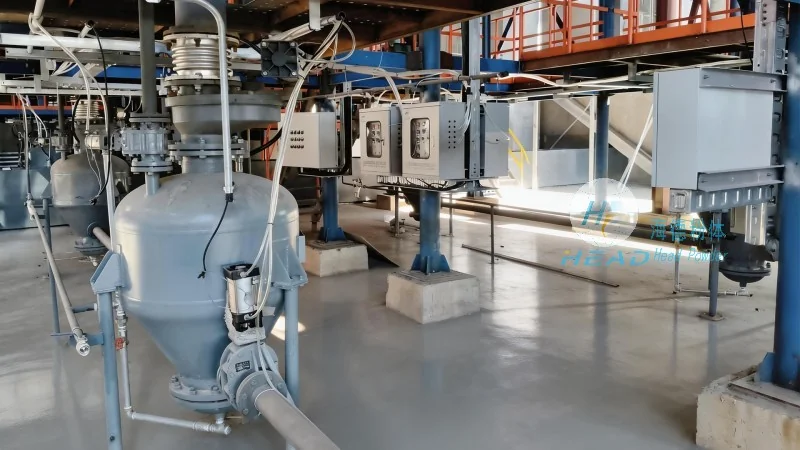
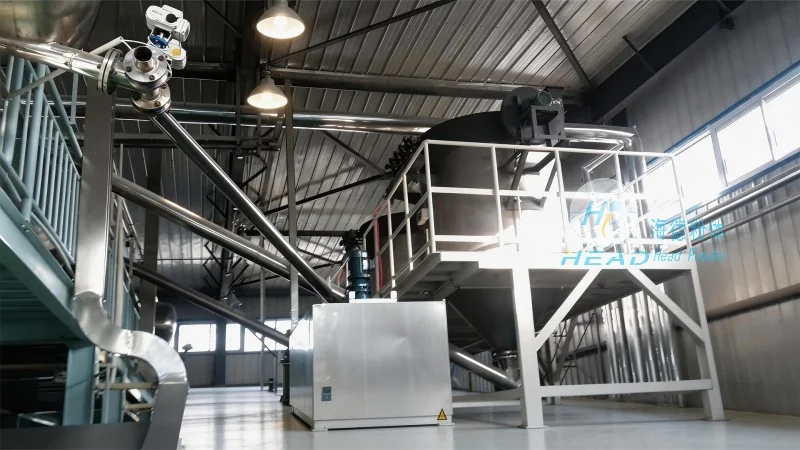
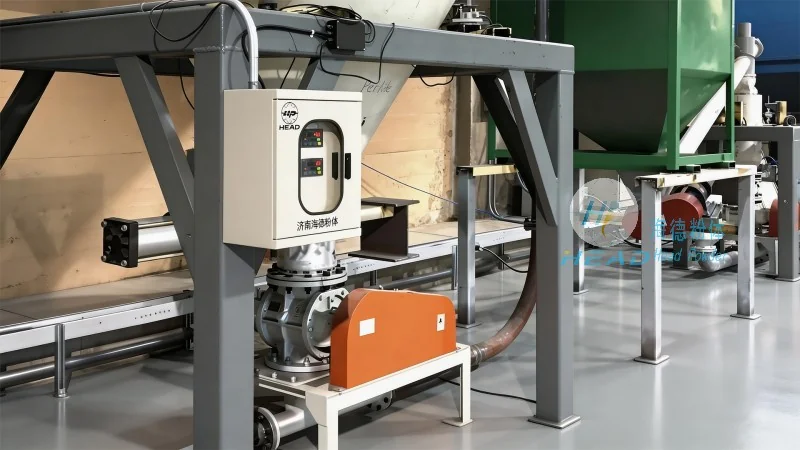
The core working principle of fiber powder conveying systems revolves around the use of specialized equipment to move materials from one location to another. Typically, these systems employ mechanisms such as pneumatic conveying, mechanical conveying, or a combination of both. Pneumatic conveying systems utilize air or gas to transport materials through a pipeline, while mechanical systems may rely on screw conveyors, belt conveyors, or other mechanical components to move the material. The choice of system depends on factors like material properties, distance to be covered, and the required flow rate. In pneumatic systems, for instance, a blower or compressor generates airflow that carries the fiber powder through the pipeline, often with the aid of cyclones or filters to separate the material from the air at the destination. The process begins with the material being fed into a hopper or feeder, where it is then introduced into the conveying line. The air flow, typically at a controlled pressure, pulls the material along the pipeline, ensuring a consistent and controlled flow. At the receiving end, a cyclone separator or filter captures the fiber powder, allowing the air to be discharged back into the system or released into the environment, depending on the system design. Mechanical systems, such as screw conveyors, operate by rotating a screw within a tube, pushing the material forward. The screw's pitch and speed are adjustable to control the flow rate, and the system can handle materials with varying moisture content and particle sizes. Belt conveyors, on the other hand, use a moving belt to transport the material, which is particularly effective for longer distances and heavier loads. The working principle ensures that the material is transported with minimal loss, reduced contamination, and consistent flow rates, which are critical for maintaining product quality and process stability.
Fiber powder conveying systems are characterized by several key features that enhance their performance and adaptability in industrial settings. One of the primary features is their ability to handle a wide range of materials, including different types of fibers, powders, and even mixtures of both. This versatility makes them suitable for diverse applications, from pharmaceuticals and food processing to chemical and construction industries. Another important feature is the system's efficiency in terms of energy consumption and operational costs. Modern fiber powder conveying systems are designed to minimize energy usage while maximizing material throughput, which contributes to cost savings and environmental sustainability. Additionally, these systems offer high levels of material containment, preventing dust and particles from escaping into the environment, which is vital for maintaining workplace safety and compliance with environmental regulations. The systems also provide flexibility in terms of layout and integration with existing production lines, allowing for easy installation and adaptation to changing production needs. Furthermore, advanced fiber powder conveying systems may incorporate features like real-time monitoring, control systems, and automated adjustments to optimize performance and ensure consistent material flow. These features collectively contribute to improved operational reliability and reduced downtime. For instance, some systems use sensors to monitor the material level and flow rate, adjusting the conveyor speed or air pressure as needed to maintain optimal performance. This automation reduces the need for manual intervention and ensures that the system operates at peak efficiency. The durability and maintenance requirements of the systems are also key features, with many components designed to withstand harsh operating conditions and require minimal maintenance. This reduces operational costs and ensures long-term reliability. Additionally, the systems are often designed with modular components, allowing for easy replacement or upgrade of parts, which extends the system's lifespan and reduces downtime during maintenance.

 Shandong Headpowder Engineering Co., Ltd.
 156-6277-7102(Manager Zhang)
  0531-83386006
  Zhangqiu District, Jinan City, Shandong Province, China
telephone
WeChatconsult
top