With more than 10‑year industry experience, Shandong Headpowder delivers full‑service pneumatic‑conveying systems and blowers, undertaking nationwide turn‑key powder‑handling projects.
Polystyrene, a widely used thermoplastic polymer, is commonly utilized in various industrial and consumer applications due to its lightweight, durable, and versatile properties. The efficient handling and transportation of polystyrene materials from production sites to processing or packaging facilities is critical for maintaining production efficiency and product quality. Pneumatic conveying systems offer a reliable solution for this purpose, enabling the movement of polystyrene powders, granules, or pellets through an enclosed pipeline using air or gas as the conveying medium. This technology is essential for industries such as packaging, construction, and automotive manufacturing, where consistent material flow is paramount.
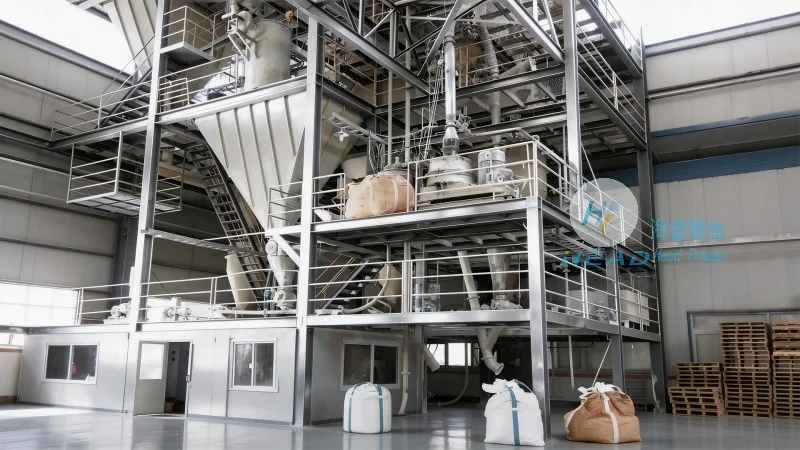
Negative pressure, or vacuum, pneumatic conveying systems operate by creating a low-pressure environment at the material inlet, drawing the polystyrene particles into the conveying line. This method is particularly effective for transporting materials over short to medium distances, typically up to several hundred meters. The vacuum system uses a fan or blower to create a pressure differential, ensuring that the material is drawn from the source and transported to the destination. Key advantages of negative pressure systems include lower air velocities, reduced material degradation, and the ability to handle fine powders without excessive wear on the system components. However, these systems may have limitations in terms of distance and material capacity compared to positive pressure alternatives.
Positive pressure pneumatic conveying systems, on the other hand, generate high-pressure air or gas at the material source, pushing the polystyrene particles through the pipeline. This approach is suitable for longer distances, often exceeding several hundred meters, and can handle a wider range of material types, including bulkier granules or pellets. The positive pressure method offers higher conveying capacities and can accommodate more complex system configurations, such as multiple inlets or branch lines. Additionally, positive pressure systems are generally more robust and can handle abrasive or sticky materials without significant performance degradation. However, they may require more powerful air compressors and can generate higher noise levels compared to vacuum systems.
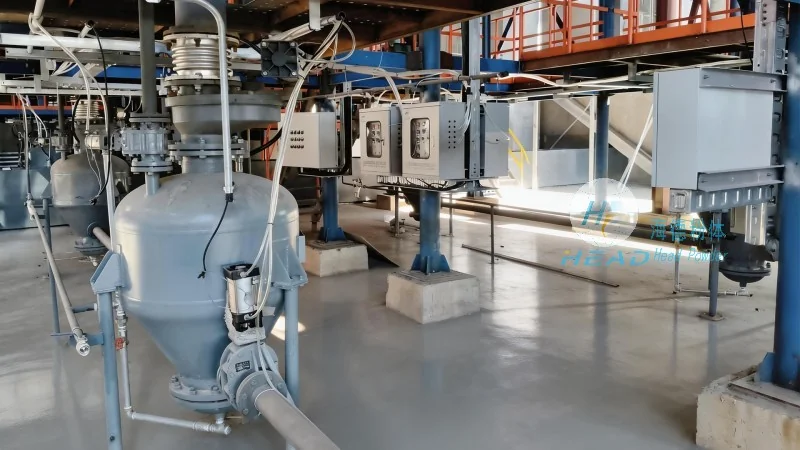
Both negative and positive pressure pneumatic conveying systems for polystyrene rely on several critical components to ensure efficient operation. These include material feeders, which control the flow rate of polystyrene into the system; conveying lines, typically made of stainless steel or other corrosion-resistant materials to prevent material buildup and contamination; and separation equipment, such as cyclones or filters, to separate the conveyed material from the air stream. The choice of components depends on the specific application requirements, including material characteristics, distance, and desired throughput. For example, cyclones are commonly used in both vacuum and positive pressure systems to separate the polystyrene particles from the air, while filters may be added to ensure the air is clean and safe for release into the environment.
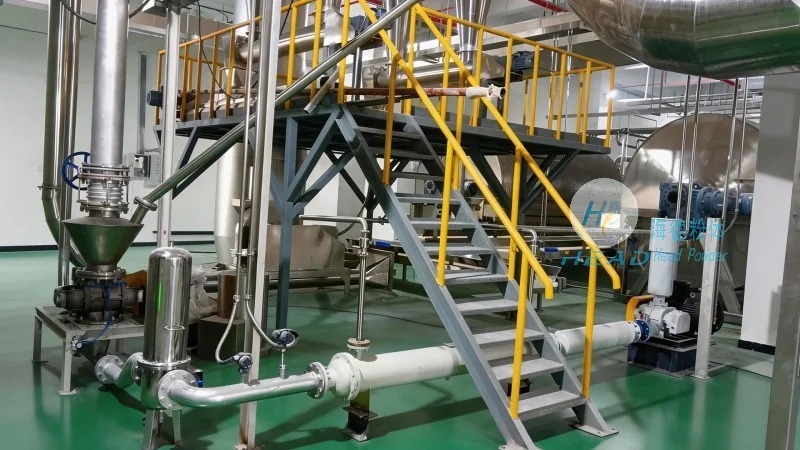
The application of pneumatic conveying technology in polystyrene processing varies across different industries. In the packaging sector, for instance, polystyrene granules are often conveyed from storage silos to extrusion lines for manufacturing foam products or molded parts. The negative pressure system may be used to transport fine polystyrene powders from a drying or grinding unit to a mixing tank, ensuring minimal dust generation and product contamination. In the construction industry, polystyrene beads are conveyed to foam machines for insulation applications, where the positive pressure system is preferred due to the longer distances and bulkier material. The automotive industry also utilizes pneumatic conveying for transporting polystyrene components from molding lines to quality control stations, where the system must maintain consistent material flow and prevent particle degradation.
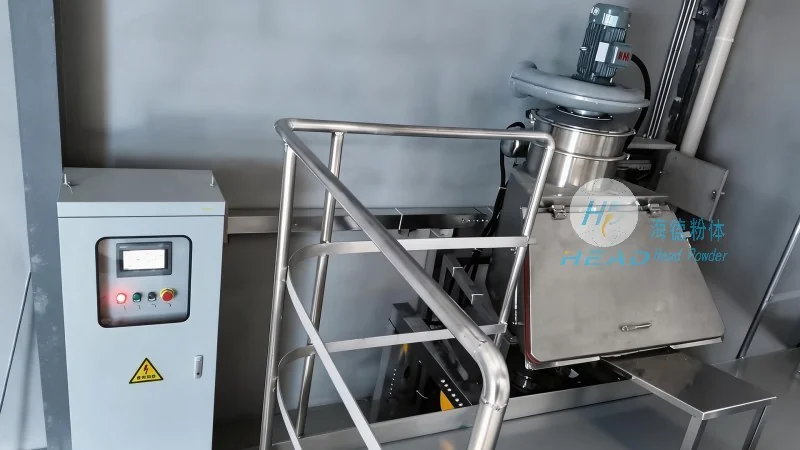
Adopting pneumatic conveying systems for polystyrene processing offers numerous benefits for industrial operations. One of the primary advantages is the reduction in material handling costs, as the system eliminates the need for manual or mechanical transport, such as forklifts or conveyor belts. This not only saves labor costs but also minimizes the risk of material damage or contamination. Additionally, pneumatic conveying systems improve production efficiency by providing a continuous and reliable material flow, reducing downtime and increasing overall throughput. The technology also enhances product quality by minimizing exposure to air and moisture, which can affect the properties of polystyrene, such as its density or thermal stability. Furthermore, the enclosed pipeline design of pneumatic conveying systems reduces dust emissions and improves workplace safety, aligning with environmental regulations and industry standards.
When selecting a pneumatic conveying system for polystyrene applications, several factors must be considered to ensure optimal performance and cost-effectiveness. The first consideration is the material characteristics, including particle size, density, and flowability. Fine powders may require a vacuum system with a high-efficiency separator to prevent clogging, while bulkier granules may benefit from a positive pressure system with a larger conveying line diameter. The distance between the source and destination is another critical factor, as vacuum systems are typically limited to shorter distances, while positive pressure systems can handle longer runs. The desired throughput and production capacity also play a role, as higher volumes may necessitate larger system components, such as more powerful fans or compressors. Finally, the budget and available space must be evaluated, as pneumatic conveying systems can range from compact, low-cost solutions for small-scale operations to large, industrial-grade systems for high-volume production.

 Shandong Headpowder Engineering Co., Ltd.
 156-6277-7102(Manager Zhang)
  0531-83386006
  Zhangqiu District, Jinan City, Shandong Province, China
telephone
WeChatconsult
top