With more than 10‑year industry experience, Shandong Headpowder delivers full‑service pneumatic‑conveying systems and blowers, undertaking nationwide turn‑key powder‑handling projects.
The gypsum sand powder conveying system equipment, as a key component in the powder handling industry, plays a crucial role in the efficient transportation of gypsum sand. This equipment is widely used in various industrial applications, including construction material production, chemical processing, and mineral processing. The smooth operation of this system directly impacts production efficiency and product quality, making it essential for businesses to understand its operation process and working principle.
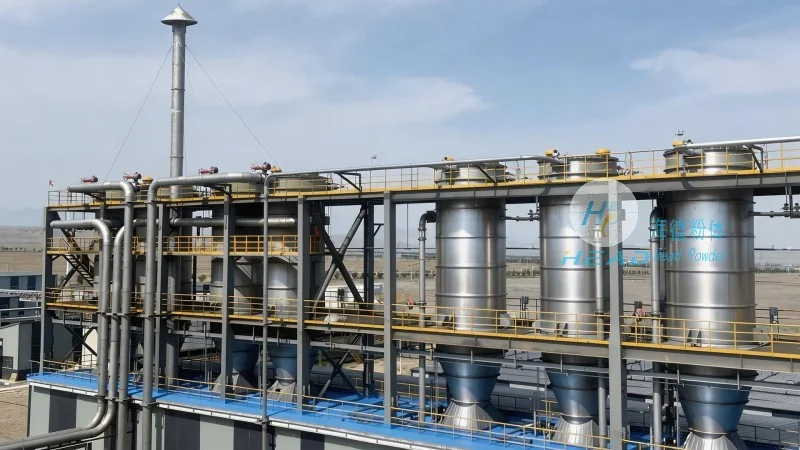
Before delving into the operation process, it's important to understand the main components that make up the gypsum sand powder conveying system. These components typically include a hopper for material storage, a feeding device to control the flow of gypsum sand, a conveying mechanism such as a screw conveyor or pneumatic conveyor, and a control system for monitoring and adjusting the operation. Each component works in tandem to ensure the safe and efficient transport of the powder material.
The operation process of the gypsum sand powder conveying system generally follows a systematic sequence. First, the gypsum sand is loaded into the hopper from the storage area. The feeding device then regulates the amount of material that enters the conveying mechanism. In the case of a screw conveyor, the rotating screw pushes the powder forward through the pipeline. For pneumatic conveyors, compressed air is used to create a flow that carries the powder particles. The control system continuously monitors parameters like pressure, flow rate, and temperature to maintain optimal operation. Any deviations are automatically adjusted to prevent system downtime or material loss.
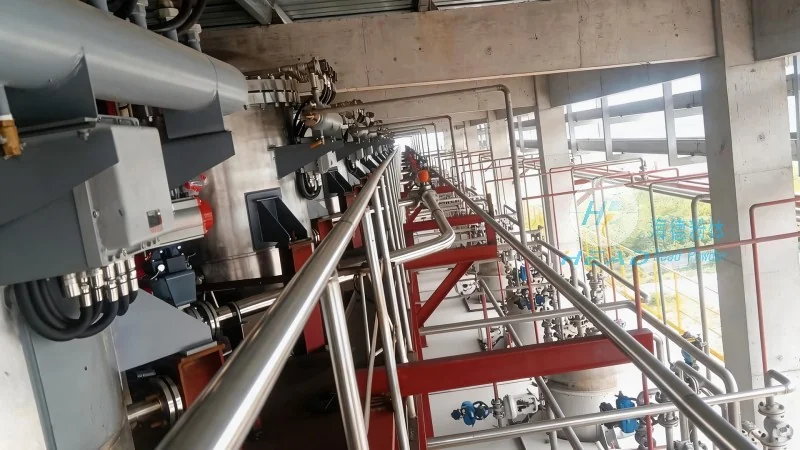
The working principle of the gypsum sand powder conveying system is based on the physical properties of the powder material and the mechanical or pneumatic forces applied to it. For mechanical conveyors like screw conveyors, the principle involves the use of a rotating screw to create a positive displacement, which moves the powder along the conveyor. The screw's pitch and speed determine the conveying capacity and the pressure exerted on the material. In pneumatic systems, the principle relies on the creation of a pressure differential. The material is drawn into the conveying line by the suction created by the air flow, and then propelled forward by the pressure of the air. The choice between mechanical and pneumatic systems depends on factors such as the material's characteristics, the distance to be conveyed, and the required flow rate.
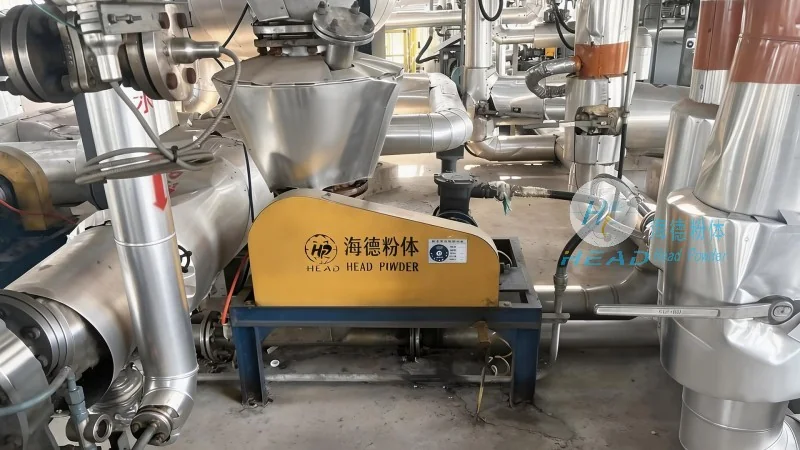
Implementing a gypsum sand powder conveying system offers several advantages for industrial operations. Firstly, it enhances production efficiency by ensuring a continuous and reliable flow of material, reducing bottlenecks and downtime. Secondly, it improves safety by minimizing manual handling of powders, which can be dusty and potentially hazardous. Thirdly, the system allows for precise control over the conveying process, enabling adjustments to meet varying production demands. Additionally, the equipment is designed to handle the specific properties of gypsum sand, such as its fine particle size and potential for caking, ensuring consistent performance.
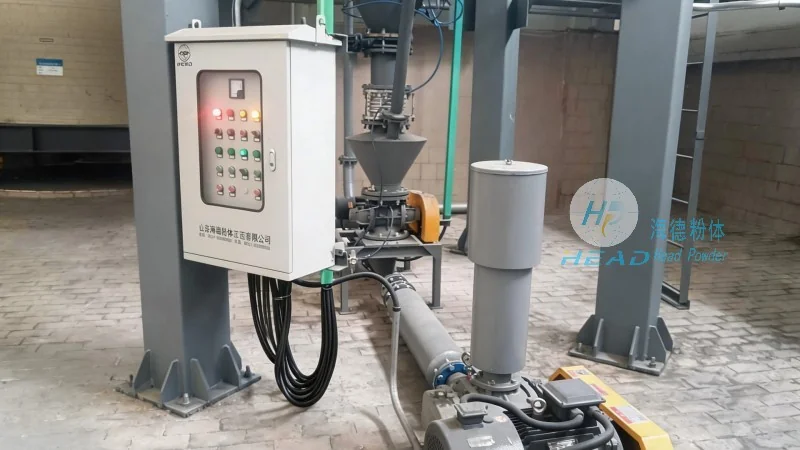
The gypsum sand powder conveying system is applicable in a wide range of industries. In the construction industry, it is used for transporting gypsum sand used in plaster and drywall production. In the chemical industry, it aids in the handling of gypsum-based materials in manufacturing processes. The system is also utilized in mineral processing plants where gypsum is a byproduct or raw material. The versatility of the equipment makes it suitable for various applications, from small-scale operations to large industrial facilities.
To ensure the longevity and optimal performance of the gypsum sand powder conveying system, regular maintenance is essential. This includes cleaning the hopper and conveyor lines to prevent material buildup and clogging, inspecting the feeding device for wear and tear, and checking the control system for any malfunctions. Additionally, operators should follow the manufacturer's guidelines for material loading and flow rates to avoid overloading the system. By adhering to these maintenance practices, businesses can minimize operational issues and maximize the system's lifespan.

 Shandong Headpowder Engineering Co., Ltd.
 156-6277-7102(Manager Zhang)
  0531-83386006
  Zhangqiu District, Jinan City, Shandong Province, China
telephone
WeChatconsult
top