

Principle and Working Scene Characteristics of Aluminum Nitride Powder Pneumatic Conveying Systems
Aluminum nitride (AlN) is a high-performance ceramic material widely utilized in semiconductor manufacturing, electronic devices, and advanced thermal management applications. Its exceptional thermal conductivity, electrical insulation properties, and chemical resistance make it indispensable for modern industrial processes. The efficient and reliable transportation of AlN powder is a critical challenge in production lines, as improper handling can lead to product contamination, equipment damage, or operational inefficiencies. Pneumatic conveying systems have become the preferred solution for AlN powder transport due to their ability to handle fine powders with minimal degradation, ensuring product quality and process consistency. This article delves into the fundamental principles of AlN powder pneumatic conveying systems and examines the key characteristics of their operational environments, providing insights into their practical applications and benefits.
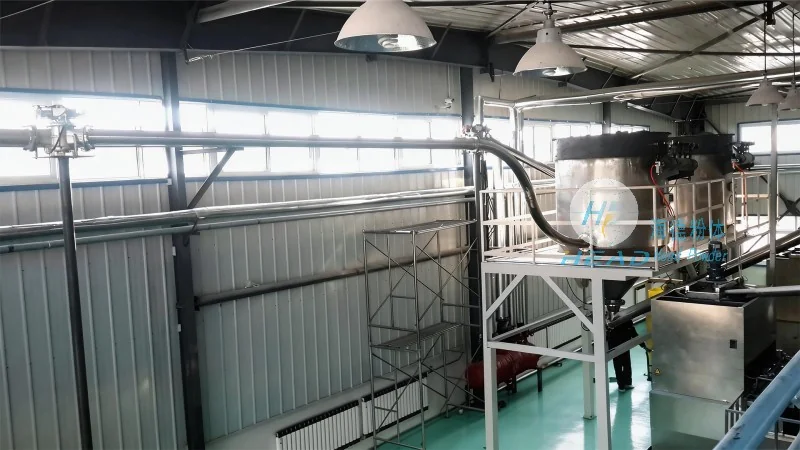
Principle of Pneumatic Conveying for Aluminum Nitride Powder
The pneumatic conveying of AlN powder relies on the fundamental principle of transporting particulate materials through a pipeline using a gas stream. The system operates by creating a pressure differential between the inlet and outlet of the conveying line. A blower or fan generates the necessary airflow, which draws the AlN powder particles into the pipeline. The powder is then suspended in the gas stream and transported to the destination point. The system can be classified into two main categories: dilute-phase and dense-phase conveying. Dilute-phase systems utilize higher gas velocities and lower powder concentrations, suitable for long-distance or high-velocity transport. Dense-phase systems, conversely, operate at lower velocities and higher powder concentrations, providing gentler handling and minimizing particle attrition—critical for delicate materials like AlN. The choice between these systems depends on factors such as the required conveying distance, powder characteristics, and the need to preserve particle integrity.
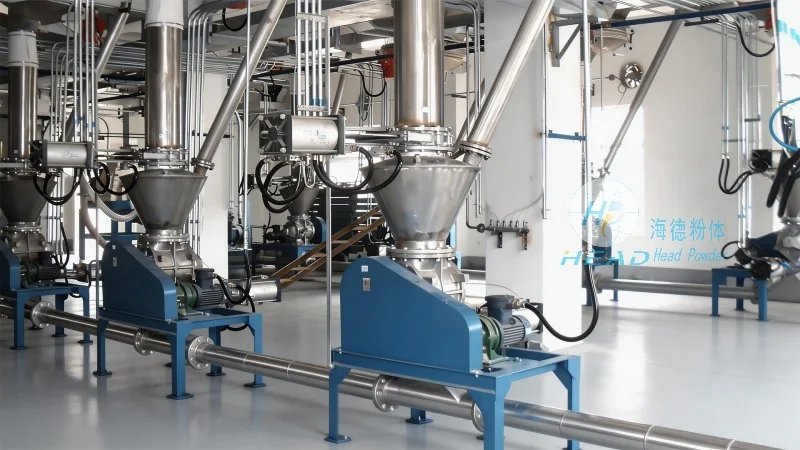
Working Scene Characteristics of AlN Powder Pneumatic Conveying Systems
The operational environment of AlN powder pneumatic conveying systems is defined by several key characteristics that impact performance and efficiency. First, the system must be designed to accommodate the specific physical properties of AlN powder, including its particle size distribution, density, and flowability. AlN powders are typically fine (often in the sub-micron range) and abrasive, requiring specialized equipment to prevent wear and maintain consistent performance. The system's design also emphasizes dust control and containment, as AlN powder is a fine particulate that poses health and safety risks if not properly managed. In industrial settings, this includes features like sealed pipelines, filtration systems, and dust collection units to ensure compliance with environmental regulations and protect personnel. Additionally, the working environment must align with the temperature and pressure requirements of the production process. For example, in semiconductor manufacturing, where AlN is used as a substrate or filler material, the conveying system must maintain a clean, particle-free environment to avoid contamination of sensitive components. The system's flexibility in handling varying production scales is another critical characteristic. It can be scaled from small laboratory applications to large-scale industrial production, adapting to different material throughput requirements. Furthermore, the working scene includes considerations for space constraints and integration with existing production lines, as many facilities have limited room for additional equipment. The system's ability to integrate seamlessly with other equipment, such as mixers, dryers, and packaging units, enhances overall production efficiency and reduces downtime.
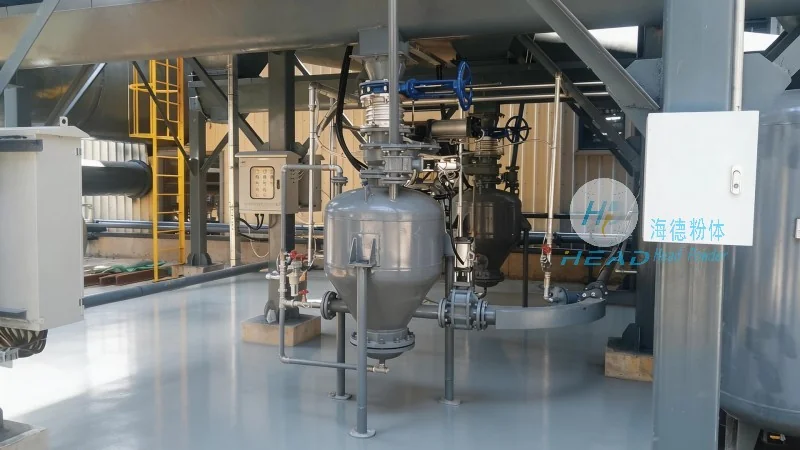
Key Features and Advantages in Real-World Applications
When evaluating AlN powder pneumatic conveying systems, several key features and advantages emerge in practical applications. One of the most significant benefits is the achievement of dust-free and enclosed transport. Unlike traditional bulk handling methods, such as bucket elevators or screw conveyors, pneumatic systems minimize the risk of powder spillage and exposure to personnel. This is particularly important for AlN powder, which can be hazardous if inhaled or ingested, as it may contain fine particles that pose respiratory risks. Another advantage is the system's low maintenance requirements. Pneumatic conveying systems have fewer moving parts compared to mechanical conveyors, reducing the likelihood of breakdowns and lowering operational costs over time. The system's efficiency in energy consumption is also notable. By optimizing the compressed air usage, the system minimizes energy waste while maintaining optimal conveying performance. This is crucial for industries where energy costs are a significant operational expense. Furthermore, the flexibility of pneumatic systems allows for easy integration with other production equipment, creating a seamless material flow from raw material to finished product. This integration capability enhances overall production efficiency and reduces downtime, which is critical for maintaining competitive advantage in the market. For instance, in a semiconductor manufacturing plant, the AlN powder conveying system can be integrated with a powder mixer and a sintering furnace, ensuring a continuous and uninterrupted production process. The system's adaptability to different production scales also makes it suitable for both research and development (R&D) laboratories and large-scale industrial production lines, providing versatility across various applications.