With more than 10‑year industry experience, Shandong Headpowder delivers full‑service pneumatic‑conveying systems and blowers, undertaking nationwide turn‑key powder‑handling projects.
HeadPowder, a leading engineering firm headquartered in Shandong, China, specializes in the design and implementation of advanced pneumatic conveying systems for handling wheat flour powders. This article provides an in-depth exploration of the fundamental working principles and key characteristics of such systems, offering valuable insights for industry professionals seeking to understand or implement efficient powder transport solutions.
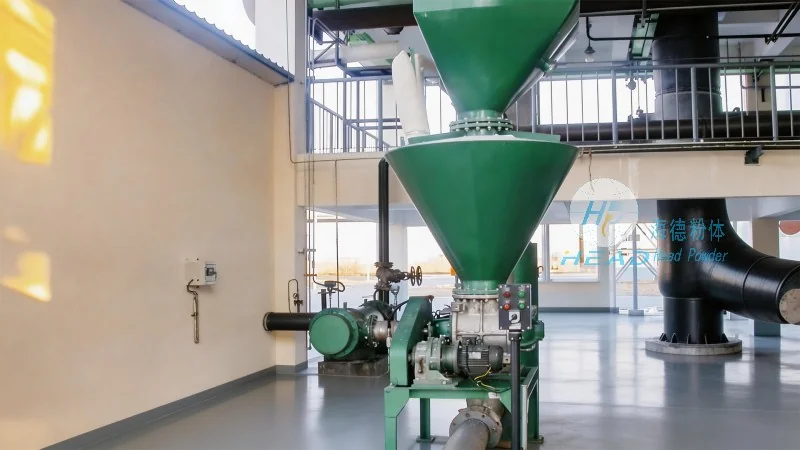
Pneumatic conveying systems operate by utilizing air as the primary medium to transport dry powders, including wheat flour, from one location to another. The core mechanism involves creating a pressure differential between the source and destination points, which drives the flow of both the powder and air mixture. There are two main categories of pneumatic conveying systems: pressure and vacuum systems. In pressure systems, compressed air is introduced into the conveying line at the source, pushing the powder forward. Conversely, vacuum systems create a negative pressure at the destination, drawing the powder through the line.
For wheat flour, a fine and cohesive powder, the system design must address specific challenges such as particle size, moisture content, and bulk density. HeadPowder's expertise lies in selecting the appropriate system configuration—whether it be a dilute-phase or dense-phase system—based on these characteristics. Dilute-phase systems use high-velocity air streams to suspend the powder, ideal for long-distance or high-volume transport. Dense-phase systems employ lower air velocities and higher powder concentrations, which are better suited for delicate powders like wheat flour to prevent degradation and maintain product integrity.
The characteristics of a pneumatic conveying system for wheat flour are determined by its design, operational parameters, and the specific requirements of the application. Some of the most significant features include:
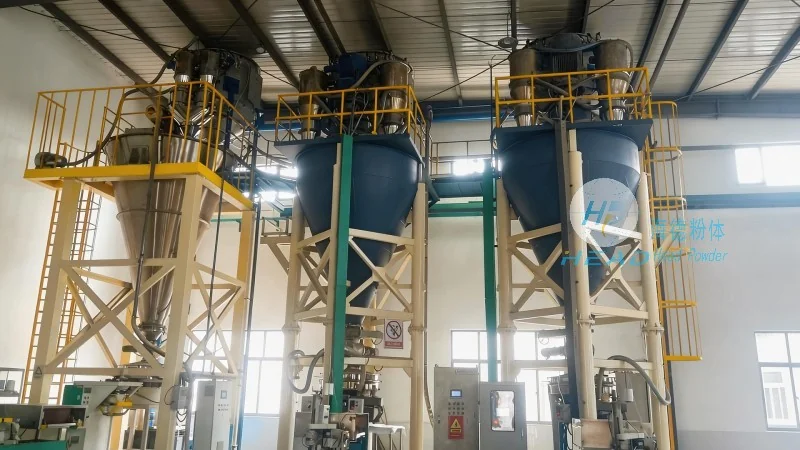
1. Efficiency and Reliability: Pneumatic conveying systems offer high efficiency in transporting wheat flour, with minimal material loss and consistent flow rates. The enclosed system design prevents contamination from external sources, ensuring the purity of the flour. HeadPowder's systems are engineered for reliability, with robust components that can withstand the abrasive nature of fine powders, minimizing downtime and maintenance needs.
2. Versatility in Application: These systems are adaptable to various processing stages, from raw material handling to final product packaging. Whether it's moving wheat flour from storage silos to mixing equipment or transporting it to packaging lines, the system can be customized to meet the specific needs of the production line. The flexibility in system configuration allows for seamless integration with existing infrastructure, reducing installation complexity and costs.
3. Low Maintenance and Operational Costs: Compared to traditional mechanical conveying methods, pneumatic systems require less maintenance due to the absence of moving parts in the conveying line. The use of air as the conveying medium eliminates the need for heavy machinery, reducing operational costs over time. HeadPowder incorporates durable materials and design features that minimize wear and tear, ensuring long-term cost-effectiveness for clients.
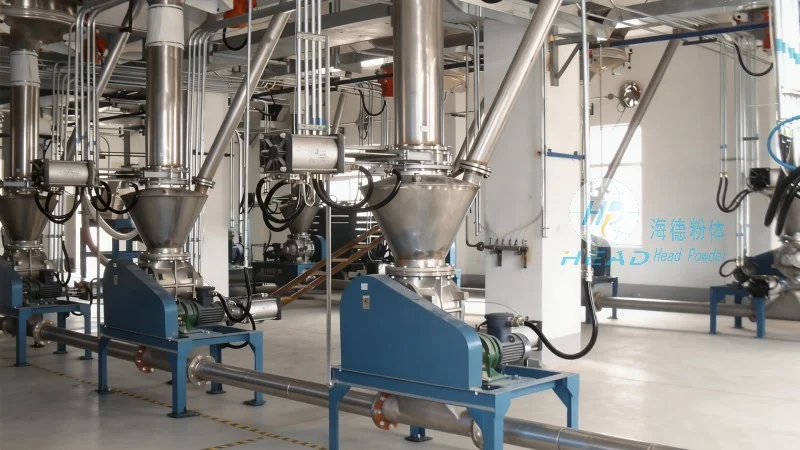
4. Hygienic and Sanitary Design: For food-grade applications like wheat flour, hygiene is paramount. Pneumatic conveying systems are constructed with materials that are easy to clean and sanitize, such as stainless steel. The enclosed design prevents dust accumulation and cross-contamination, meeting stringent food safety regulations. HeadPowder adheres to international hygiene standards, ensuring that their systems are suitable for use in food processing environments without compromising product quality.
5. Energy Efficiency: Modern pneumatic conveying systems are designed to optimize energy usage. By controlling air pressure and flow rates precisely, the system minimizes energy consumption while maintaining efficient transport. HeadPowder incorporates energy-saving technologies, such as variable frequency drives (VFDs), to adjust air flow based on demand, further reducing operational costs and environmental impact.
For businesses in the flour industry, selecting the right pneumatic conveying system is crucial for maintaining operational efficiency, product quality, and cost-effectiveness. HeadPowder, with its headquarters in Shandong, China, brings decades of experience in engineering and manufacturing advanced pneumatic conveying systems tailored for wheat flour powders. The company's commitment to innovation, quality, and customer satisfaction makes it a trusted partner for industries seeking reliable and efficient powder transport solutions. By understanding the working principles and characteristics of pneumatic conveying systems, as outlined above, companies can make informed decisions that enhance their production processes and ensure the quality of their wheat flour products, ultimately driving business success.

 Shandong Headpowder Engineering Co., Ltd.
 156-6277-7102(Manager Zhang)
  0531-83386006
  Zhangqiu District, Jinan City, Shandong Province, China
telephone
WeChatconsult
top