

Working Principle and Features of Borax Granule Pneumatic Conveying Systems
Borax, chemically known as sodium tetraborate decahydrate, is a white crystalline powder widely used in industries such as glass manufacturing, detergents, and agriculture. Its granular form, typically with particle sizes ranging from 0.1 to 2 millimeters, presents unique challenges for material handling due to its abrasive nature and potential for caking. Traditional mechanical conveyors, like screw conveyors or belt conveyors, may not be suitable for borax granules as they can cause excessive wear and material degradation. The borax granule pneumatic conveying system addresses these challenges by using compressed air to transport the material, offering a more gentle and efficient method. This system is particularly important in applications where the integrity of the borax granules must be maintained, such as in food processing or pharmaceutical manufacturing, where contamination or particle size changes can affect product quality.
Working Principle of the Borax Granule Pneumatic Conveying System
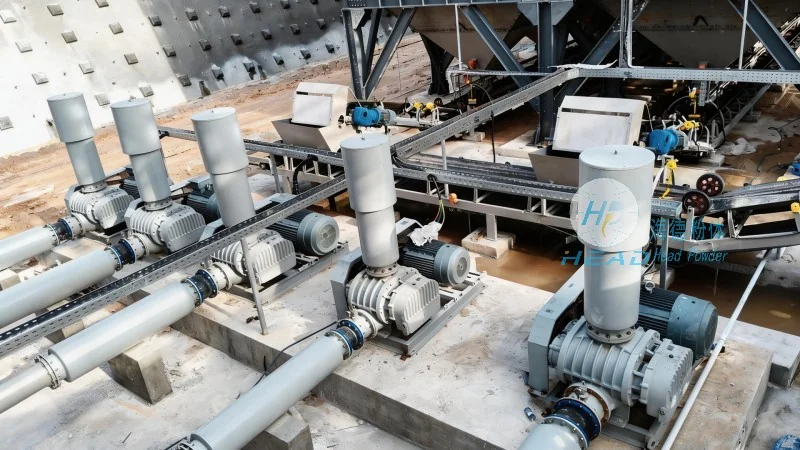
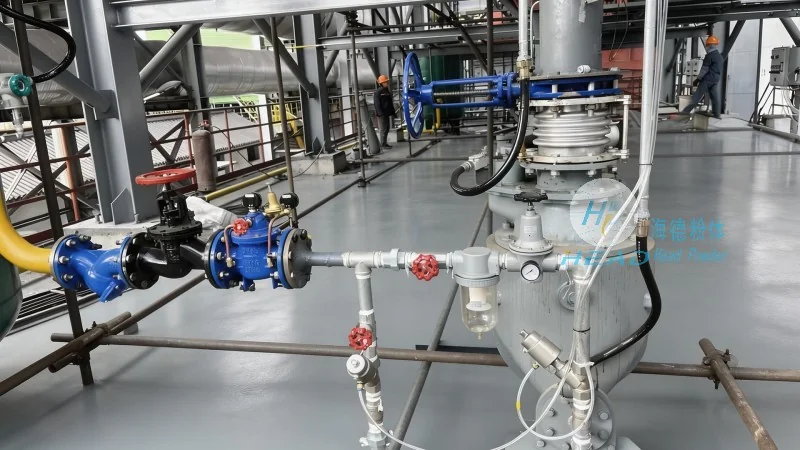
The working principle of the borax granule pneumatic conveying system is based on the entrainment of solid particles by a moving air stream. The system operates by creating a pressure difference between the inlet and outlet of the conveying line. Compressed air is introduced into the system at a controlled pressure and flow rate, typically ranging from 0.5 to 1.5 bar. The air flow is directed through a hopper where the borax granules are fed into the system. The feeder, often a rotary valve or a screw feeder, controls the flow rate of the granules, ensuring a consistent and stable material feed. As the air and granules mix, the air entrains the particles, forming a slurry-like flow that moves through the pipeline. The conveying line is usually made of corrosion-resistant materials like stainless steel or PVC to withstand the chemical properties of borax. The system may include a series of bends, expansions, and reductions in the pipeline to accommodate changes in direction and flow velocity, minimizing pressure losses and ensuring smooth transport. At the receiving end, the system typically includes a separator or a cyclone to separate the air from the granules, allowing the borax to be collected in a receiver or storage tank.
Key Features and Advantages of the System
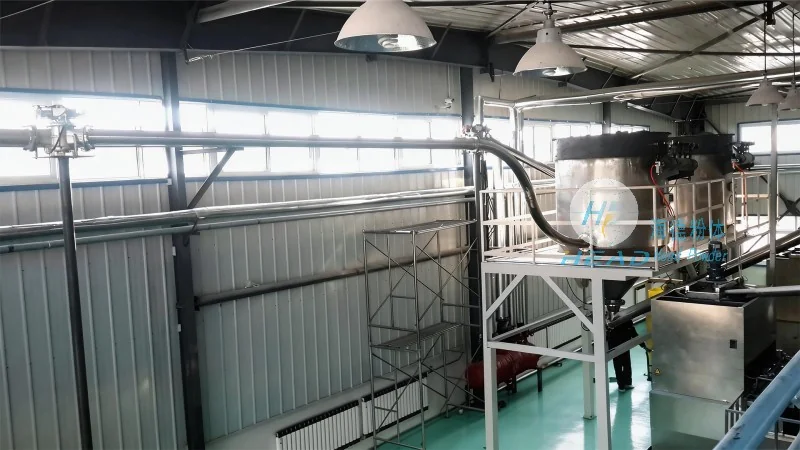
One of the most significant advantages of the borax granule pneumatic conveying system is its ability to handle abrasive and corrosive materials without causing excessive wear on the equipment. The system's design minimizes direct contact between the granules and the conveying components, reducing the need for frequent maintenance and replacement of parts. This results in lower operational costs and higher system reliability over time. Another key feature is the system's flexibility in terms of layout and integration with existing facilities. The pneumatic conveying lines can be installed in various configurations, including vertical, horizontal, or a combination of both, to fit the specific space constraints and process requirements of the plant. The system also offers high material transport efficiency, with the ability to move large quantities of borax granules over long distances with minimal energy consumption compared to traditional methods. Additionally, the system provides excellent control over the material flow, allowing for precise regulation of the feed rate and pressure, which is crucial for maintaining consistent product quality. The real-time monitoring capabilities of the system enable operators to track key parameters such as pressure, flow rate, and temperature, ensuring optimal performance and early detection of any potential issues. This proactive approach helps in preventing system downtime and maintaining continuous production.
Company Profile: Shandong HeadPowder Engineering Co., Ltd.
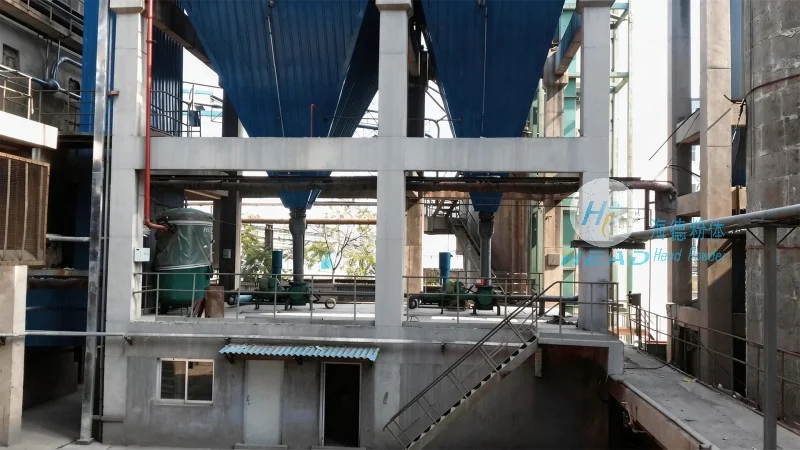
HeadPowder, a prominent player in the powder and bulk material handling industry, is dedicated to providing innovative and reliable solutions for the transportation of borax granules and other similar materials. As a professional manufacturer based in Shandong, China, HeadPowder combines years of engineering expertise with advanced technology to develop customized pneumatic conveying systems that meet the diverse needs of its clients. The company's commitment to quality is evident in its adherence to international standards and rigorous quality control processes. HeadPowder's team of experienced engineers works closely with clients to understand their specific requirements, from material characteristics to operational constraints, and designs systems that are tailored to deliver optimal performance. The company's product line includes a range of pneumatic conveying systems, from simple low-capacity units to complex high-capacity networks, ensuring that clients can find a solution that matches their production scale and budget. HeadPowder also provides comprehensive after-sales support, including installation, training, and maintenance services, to ensure that its systems operate at peak efficiency throughout their service life. With a strong focus on customer satisfaction and long-term partnerships, HeadPowder has established itself as a trusted supplier of pneumatic conveying systems in the global market.