With more than 10‑year industry experience, Shandong Headpowder delivers full‑service pneumatic‑conveying systems and blowers, undertaking nationwide turn‑key powder‑handling projects.
Silicomanganese, a vital alloy in the steel manufacturing sector, plays a crucial role in enhancing the mechanical properties of steel. Its production and handling require sophisticated systems to ensure efficiency and safety. The pneumatic conveying system stands out as an effective method for transporting silicomanganese and its raw materials, such as manganese ore and silicon, from storage to processing units. This article delves into the fundamental principles of silicomanganese pneumatic conveying, detailing the system's components, operational mechanisms, and the expertise of Shandong HeadPowder Engineering Co., Ltd. in providing tailored solutions for industrial applications.
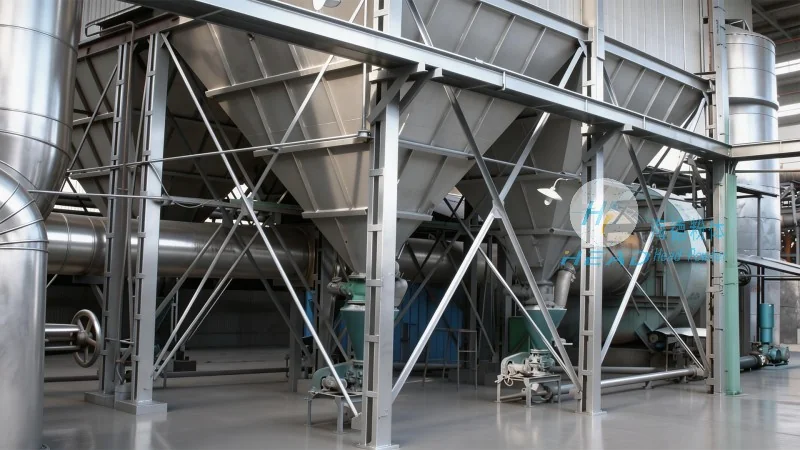
The silicomanganese pneumatic conveying system comprises several critical components, each designed to perform a specific function in the material transport process. The material hopper serves as the initial storage unit, holding the silicomanganese or raw materials in a controlled manner. It is equipped with a discharge valve to regulate the flow of material into the system. The air compressor or blower is the heart of the system, generating the necessary air pressure to create a flow that moves the material. This component can be either a positive displacement blower or a centrifugal fan, chosen based on the system's requirements. The conveying line, typically made of stainless steel or other corrosion-resistant materials, transports the air and material mixture. Its design, including the diameter and length, is optimized to maintain the required air velocity for efficient particle suspension. The receiver or discharge hopper collects the material at the end of the conveying line, often equipped with a filter or cyclone to separate the material from the air. Finally, the control system manages the operation of the air compressor, hopper levels, and other components, ensuring smooth and safe operation.
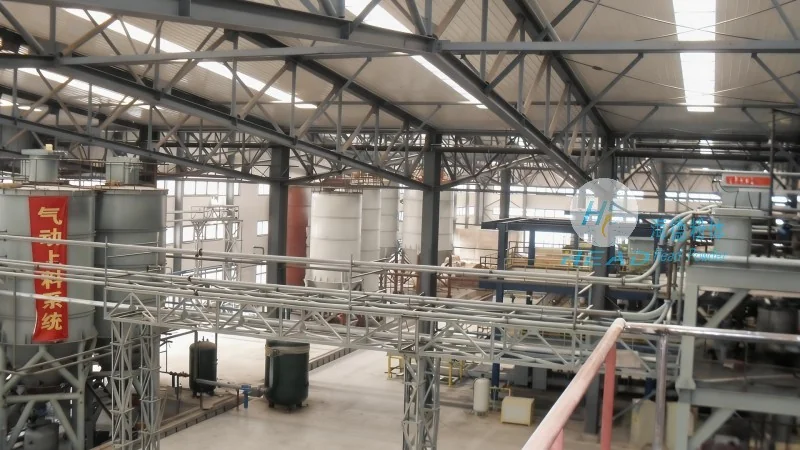
The pneumatic conveying process operates on the principle of fluid dynamics, where air is used as the conveying medium to transport solid particles. In a positive pressure system, the air compressor forces air into the conveying line, creating a high-pressure air stream that pulls the silicomanganese particles along with it. The air velocity is maintained above the minimum fluidization velocity of the particles, ensuring they remain suspended and do not settle or clog the line. The system may use either a dilute-phase or dense-phase conveying method. Dilute-phase conveying uses higher air velocities and lower material concentrations, suitable for short to medium distances. Dense-phase conveying, on the other hand, uses lower air velocities and higher material concentrations, ideal for longer distances and preventing material degradation. The choice between these methods depends on factors such as the material's properties, the required transport distance, and the desired system efficiency. The process begins when the material is released from the hopper into the conveying line, where it is entrained by the air flow. As the mixture travels through the line, it passes through any necessary components like cyclones or filters, which separate the material from the air. The material is then deposited into the receiver hopper, while the air is either recirculated or discharged, depending on the system design.
Compared to conventional material handling methods like belt conveyors or bucket elevators, pneumatic conveying offers several distinct advantages for silicomanganese processing. One of the primary benefits is the reduced risk of material degradation. Since the material is transported in a closed system with minimal contact with equipment, it is less prone to breakage or contamination. This is particularly important for silicomanganese, which can be sensitive to moisture and temperature changes. Additionally, pneumatic conveying systems are more compact and can be installed in confined spaces, making them suitable for facilities with limited floor area. The system also provides better dust control, as the material is contained within the conveying line, reducing airborne dust and improving workplace safety. Maintenance costs are generally lower compared to mechanical systems, as there are fewer moving parts and less wear and tear. Furthermore, the flexibility of pneumatic conveying allows for easy integration with other processing equipment, enabling seamless material flow throughout the production line.
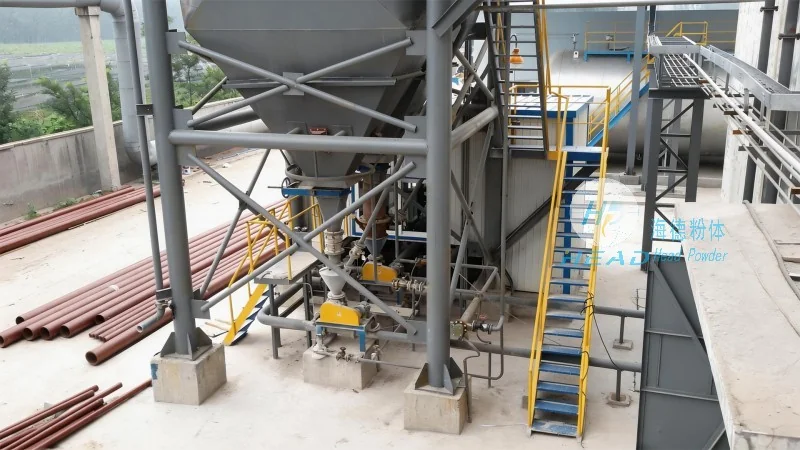
Shandong HeadPowder Engineering Co., Ltd., operating under the brand headpowder, is a leading manufacturer of pneumatic conveying systems for the silicomanganese industry. With headquarters in Shandong, China, the company has built a strong reputation for delivering high-quality, reliable solutions tailored to the specific needs of its clients. Their expertise lies in understanding the unique properties of silicomanganese and designing systems that optimize performance and efficiency. The company offers customized solutions, including system design, manufacturing, installation, and after-sales support. They work closely with clients to assess their operational requirements, material characteristics, and space constraints, ensuring that the final system meets all specifications. The systems provided by headpowder are built with durable materials and advanced control technologies, ensuring long-term operation with minimal downtime. By choosing headpowder, clients gain access to professional engineering services, ensuring that their pneumatic conveying system is optimized for their specific application, thereby enhancing productivity and reducing operational costs.

 Shandong Headpowder Engineering Co., Ltd.
 156-6277-7102(Manager Zhang)
  0531-83386006
  Zhangqiu District, Jinan City, Shandong Province, China
telephone
WeChatconsult
top