With more than 10‑year industry experience, Shandong Headpowder delivers full‑service pneumatic‑conveying systems and blowers, undertaking nationwide turn‑key powder‑handling projects.
Limestone is a widely used material in various industrial applications, including construction, chemical production, and environmental control. Efficient and reliable material handling is crucial for optimizing production processes and reducing operational costs. Pneumatic conveying systems offer a versatile and effective method for transporting limestone, providing advantages such as low maintenance, minimal dust generation, and the ability to handle a wide range of particle sizes. This article explores several key solutions for limestone pneumatic conveying, highlighting the technical aspects, benefits, and practical considerations for implementation.
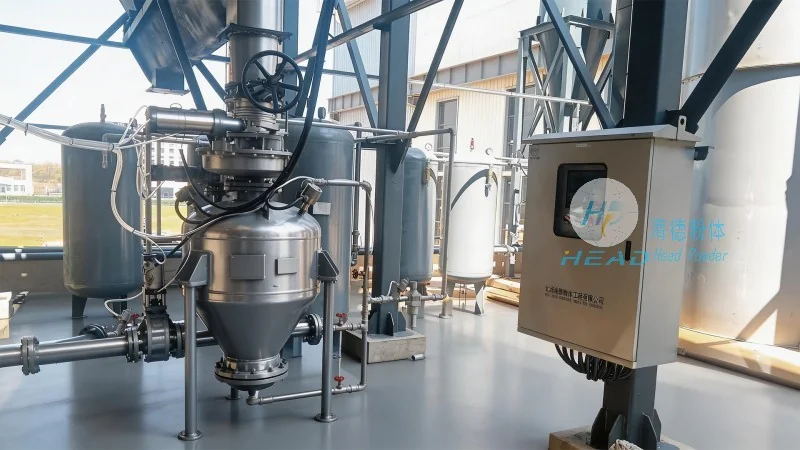
HeadPowder, a leading provider of material handling solutions, specializes in designing and manufacturing advanced pneumatic conveying systems. With years of experience in the industry, the company has developed a comprehensive range of products tailored to meet the diverse needs of clients. Based in Shandong, China, HeadPowder leverages its expertise to deliver high-quality, customized solutions that enhance operational efficiency and ensure long-term performance. The company's commitment to innovation and customer satisfaction has established it as a trusted partner in the material handling sector.
Dilute phase pneumatic conveying is a common and effective method for transporting limestone over moderate distances. This system operates by injecting air into the material stream, creating a dilute mixture of limestone particles and air. The air velocity is maintained at a level sufficient to keep the particles suspended, allowing them to be transported through the pipeline. The primary advantages of dilute phase conveying include its ability to handle high flow rates, low pressure drop, and minimal equipment complexity. It is particularly suitable for applications where the limestone is relatively dry and free-flowing, and the distance between the source and destination is not excessively long. HeadPowder offers specialized dilute phase systems that are optimized for limestone characteristics, ensuring efficient and reliable operation.
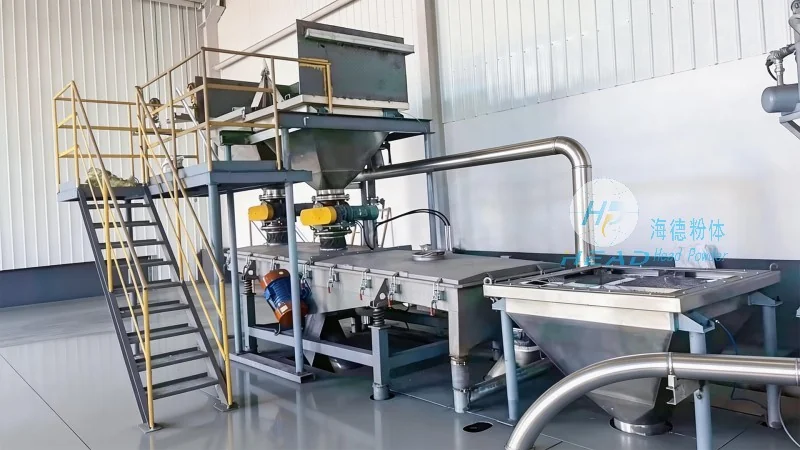
Dense phase pneumatic conveying, also known as low velocity conveying, is an alternative method that is ideal for transporting limestone over longer distances or when the material is more abrasive or contains moisture. Unlike dilute phase systems, dense phase conveying operates at lower air velocities, which results in a higher concentration of limestone particles in the air stream. This method reduces the risk of particle degradation and equipment wear, making it suitable for sensitive limestone products. The system typically uses a positive displacement blower or compressor to generate the necessary pressure, ensuring a steady and controlled flow of material. HeadPowder's dense phase solutions are designed to handle challenging limestone properties, providing consistent performance and minimal downtime.
Hybrid pneumatic conveying systems combine the features of both dilute and dense phase methods, offering a flexible solution for various limestone handling requirements. These systems can switch between dilute and dense phase operation based on the specific conditions of the material and the distance to be covered. The hybrid approach allows for optimized energy consumption and operational efficiency, as the system can adjust its air velocity and pressure to match the current conveying needs. This flexibility makes hybrid systems particularly advantageous for applications with varying limestone characteristics or fluctuating production demands. HeadPowder provides advanced hybrid systems that incorporate intelligent control technologies, enabling real-time monitoring and adjustment to ensure optimal performance.
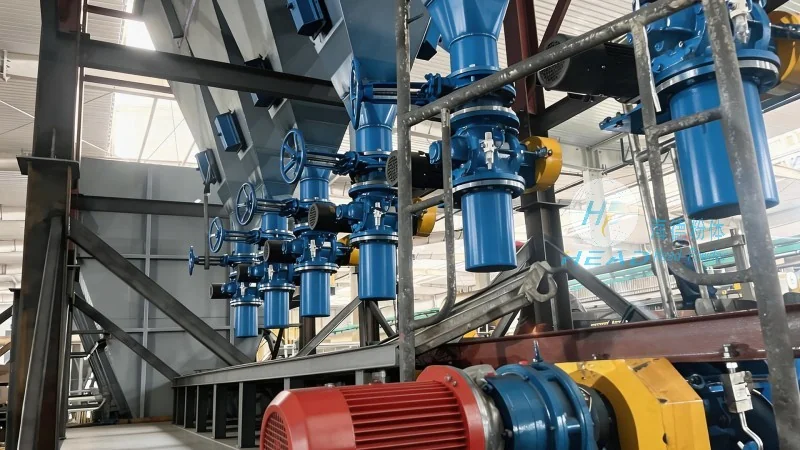
When implementing a limestone pneumatic conveying system, several factors must be carefully considered to ensure successful operation and long-term reliability. The first consideration is the particle size and density of the limestone, as these properties directly impact the system's design and performance. Larger or denser particles may require higher air velocities or more robust equipment to maintain suspension. The distance between the source and destination is another critical factor, as it determines whether a dilute or dense phase system is more appropriate. Additionally, the presence of moisture or dust in the limestone can affect the system's efficiency and may require additional equipment such as filters or drying units. HeadPowder's engineers work closely with clients to assess these factors and develop customized solutions that address specific challenges, ensuring that the chosen system meets all operational requirements.
Choosing the right pneumatic conveying solution for limestone is essential for maximizing productivity and minimizing costs in industrial applications. Whether using dilute phase, dense phase, or hybrid systems, the key is to select a solution that matches the specific characteristics of the limestone and the operational requirements of the facility. Shandong HeadPowder Engineering Co., Ltd. offers a comprehensive range of pneumatic conveying systems tailored to the needs of limestone handling, providing reliable, efficient, and cost-effective solutions. For more information or to discuss specific requirements, please contact HeadPowder at its headquarters in Shandong, China.

 Shandong Headpowder Engineering Co., Ltd.
 156-6277-7102(Manager Zhang)
  0531-83386006
  Zhangqiu District, Jinan City, Shandong Province, China
telephone
WeChatconsult
top