With more than 10‑year industry experience, Shandong Headpowder delivers full‑service pneumatic‑conveying systems and blowers, undertaking nationwide turn‑key powder‑handling projects.
HeadPowder, a leading enterprise in the field of powder processing technology, specializes in the design, manufacturing, and application of pneumatic conveying systems for calcium carbonate. This article provides a detailed classification of these systems and an analysis of their practical applications, highlighting the technical advantages and operational efficiency they offer in industrial settings.
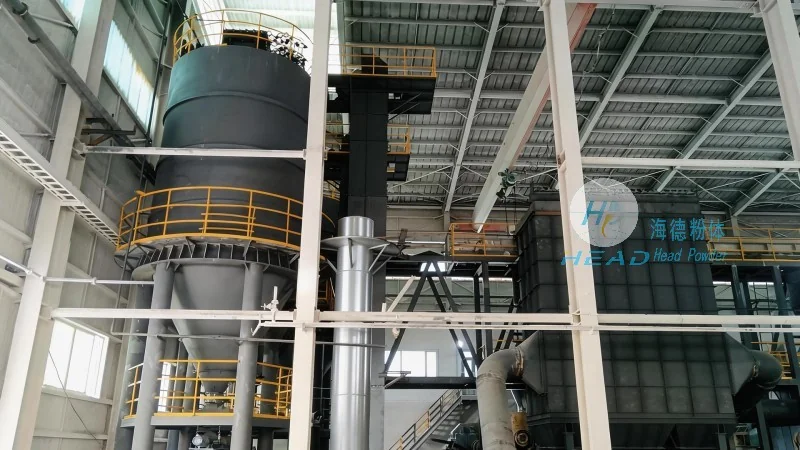
Calcium carbonate (CaCO₃) is a widely used industrial material, prevalent in applications such as papermaking, plastics, coatings, and food processing. The efficient handling and transportation of calcium carbonate powders are critical to maintaining production line efficiency and product quality. Pneumatic conveying systems have emerged as a preferred solution for this purpose, offering advantages like dust-free operation, low maintenance, and the ability to transport materials over long distances without the need for mechanical components like belts or buckets.
Based on the principle of air flow and material transport, calcium carbonate pneumatic conveying systems can be broadly classified into two main categories: dilute-phase and dense-phase systems. Each type has distinct characteristics and is suitable for different operational requirements.
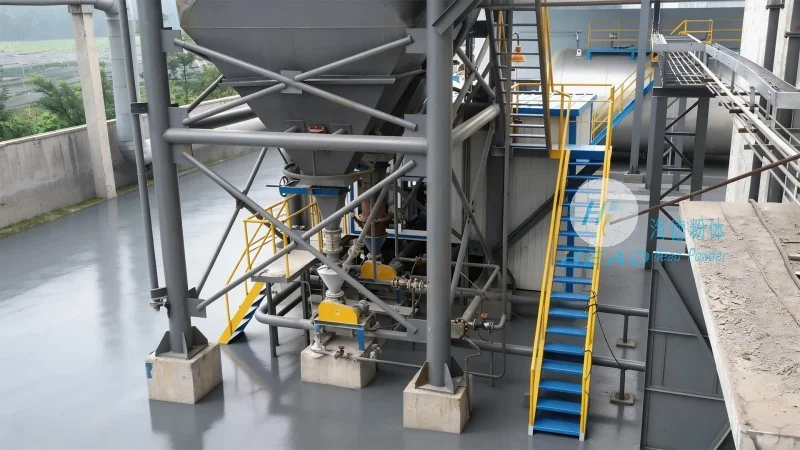
Dilute-phase systems operate by suspending the calcium carbonate particles in a high-velocity air stream. The material is carried through the pipeline as a fine mist, with the air-to-material ratio typically ranging from 5:1 to 20:1. This method is ideal for short to medium-distance transport and is commonly used in applications where the material is relatively fine and requires minimal pressure drop. The system is characterized by low pressure requirements, making it suitable for installations where energy consumption is a concern. However, dilute-phase systems may not be suitable for transporting highly abrasive or sticky calcium carbonate powders, as the high air velocity can cause wear and material degradation.
Dense-phase systems, also known as low-velocity or positive displacement systems, transport calcium carbonate particles in a dense, slurry-like state. The air-to-material ratio is much lower, typically ranging from 0.5:1 to 2:1, and the material is moved at a slower velocity compared to dilute-phase systems. This approach is particularly effective for long-distance transport, as it reduces wear on the pipeline and equipment, and minimizes material degradation. Dense-phase systems are also better suited for handling abrasive or sticky powders, as the lower velocity reduces the risk of wear and material agglomeration. However, they require higher pressure and more complex equipment, including positive displacement blowers or compressors.
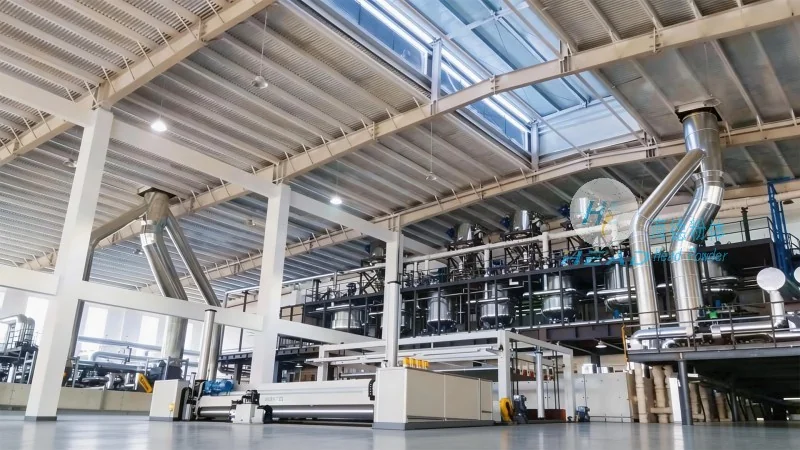
Both dilute-phase and dense-phase pneumatic conveying systems for calcium carbonate share common components, including a material feeder, a conveying line, a separator, and a receiver. The specific design and selection of these components depend on the system classification and the operational requirements. For example, in dilute-phase systems, a rotary valve or a star feeder is commonly used to feed the material into the pipeline, while in dense-phase systems, a positive displacement feeder is preferred to maintain a consistent material flow rate. The conveying line is typically made of stainless steel or other corrosion-resistant materials to withstand the abrasive nature of calcium carbonate. The separator, often a cyclone or a bag filter, is used to separate the material from the air stream and return the material to the receiver. The receiver is designed to store the material and prevent dust emissions.
The choice of pneumatic conveying system for calcium carbonate depends on several factors, including the particle size distribution, the moisture content, the abrasiveness of the material, and the distance and layout of the production line. Dilute-phase systems are often preferred for short-distance transport in applications where the material is fine and non-abrasive, such as in the papermaking industry for transporting calcium carbonate filler. Dense-phase systems, on the other hand, are more suitable for long-distance transport in applications where the material is coarse or abrasive, such as in the plastics industry for transporting calcium carbonate used as a filler in polymer compounds.
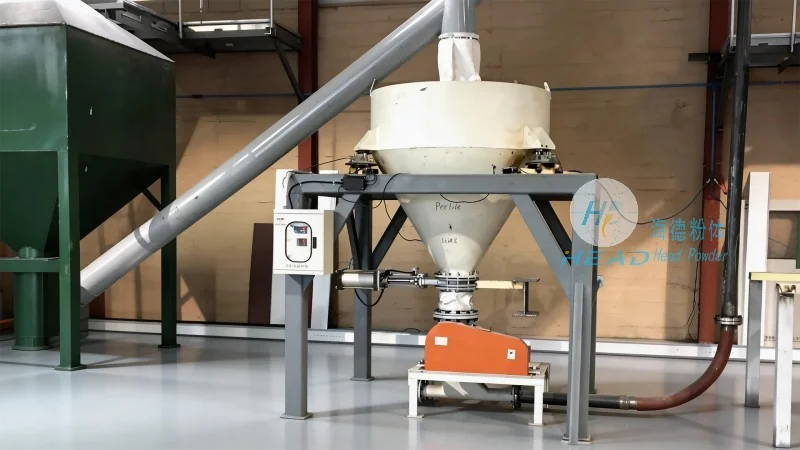
Pneumatic conveying systems for calcium carbonate offer several operational advantages, including dust-free operation, which improves workplace safety and reduces environmental impact. The systems are also relatively low maintenance, as they have fewer moving parts compared to mechanical conveying systems. Additionally, the ability to transport materials over long distances without the need for intermediate storage or handling points enhances overall production efficiency. However, there are also considerations to keep in mind. For instance, the energy consumption of pneumatic conveying systems can be high, especially for dense-phase systems, due to the higher pressure requirements. Furthermore, the system design must account for the potential for material buildup or blockages in the pipeline, which can be mitigated through proper material handling and system maintenance.
Calcium carbonate pneumatic conveying systems are a vital component in modern industrial operations, offering efficient and reliable transportation of calcium carbonate powders. The classification into dilute-phase and dense-phase systems allows for tailored solutions to meet specific operational requirements, ensuring optimal performance and minimal material degradation. As a leading provider in this field, Shandong HeadPowder Engineering Co., Ltd. leverages advanced technology and expertise to design and implement customized pneumatic conveying systems that meet the unique needs of its clients, contributing to improved productivity and operational efficiency in various industrial sectors.

 Shandong Headpowder Engineering Co., Ltd.
 156-6277-7102(Manager Zhang)
  0531-83386006
  Zhangqiu District, Jinan City, Shandong Province, China
telephone
WeChatconsult
top