

Lithium Oxalate Technical Specifications and Conveying System Process
Shandong HeadPowder Engineering Co., Ltd., commonly known as HeadPowder, specializes in the production and supply of high-quality lithium oxalate. This document provides a detailed overview of the technical parameters of lithium oxalate and the corresponding conveying system process, which is crucial for ensuring efficient and safe handling of the material in industrial applications.
Key Technical Parameters of Lithium Oxalate
Lithium oxalate, with the chemical formula LiC₂O₄, is a white crystalline powder widely used in the battery industry as a precursor for lithium ion batteries. The technical parameters of lithium oxalate are critical for its performance and compatibility in various manufacturing processes. Key parameters include:
- Purity: Typically, lithium oxalate is available with a purity level of 99.9% or higher, ensuring minimal impurities that could affect battery performance.
- Particle Size: The particle size distribution is an important factor, often ranging from 100 mesh to 325 mesh, which influences the solubility and reaction rate during battery production.
- Moisture Content: Low moisture content is essential to prevent hydrolysis and maintain the stability of the material. The standard moisture content is usually below 0.5%.
- Density: The bulk density of lithium oxalate is approximately 0.8-1.0 g/cm³, which affects the design of storage and conveying equipment.
Conveying System Process for Lithium Oxalate
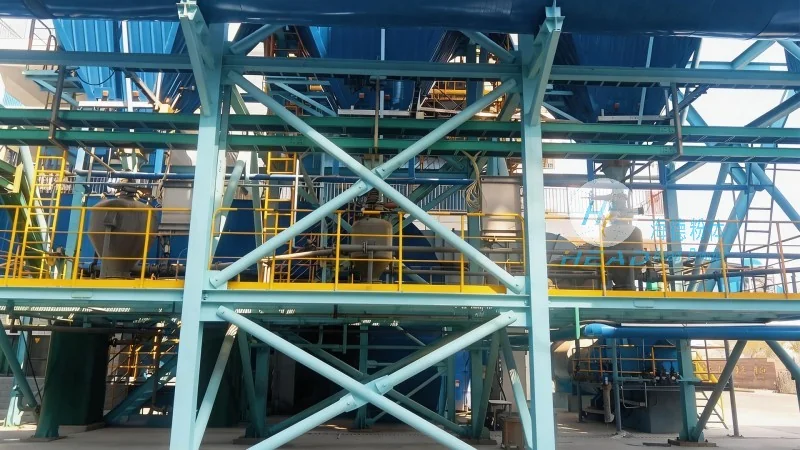
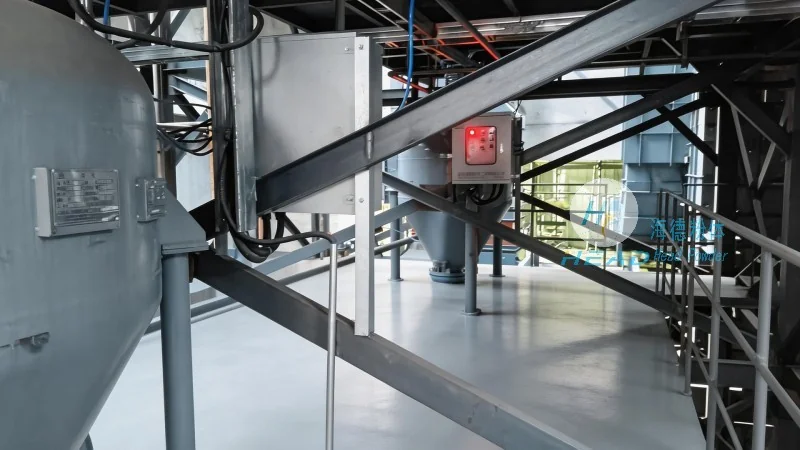
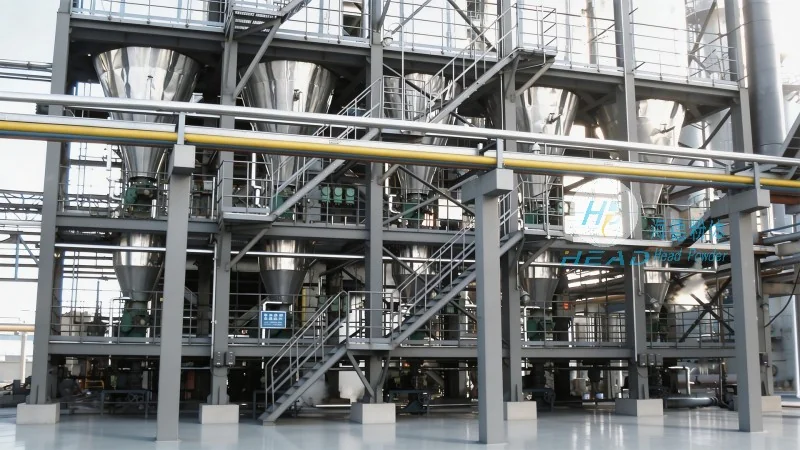
The conveying system for lithium oxalate is designed to handle the material safely and efficiently, considering its chemical properties and physical characteristics. The process typically involves several key components and steps:
- Storage: Lithium oxalate is stored in sealed, moisture-proof containers to prevent exposure to air and moisture. The storage area is equipped with ventilation systems to maintain a dry environment.
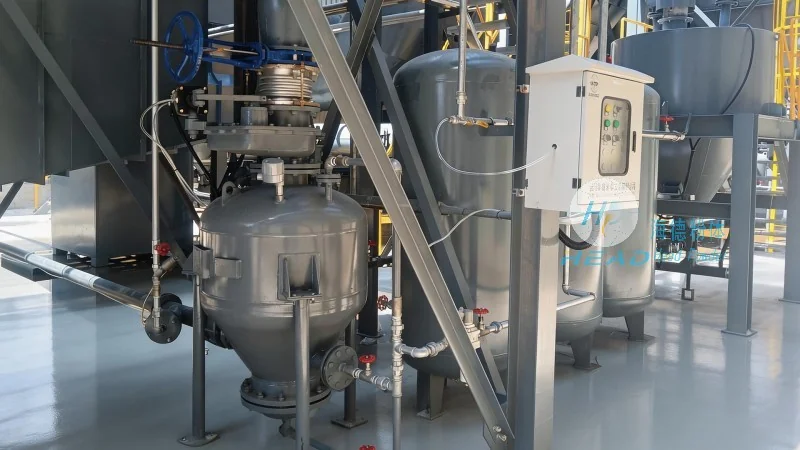
- Pneumatic Conveying: For long-distance transport, a pneumatic conveying system is commonly used. This system uses compressed air to transport the powder through a pipeline, ensuring minimal dust generation and contamination. The system includes a hopper, a rotary valve, and a venturi tube to control the flow of the material.
- Electrostatic Discharge (ESD) Protection: Given the electrostatic properties of lithium oxalate, the conveying system incorporates ESD measures such as grounding and anti-static coatings on equipment to prevent static buildup that could lead to sparks or fires.
- Material Handling Equipment: Conveyors, such as belt conveyors or screw conveyors, are used for short-distance transport within the production facility. These systems are designed with smooth surfaces to minimize material degradation and ensure consistent flow.
Quality Control and Safety Measures
During the conveying process, strict quality control measures are implemented to ensure the integrity of the lithium oxalate. Regular sampling and testing are conducted to verify the purity and particle size of the material. Additionally, safety protocols are in place to handle any potential spills or leaks, including the use of personal protective equipment (PPE) and emergency response plans.
Conclusion
Shandong HeadPowder Engineering Co., Ltd. provides comprehensive solutions for the handling of lithium oxalate, including advanced conveying systems that adhere to industry standards for safety and efficiency. By adhering to strict technical parameters and robust process controls, the company ensures that lithium oxalate is delivered in optimal condition for its intended applications in the battery industry.