With more than 10‑year industry experience, Shandong Headpowder delivers full‑service pneumatic‑conveying systems and blowers, undertaking nationwide turn‑key powder‑handling projects.
For industries dealing with silica sand, efficient material handling is crucial. Pneumatic conveying systems offer a reliable solution for transporting bulk materials like silica sand over short to medium distances. This article provides a comprehensive overview of the design calculations and equipment selection process tailored for silica sand applications, emphasizing the expertise of Shandong HeadPowder Engineering Co., Ltd. (headpowder), a leading provider in the field.
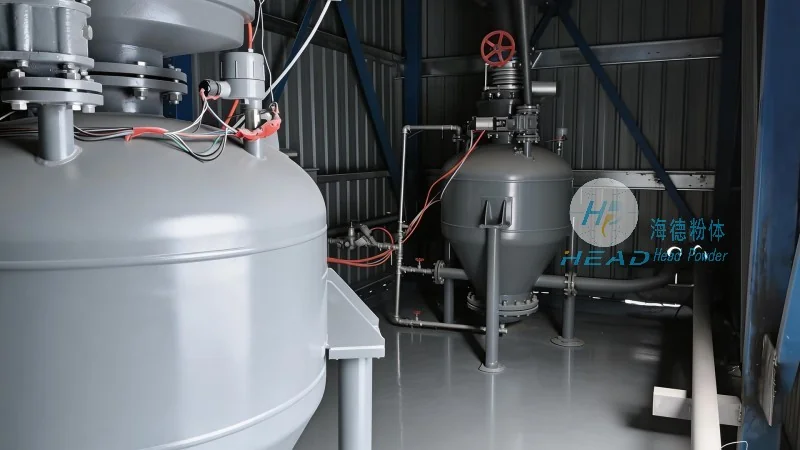
The success of a pneumatic conveying system for silica sand hinges on accurate design calculations that account for material properties, system layout, and operational requirements. Several critical factors must be considered to ensure optimal performance and longevity of the equipment. First, the physical characteristics of silica sand, such as particle size distribution, density, and moisture content, directly impact the selection of conveying velocity and system pressure. Larger or denser particles may require higher air velocities to prevent blockages and ensure smooth flow. Additionally, moisture content can affect the material's flowability and friction properties, necessitating adjustments in air flow rates and system design.
Second, the system layout and distance between the loading and discharge points are essential design parameters. The conveying distance determines the required air pressure and power consumption. For short distances, low-pressure systems may suffice, while longer distances often demand high-pressure or positive displacement systems to maintain material transport efficiency. The layout also influences the choice of pipeline configuration—straight, curved, or with bends—each affecting pressure drop and energy consumption. Properly accounting for these factors in the design phase minimizes operational issues and reduces maintenance costs.
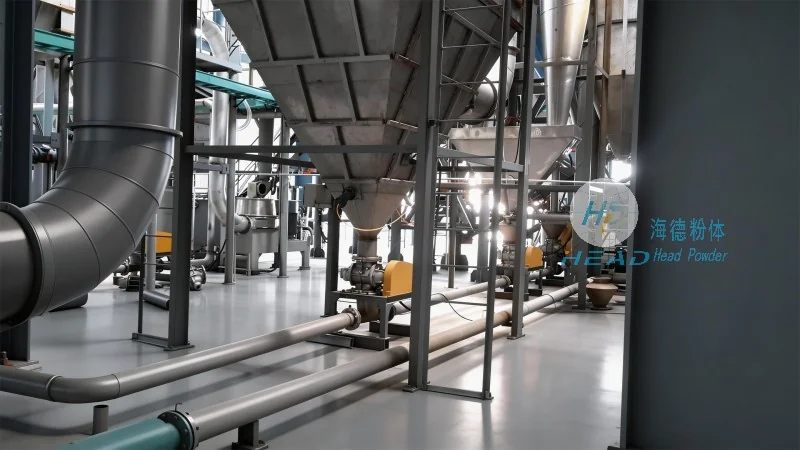
Third, the type of pneumatic conveying system (e.g., dilute phase, dense phase, or hybrid) must align with the application's specific needs. Dilute phase systems use high air velocities to suspend particles in the air stream, suitable for short distances and low to medium material loads. Dense phase systems, on the other hand, operate at lower velocities, using higher air volumes to push material in a slurry-like state, ideal for longer distances and high material throughput. Hybrid systems combine elements of both, offering flexibility for varying conditions. The selection of the system type is based on factors like material handling capacity, distance, and the need for gentle material handling to avoid degradation.
Once the design calculations are finalized, the next step is selecting the appropriate equipment for the silica sand pneumatic conveying system. The key components include the air compressor, material feeders, pipelines, and control systems. The air compressor is the heart of the system, providing the necessary pressure and airflow. For silica sand applications, high-efficiency, oil-free compressors are often preferred to prevent contamination of the material and ensure clean conveying. The compressor's capacity must match the system's air demand, calculated based on the material's flow rate and the required conveying velocity.
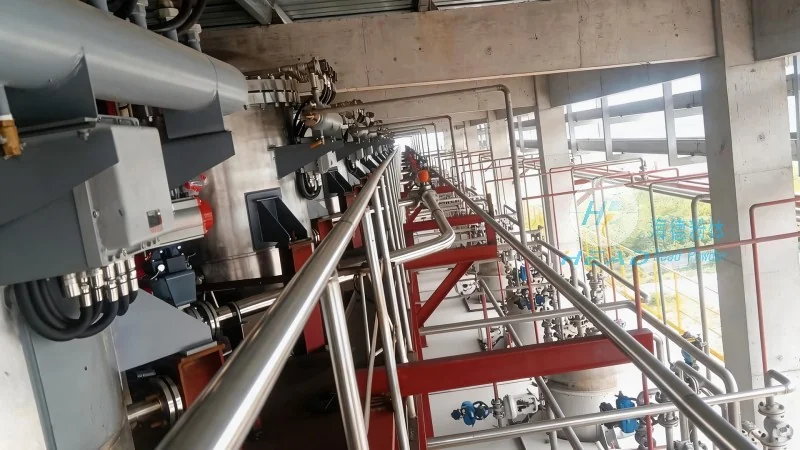
Material feeders are critical for controlling the material flow rate and preventing surges or blockages. For silica sand, screw feeders or rotary valves are commonly used. Screw feeders provide a continuous, controlled feed, while rotary valves offer a more precise, on-demand material discharge. The choice depends on the material's flowability and the system's operational requirements. Properly sized and maintained feeders ensure consistent material delivery, which is vital for maintaining system efficiency and preventing pipeline wear.
Pipelines are another critical component, with the material's particle size and density influencing the pipe diameter and material of construction. Larger or abrasive particles may require thicker-walled pipes or specialized materials like stainless steel to withstand wear and prevent corrosion. The pipeline layout, including bends and elbows, must be designed to minimize pressure drop and avoid material accumulation. Properly sized and routed pipelines ensure smooth material transport and reduce energy consumption.
Control systems play a vital role in optimizing the operation of the pneumatic conveying system. Modern control systems use sensors and automation to monitor parameters such as pressure, flow rate, and material level. These systems can adjust air pressure and flow rates in real-time, responding to changes in material load or system conditions. This automation enhances system efficiency, reduces energy costs, and minimizes the risk of equipment failure. For silica sand applications, reliable control systems are essential to maintain consistent material handling and ensure system longevity.
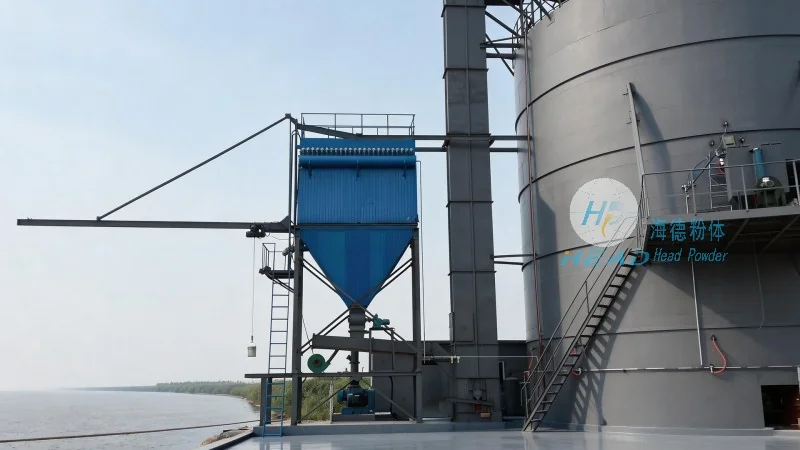
Shandong HeadPowder Engineering Co., Ltd. (headpowder) has extensive experience in designing and implementing pneumatic conveying systems for silica sand applications. One recent project involved a client in the glass manufacturing industry, where the need to transport silica sand from a storage silo to a production line was critical. The client required a system that could handle high material throughput while maintaining low maintenance costs.
headpowder's engineering team first conducted a thorough analysis of the material properties, including particle size distribution and moisture content. Based on the analysis, a high-pressure dilute phase system was selected, with a conveying distance of 150 meters. The design calculations determined the required air pressure (approximately 0.8 MPa) and airflow rate (around 10 m³/min). The air compressor selected was an oil-free, variable-speed model, providing flexibility in adjusting air flow as needed.

 Shandong Headpowder Engineering Co., Ltd.
 156-6277-7102(Manager Zhang)
  0531-83386006
  Zhangqiu District, Jinan City, Shandong Province, China
telephone
WeChatconsult
top