With more than 10‑year industry experience, Shandong Headpowder delivers full‑service pneumatic‑conveying systems and blowers, undertaking nationwide turn‑key powder‑handling projects.
For industrial applications involving the transportation of lutic materials, such as loess or silt, the design and selection of pneumatic conveying systems require meticulous engineering calculations and equipment optimization. This article provides a comprehensive overview of the design principles, key calculations, and equipment selection criteria for efficient and reliable lutic material pneumatic conveying systems, with a focus on practical applications and performance optimization.
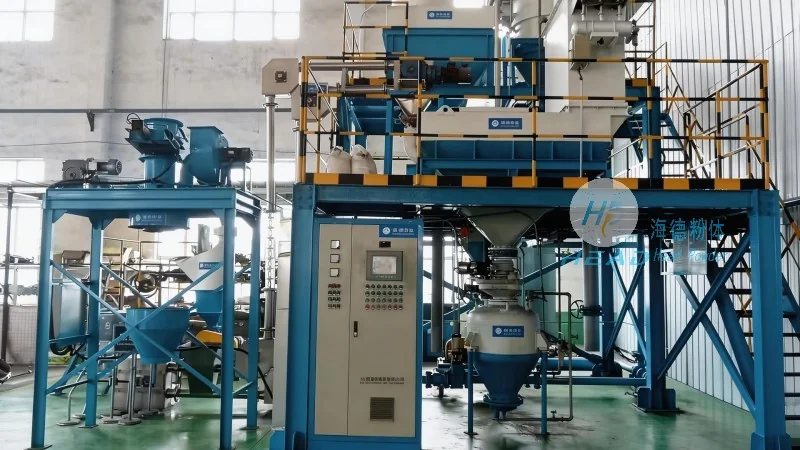
HeadPowder, a leading engineering firm based in Shandong, China, specializes in the design, manufacturing, and installation of advanced pneumatic conveying systems. With years of experience in handling various bulk materials, including lutic soils, the company leverages its expertise to deliver customized solutions that meet the specific requirements of clients across different industries. The company's team of skilled engineers and technicians ensures that each project is approached with precision and attention to detail, resulting in systems that are not only efficient but also durable and cost-effective.
The design of a pneumatic conveying system for lutic materials begins with a thorough analysis of the material properties and operational conditions. Key parameters such as particle size distribution, moisture content, bulk density, and flow characteristics are critical in determining the appropriate conveying method and system configuration. The first step in the design process involves calculating the required air velocity and pressure to ensure that the material is effectively transported without causing blockages or excessive energy consumption.
One of the primary design calculations is the determination of the minimum air velocity required to keep the material in suspension. This is typically based on the Stokes' law or the more complex Ergun equation, which accounts for the interaction between the particles and the air stream. The calculation considers factors like particle diameter, density, and the air's viscosity and density. For lutic materials, which often have a wide range of particle sizes and varying moisture levels, the design must account for the potential for agglomeration or caking, which can affect the conveying efficiency. Engineers at HeadPowder employ advanced computational fluid dynamics (CFD) models to simulate the flow behavior and optimize the system design, ensuring that the air velocity and pressure are precisely matched to the material's characteristics.
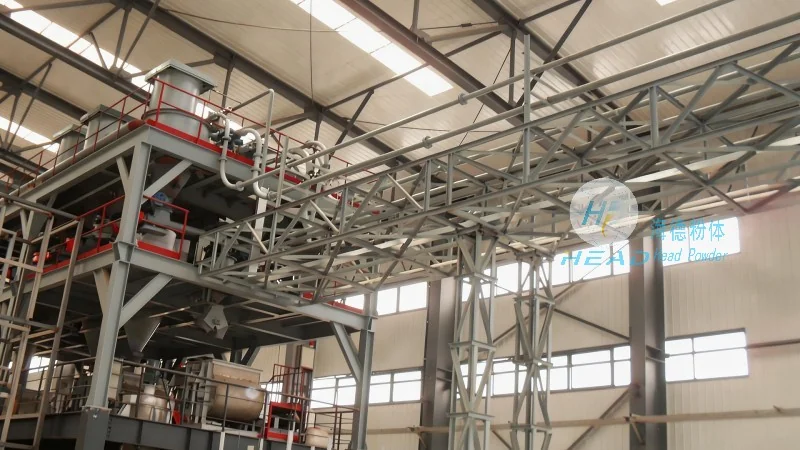
Once the design calculations are complete, the next critical step is the selection of appropriate equipment components. The main components of a pneumatic conveying system include the feeding device, the conveying line, the air source (blower or compressor), and the discharge equipment. For lutic materials, which can be abrasive and prone to clogging, the choice of equipment is crucial to ensure long-term system performance.
The feeding device is responsible for introducing the material into the conveying line at a consistent rate. For lutic materials, which may have a tendency to stick to the feeder, a rotary valve or a star feeder is often preferred. These devices provide a controlled flow and help prevent material buildup, which can lead to blockages. The conveying line itself is typically made of stainless steel or other corrosion-resistant materials to withstand the abrasive nature of lutic soils. The pipe diameter and length are determined based on the air velocity and pressure calculations, ensuring that the material is conveyed smoothly without excessive pressure drop.
The air source, such as a positive displacement blower or a centrifugal fan, must be capable of delivering the required air volume and pressure. The selection of the blower type depends on the system's operating conditions, including the pressure drop across the system and the required flow rate. For lutic material conveying, where the pressure drop can be significant due to the material's properties, a high-pressure blower is often necessary to maintain the air velocity and prevent material deposition. The discharge equipment, such as a rotary valve or a dust collector, is designed to handle the material efficiently and minimize dust emissions. HeadPowder offers a range of discharge options tailored to the specific application, ensuring that the material is discharged cleanly and without causing operational issues.
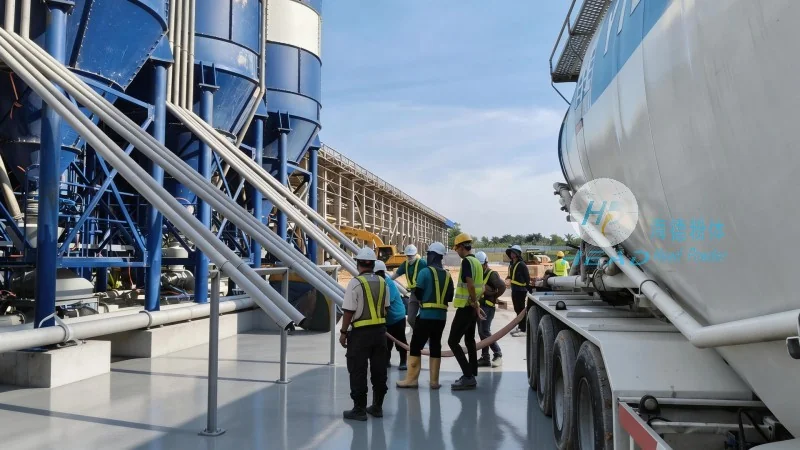
After the equipment is selected and installed, the system performance must be optimized to ensure maximum efficiency and reliability. This involves regular maintenance and monitoring of key parameters such as air pressure, flow rate, and material flow. HeadPowder provides comprehensive maintenance services and technical support to clients, helping them to identify and resolve any issues that may arise during operation. Additionally, the company offers system upgrades and retrofits to improve performance and extend the lifespan of the equipment.
Another aspect of system optimization is the consideration of energy efficiency. By selecting the appropriate equipment and optimizing the system design, the energy consumption of the pneumatic conveying system can be reduced. This not only lowers operating costs but also contributes to environmental sustainability. HeadPowder's engineers focus on energy-efficient designs, incorporating features such as variable speed drives and optimized pipe layouts to minimize energy waste.
In conclusion, the design and selection of pneumatic conveying systems for lutic materials require a thorough understanding of material properties, engineering calculations, and equipment performance. HeadPowder, with its expertise and experience, provides comprehensive solutions that meet the specific needs of clients. By following the design principles and equipment selection criteria outlined in this article, industrial facilities can achieve efficient and reliable transportation of lutic materials, reducing operational costs and improving overall productivity.

 Shandong Headpowder Engineering Co., Ltd.
 156-6277-7102(Manager Zhang)
  0531-83386006
  Zhangqiu District, Jinan City, Shandong Province, China
telephone
WeChatconsult
top