With more than 10‑year industry experience, Shandong Headpowder delivers full‑service pneumatic‑conveying systems and blowers, undertaking nationwide turn‑key powder‑handling projects.
For industries dealing with polypropylene resin powder, efficient material handling is crucial to maintain production efficiency and product quality. Pneumatic conveying systems offer a reliable method to transport these powders from one location to another, and there are several effective solutions tailored to different operational needs. This article explores various approaches to pneumatic conveying for polypropylene resin powder, highlighting the benefits and considerations for each method.
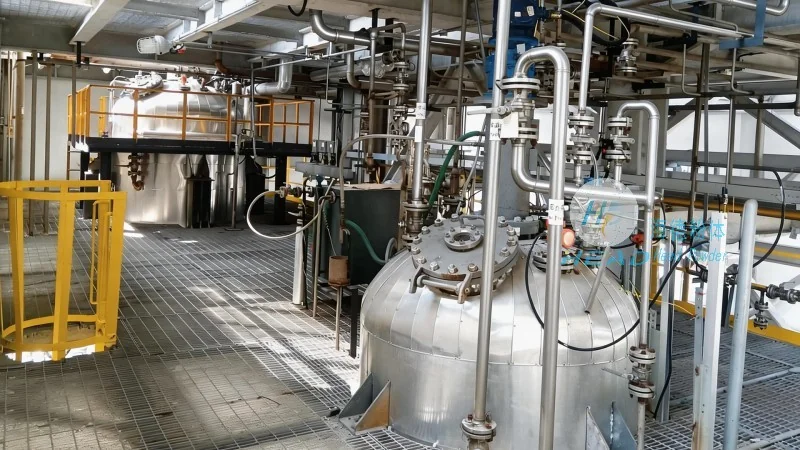
Pneumatic conveying involves the use of air or gas to transport solid materials through a pipeline. In the case of polypropylene resin powder, these systems are designed to handle fine, abrasive, or hygroscopic powders, which can be challenging to move using traditional mechanical methods. The primary goal is to ensure consistent flow, minimize material degradation, and maintain a clean, dust-free environment.
When choosing a pneumatic conveying system for polypropylene resin powder, several factors must be considered. These include the material's properties (such as particle size, density, and moisture content), the distance and height of the transfer, the required flow rate, and the overall system cost. Additionally, the system must comply with safety regulations and environmental standards to prevent dust explosions or air pollution.
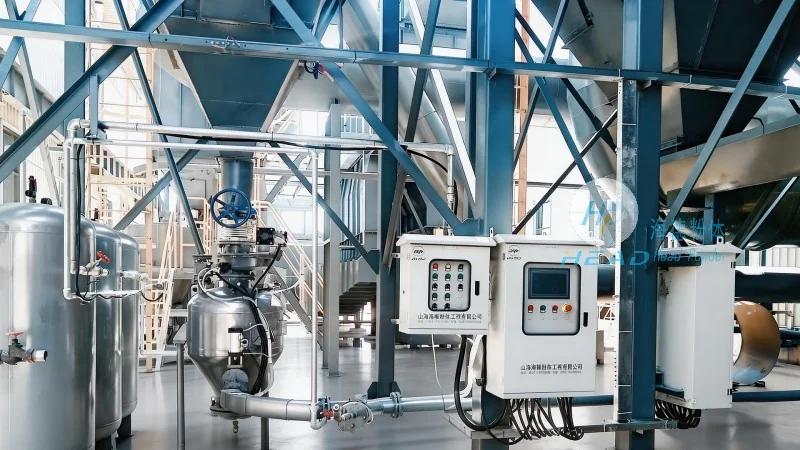
Dilute phase pneumatic conveying is a common solution for transporting polypropylene resin powder over moderate distances. This method uses high-velocity air to entrain the powder particles, creating a dilute mixture that flows through the pipeline. The system typically operates at pressures between 1 and 7 bar, making it suitable for applications where the transfer distance is up to several hundred meters. The main advantages of this approach include low system complexity, relatively low capital cost, and the ability to handle powders with varying properties. However, it may not be ideal for long-distance or high-volume transfers, as the air-to-powder ratio can be high, leading to increased energy consumption.
Dense phase pneumatic conveying is another effective solution, particularly for longer distances or when the material is sensitive to high velocities. In this method, the powder is conveyed in a dense phase, where the air velocity is lower, and the powder particles are more closely packed. This reduces the risk of material degradation and equipment wear. The system operates at higher pressures (typically 7 to 15 bar) and uses a lower air-to-powder ratio, resulting in more efficient material transport. Dense phase conveying is often preferred for applications involving abrasive or valuable powders, as it minimizes product damage and maintains a stable flow. However, it may require more complex equipment and higher energy input compared to dilute phase systems.
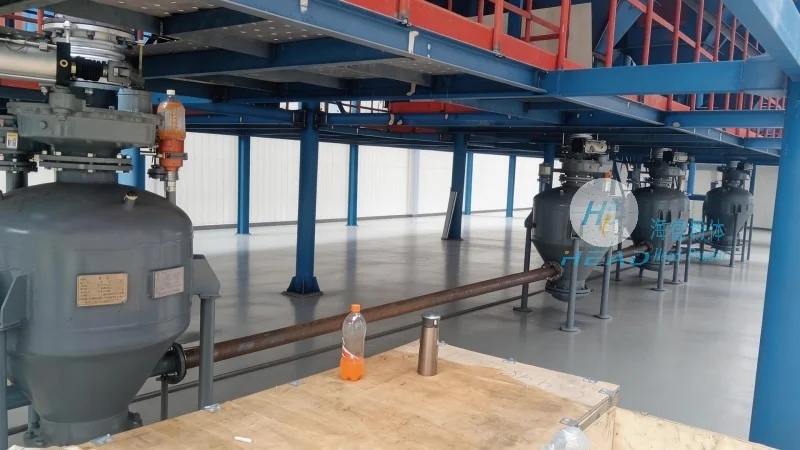
Hybrid systems combine elements of both dilute and dense phase conveying to offer a flexible solution for diverse operational requirements. These systems use a combination of high and low air velocities, allowing for efficient transport over varying distances and flow rates. For example, a hybrid system might use a dilute phase for the initial portion of the transfer and then switch to a dense phase for the final leg, optimizing energy use and material handling. This approach is particularly useful for complex layouts or when the transfer involves multiple elevation changes. Hybrid systems provide greater adaptability and can handle a wider range of material types, making them a popular choice for many industrial applications.
Implementing a pneumatic conveying system for polypropylene resin powder requires careful planning and regular maintenance to ensure optimal performance. Proper pipeline design, including the use of appropriate fittings and valves, is essential to prevent blockages and maintain consistent flow. Regular cleaning and inspection of the system components, such as filters and cyclones, are necessary to prevent dust accumulation and maintain air quality. Additionally, the system should be equipped with safety features, such as explosion-proof components and dust suppression systems, to comply with regulatory standards and protect personnel.

 Shandong Headpowder Engineering Co., Ltd.
 156-6277-7102(Manager Zhang)
  0531-83386006
  Zhangqiu District, Jinan City, Shandong Province, China
telephone
WeChatconsult
top