With more than 10‑year industry experience, Shandong Headpowder delivers full‑service pneumatic‑conveying systems and blowers, undertaking nationwide turn‑key powder‑handling projects.
Chromium(III) oxide, also known as chromium sesquioxide, is a vital industrial material utilized in applications such as pigments, catalysts, and coatings. The efficient and safe transportation of this material is critical for industrial processes, and pneumatic conveying has become a preferred method due to its advantages in handling fine powders like chromium(III) oxide. This article explores several effective solutions for the pneumatic conveying of chromium(III) oxide, focusing on technical aspects and practical considerations that ensure optimal performance and reliability.
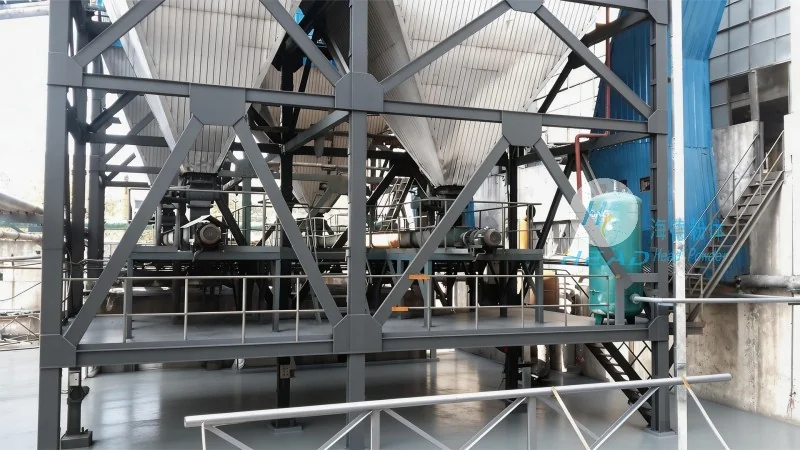
HeadPowder, a leading provider in the powder processing industry, specializes in engineering solutions for material handling and processing. With a strong commitment to quality and innovation, Shandong HeadPowder Engineering Co., Ltd. has established itself as a trusted partner for clients seeking reliable equipment and systems for handling sensitive materials like chromium(III) oxide. The company's expertise in pneumatic conveying technology, combined with its dedication to customer satisfaction, makes it a go-to choice for industrial applications requiring efficient and safe material transport.
When designing a pneumatic conveying system for chromium(III) oxide, several key factors must be considered to ensure optimal performance. Firstly, the particle size and flow characteristics of the material play a critical role. Chromium(III) oxide typically exists as fine particles, which can affect the system's pressure drop and flow rate. Proper selection of the conveying velocity and pipeline diameter is essential to maintain a stable and efficient flow. Secondly, the material's chemical properties, such as its reactivity and potential for dust generation, require appropriate equipment design to prevent contamination and ensure safety. Additionally, the system's energy efficiency and maintenance requirements are important considerations for long-term operational costs.
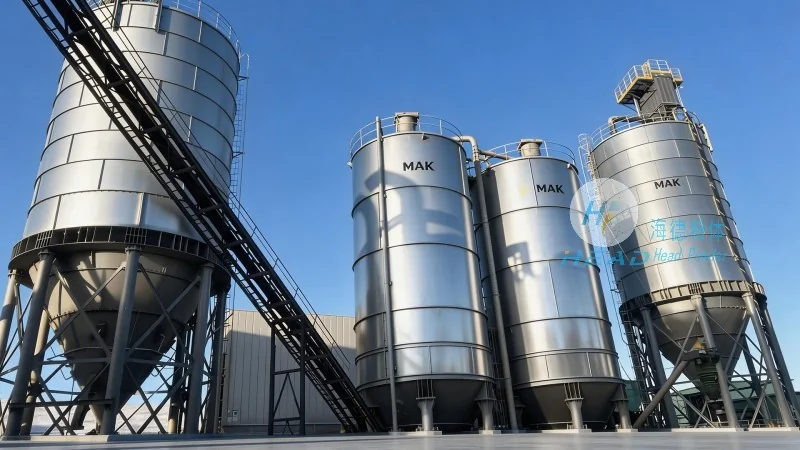
The dilute phase pneumatic conveying system is a common and effective solution for transporting chromium(III) oxide over moderate distances. This system operates by injecting air or other gases into the material stream, creating a dilute mixture that is then conveyed through a pipeline. The key components of this system include a feeder, a compressor, and a pipeline network. The feeder ensures a consistent material feed rate, while the compressor provides the necessary pressure to move the material. The pipeline design, including the diameter and length, is critical to maintaining the required velocity and pressure drop. This solution is suitable for applications where the material needs to be transported over short to medium distances, and it offers advantages such as low maintenance and flexibility in system layout.
For applications requiring the transport of chromium(III) oxide over longer distances or with higher material loads, the dense phase pneumatic conveying system is often preferred. This system operates by compressing the material and air mixture to a higher density, resulting in a more efficient use of energy and a lower pressure drop. The dense phase system typically uses a positive displacement blower or a high-pressure compressor to achieve the necessary pressure. The material is conveyed in a slug or plug flow, which reduces the risk of particle degradation and ensures a more stable flow. This solution is particularly suitable for handling abrasive or sensitive materials like chromium(III) oxide, as it minimizes the impact forces on the particles. The dense phase system also offers better control over the material's temperature and moisture content, which is important for maintaining the material's quality.
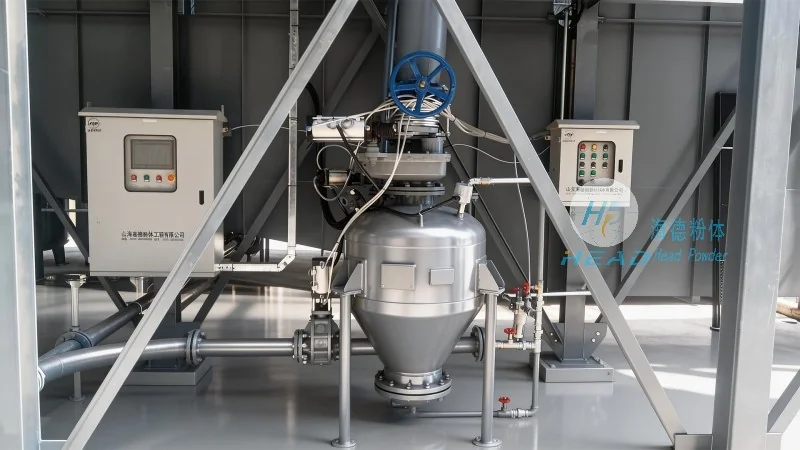
In some cases, a hybrid approach combining both dilute and dense phase conveying may be the most effective solution for chromium(III) oxide transport. This system integrates the advantages of both methods, allowing for flexible operation over varying distances and material loads. The hybrid system typically starts with a dilute phase section for initial transport and then transitions to a dense phase section for longer distances or higher loads. This approach optimizes energy consumption and reduces wear on the equipment. The hybrid system is particularly useful in industrial settings where the material needs to be transported through complex layouts or over varying distances, providing a versatile solution that meets the specific requirements of the application.
The success of a pneumatic conveying system for chromium(III) oxide depends heavily on the proper selection and design of the equipment. The feeder is a critical component, as it must handle the material's flow characteristics without causing blockages or degradation. For chromium(III) oxide, a rotary valve or a screw feeder may be suitable, depending on the material's properties. The compressor or blower must be chosen based on the required pressure and flow rate, ensuring that it can handle the material's density and particle size. The pipeline network should be designed with appropriate diameter and material, considering factors such as corrosion resistance and wear resistance. Additionally, the system should include appropriate controls and monitoring devices to ensure safe and efficient operation. Regular maintenance and inspection of the equipment are essential to prevent issues such as clogging or pressure drops, which can affect the system's performance.

 Shandong Headpowder Engineering Co., Ltd.
 156-6277-7102(Manager Zhang)
  0531-83386006
  Zhangqiu District, Jinan City, Shandong Province, China
telephone
WeChatconsult
top