With more than 10‑year industry experience, Shandong Headpowder delivers full‑service pneumatic‑conveying systems and blowers, undertaking nationwide turn‑key powder‑handling projects.
Shandong HeadPowder Engineering Co., Ltd., a leading manufacturer in the field, specializes in the design, production, and application of pneumatic conveying equipment tailored for handling powder materials. This article provides a detailed overview of the operation process and working principles of such systems, emphasizing the technical aspects and practical applications that define their efficiency and reliability.
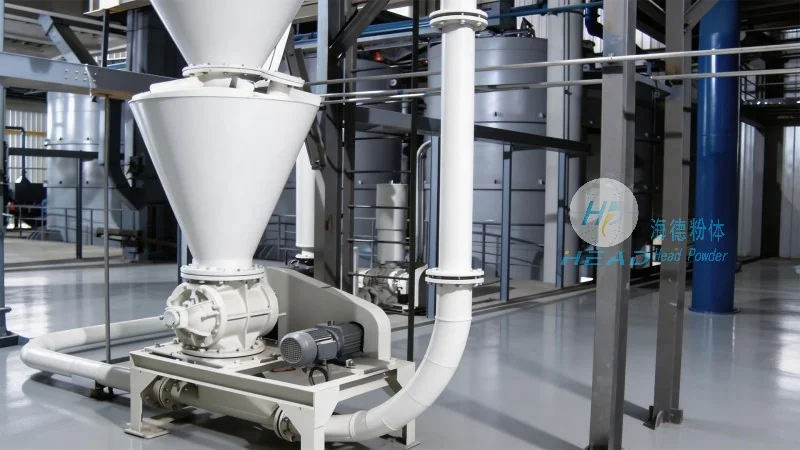
The pneumatic conveying system for powders typically consists of several core components, each playing a crucial role in the material transport process. These include the material hopper, which serves as the storage and feeding unit; the air compressor or blower, responsible for generating the necessary air pressure to move the material; the conveying pipeline, which forms the main transport path; and the control system, which regulates the flow of air and material to ensure smooth operation. Each component is meticulously designed to handle the specific characteristics of the powder, such as particle size, density, and moisture content, to optimize performance.
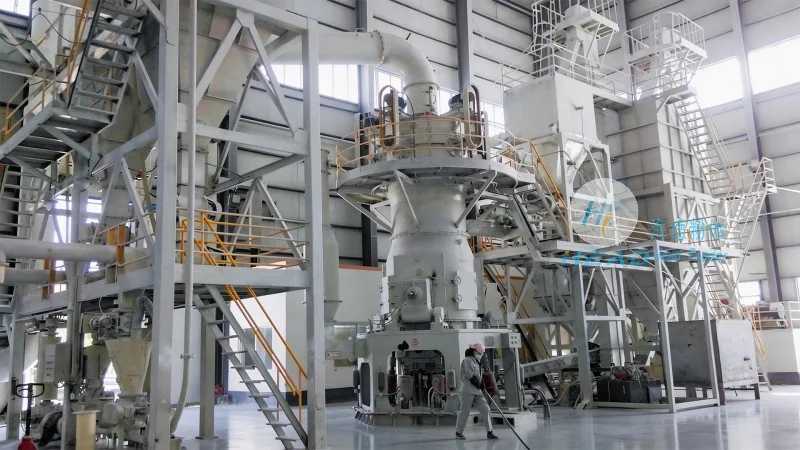
The operation of a pneumatic conveying system for powder materials begins with the loading of the material into the hopper. The material is then fed into the conveying pipeline through the use of a feeder, which can be a rotary valve or a screw feeder, depending on the system design. Simultaneously, the air compressor starts operating, generating a flow of air that creates a pressure differential within the pipeline. This pressure differential propels the powder particles forward, moving them from the hopper to the destination point, such as a silo or processing unit. The system continuously monitors the pressure and flow rates to maintain a stable and efficient transport process, ensuring that the material reaches its intended location without any blockages or losses.
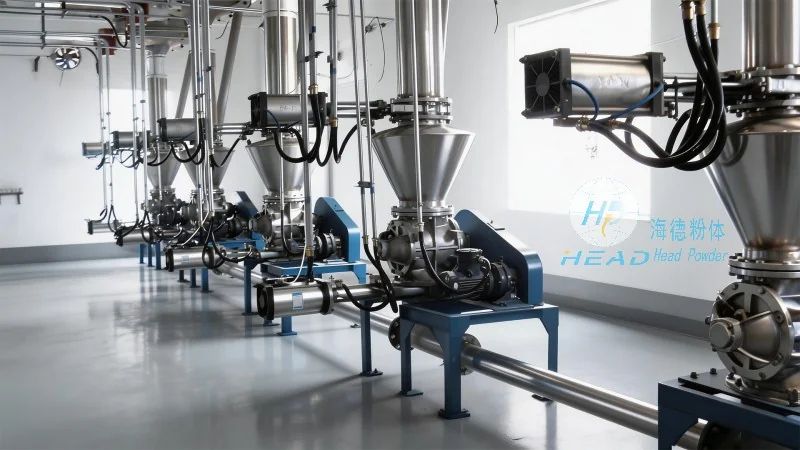
The working principle of pneumatic conveying systems for powders is based on the interaction between air pressure and the powder particles. When air is introduced into the conveying pipeline, it creates a flow that lifts and transports the powder particles. This process can be categorized into two main types: dilute phase and dense phase conveying. In dilute phase conveying, the air velocity is high enough to keep the particles suspended in the air stream, allowing for long-distance transport with minimal pressure drop. In dense phase conveying, the air velocity is lower, causing the particles to move in a more compact manner, which is suitable for handling sensitive or abrasive materials. The choice between these two modes depends on the specific requirements of the application, including the material properties, transport distance, and desired flow rate.
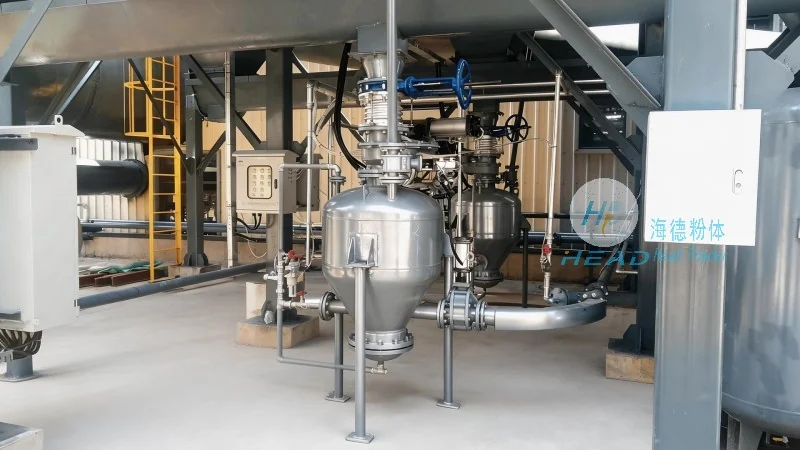
Pneumatic conveying systems for powder materials offer numerous advantages over traditional methods like belt conveyors or bucket elevators. These systems are highly flexible, allowing for easy integration into existing production lines and the ability to transport materials over long distances without the need for multiple transfer points. They are also hygienic and dust-free, making them suitable for applications in the food, pharmaceutical, and chemical industries where contamination control is critical. Additionally, these systems can handle a wide range of powder types, from fine powders like flour to coarse powders like cement, making them versatile and adaptable to various industrial needs. Shandong HeadPowder Engineering Co., Ltd. has developed advanced solutions that leverage these advantages, providing customized pneumatic conveying systems that meet the specific demands of different industries and applications.

 Shandong Headpowder Engineering Co., Ltd.
 156-6277-7102(Manager Zhang)
  0531-83386006
  Zhangqiu District, Jinan City, Shandong Province, China
telephone
WeChatconsult
top