With more than 10‑year industry experience, Shandong Headpowder delivers full‑service pneumatic‑conveying systems and blowers, undertaking nationwide turn‑key powder‑handling projects.
Aluminum flakes powder pneumatic conveying lines are sophisticated industrial systems designed to transport aluminum flakes in a dry, dust-free manner. These systems are essential in various manufacturing processes where aluminum flakes are used as raw materials or additives. The operation of such lines involves a combination of mechanical and pneumatic components that work together to ensure efficient and safe material handling. This article will explore the detailed operation process and working principles of aluminum flakes powder pneumatic conveying lines, highlighting the key components, their functions, and the overall workflow. Developed by Shandong HeadPowder Engineering Co., Ltd. (headpowder), these systems are engineered to meet the demanding requirements of modern industrial applications.
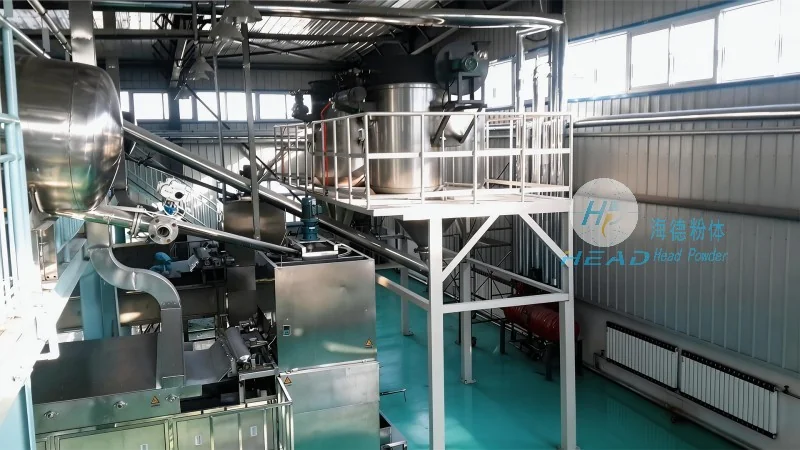
The aluminum flakes powder pneumatic conveying line typically consists of several critical components that ensure smooth and reliable operation. These components include the hopper for material storage, a rotary valve or feeder for controlled material discharge, a pipeline network that transports the material, a blower or air compressor to generate the conveying air, a filter system to clean the air and collect any escaped particles, and a discharge device at the receiving end. Each component plays a vital role in the overall system performance, and their proper integration is crucial for efficient operation.
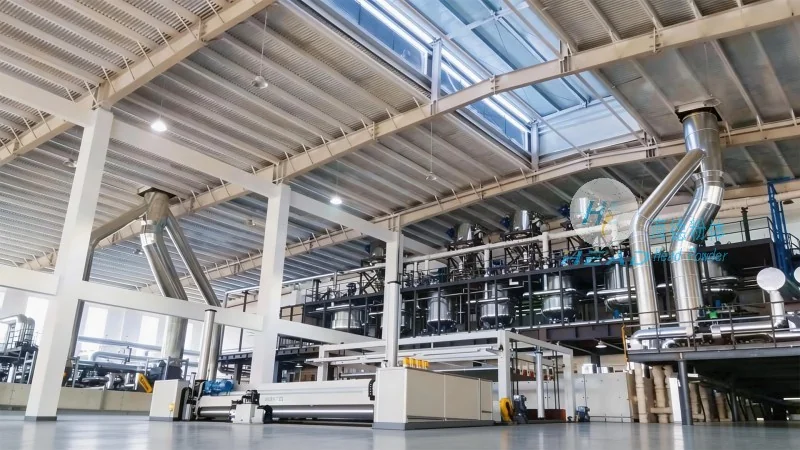
The working principle of the aluminum flakes powder pneumatic conveying line is based on the use of air as the conveying medium. The process begins with the material being fed from the hopper into the pipeline. The rotary valve or feeder regulates the flow rate of aluminum flakes, ensuring a consistent and controlled discharge. Simultaneously, the blower generates a high-pressure air stream that moves through the pipeline. As the air flows, it entrains the aluminum flakes, creating a slurry-like mixture that is carried along the pipeline to the destination. The air velocity is carefully controlled to maintain the material in suspension without causing excessive wear or degradation of the aluminum flakes. At the receiving end, the air and material mixture passes through a filter system, where the air is cleaned and the aluminum flakes are separated and discharged into the receiving container. The filtered air is then returned to the blower or released safely, depending on the system design.
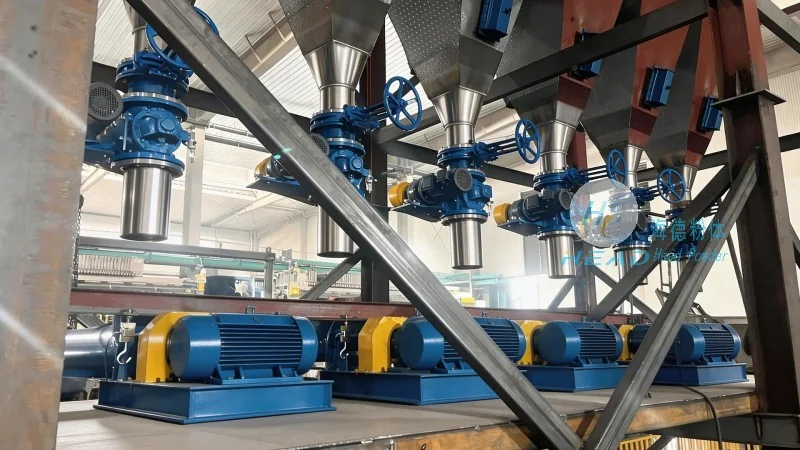
The operation of the aluminum flakes powder pneumatic conveying line follows a systematic sequence of steps to ensure efficient material transport. The process starts with the loading of aluminum flakes into the hopper. The hopper is equipped with a level indicator to monitor the material volume, and a lid or cover to prevent contamination. Once the hopper is filled, the rotary valve or feeder is activated to start the material discharge. The feeder controls the flow rate based on the required conveying capacity, adjusting the speed of the valve to maintain a steady flow. The blower is then started, generating the necessary air pressure to initiate the conveying process. As the air flows, it pulls the aluminum flakes into the pipeline, creating a continuous flow of material. The pipeline network is designed with appropriate bends and fittings to minimize pressure loss and maintain the air velocity required for material suspension. At the receiving end, the material is discharged into a storage bin or processing equipment, while the air is filtered and recycled or vented. The entire process is monitored by a control system that adjusts parameters such as air pressure, flow rate, and material feed rate to maintain optimal performance. Regular maintenance of the system components, including the blower, filter, and pipeline, is essential to ensure long-term reliability and efficiency.
Aluminum flakes powder pneumatic conveying lines offer several advantages over traditional material handling methods. One of the primary benefits is the ability to transport aluminum flakes in a dust-free environment, which is crucial for maintaining product quality and preventing contamination. The system also provides a continuous and uniform flow of material, reducing the risk of blockages or uneven distribution. Additionally, pneumatic conveying systems are compact and can be integrated into existing manufacturing facilities with minimal space requirements. The use of air as the conveying medium allows for flexible pipeline layouts, enabling the system to transport material over long distances or around obstacles. Furthermore, the system is relatively low in maintenance compared to other bulk material handling methods, such as belt conveyors, which require more frequent adjustments and repairs. The overall efficiency of the system is enhanced by the ability to control the flow rate and air pressure, ensuring optimal performance under varying operating conditions.
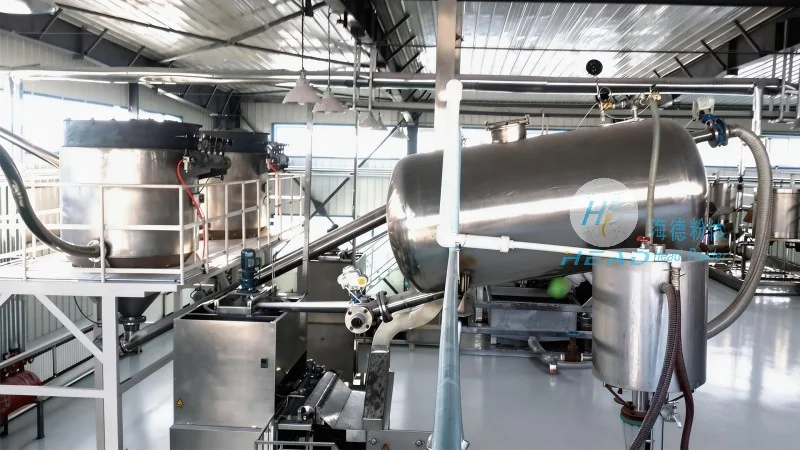
Aluminum flakes powder pneumatic conveying lines are widely used in various industries that require the handling of aluminum flakes. These industries include the manufacturing of aluminum alloys, automotive parts, aerospace components, and cosmetics. In the automotive industry, aluminum flakes are used as additives in aluminum alloys for engine blocks and other components, where the pneumatic conveying system ensures a consistent supply of high-quality material. In the aerospace industry, the system is used to transport aluminum flakes for the production of lightweight and durable parts, where precision and purity are critical. The cosmetics industry also utilizes aluminum flakes as pigments or additives in products such as powders and creams, where the dust-free conveying process maintains the product's quality and appearance. Additionally, the system is used in the production of aluminum-based chemicals and coatings, where the controlled transport of aluminum flakes is essential for achieving the desired product specifications.

 Shandong Headpowder Engineering Co., Ltd.
 156-6277-7102(Manager Zhang)
  0531-83386006
  Zhangqiu District, Jinan City, Shandong Province, China
telephone
WeChatconsult
top