With more than 10‑year industry experience, Shandong Headpowder delivers full‑service pneumatic‑conveying systems and blowers, undertaking nationwide turn‑key powder‑handling projects.
HeadPowder, or Shandong HeadPowder Engineering Co., Ltd., is a company based in Shandong, China, specializing in the design and implementation of powder material conveying systems for lithium-ion battery production. The company focuses on providing efficient and reliable solutions for handling the various powders used in the battery manufacturing process, such as cathode materials, anode materials, and conductive additives.
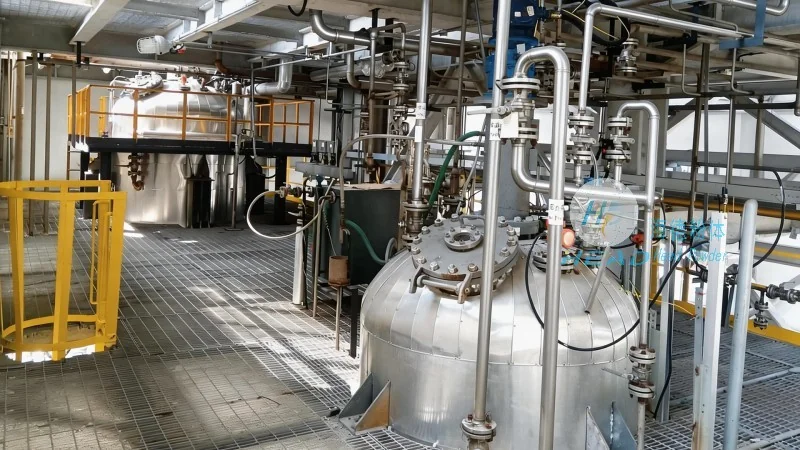
The operation process of powder material conveying for lithium-ion battery materials typically involves several key steps to ensure efficient material transfer from storage to processing equipment. The process begins with the storage of raw powder materials in silos or hoppers. These storage vessels are equipped with level sensors and discharge mechanisms to control the flow of material. When the conveying system is activated, the powder is released from the storage vessel and enters the conveying line. The conveying line may consist of various components, including feeders, conveyors (such as screw conveyors or pneumatic conveying systems), and transfer points. Each component plays a crucial role in maintaining the flow rate and preventing material degradation or blockages.
During the conveying process, the system monitors parameters such as pressure, flow rate, and temperature to ensure optimal performance. For example, in pneumatic conveying systems, compressed air is used to transport the powder through a pipeline. The air velocity and pressure are carefully controlled to prevent particle segregation or agglomeration. In screw conveyors, the rotation of the screw pushes the powder forward, with the speed adjusted based on the material's characteristics and the required throughput. The conveying system is designed to handle different powder types, including fine powders like lithium cobalt oxide (LCO) or lithium iron phosphate (LFP), which require specialized equipment to maintain particle integrity.
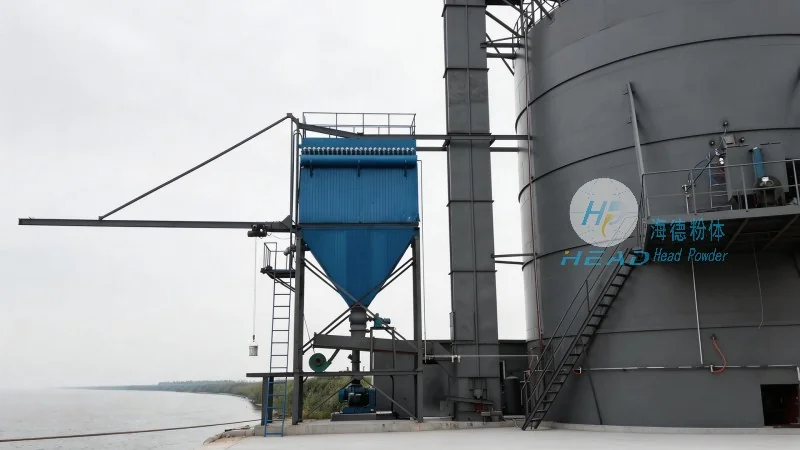
The working principle of powder material conveying systems for lithium-ion battery materials revolves around the transfer of material from a source to a destination using mechanical or pneumatic forces. Mechanical conveying systems, such as screw conveyors and belt conveyors, rely on the physical movement of a conveying element to push or pull the powder. These systems are suitable for handling bulk powders and can be integrated with other processing equipment, such as mixers or extruders, to form a continuous production line. Pneumatic conveying systems, on the other hand, use compressed air to create a flow of material through a pipeline. The air flow carries the powder particles, and the system is designed to maintain a consistent velocity to prevent particle separation. The choice between mechanical and pneumatic conveying depends on factors such as the material's properties, the required conveying distance, and the need for dust control.
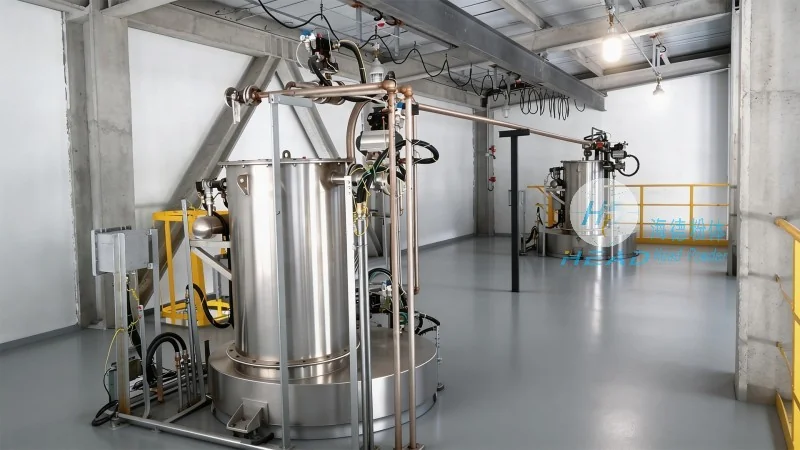
In both types of systems, the conveying process is controlled by a series of sensors and control valves. Level sensors in the storage silos monitor the material level and trigger the discharge mechanism when the level reaches a certain point. Flow meters in the conveying line measure the material flow rate, allowing for real-time adjustments to maintain the desired throughput. Pressure sensors in the pneumatic system ensure that the air pressure is within the optimal range to prevent system failures or material blockages. The control system integrates all these sensors and actuators to operate the conveying system automatically, minimizing human intervention and improving operational efficiency.
Several key components are essential for the proper operation of powder material conveying systems for lithium-ion battery materials. These components include storage silos, feeders, conveyors, transfer points, and control systems. Storage silos are used to store the raw powder materials and are equipped with discharge valves and level sensors to control the material flow. Feeders, such as rotary valves or vibratory feeders, regulate the flow of material from the storage silo to the conveying line, ensuring a consistent feed rate. Conveyors, including screw conveyors and pneumatic pipelines, transport the powder from the feeder to the processing equipment. Transfer points, such as bends or junctions, are designed to change the direction of the material flow without causing blockages or particle segregation. Control systems, including PLCs (Programmable Logic Controllers) and HMI (Human-Machine Interfaces), monitor and control all the components of the system, ensuring smooth operation and quick response to any issues.

 Shandong Headpowder Engineering Co., Ltd.
 156-6277-7102(Manager Zhang)
  0531-83386006
  Zhangqiu District, Jinan City, Shandong Province, China
telephone
WeChatconsult
top