With more than 10‑year industry experience, Shandong Headpowder delivers full‑service pneumatic‑conveying systems and blowers, undertaking nationwide turn‑key powder‑handling projects.
HeadPowder, a leading engineering firm based in Shandong, China, specializes in the design and implementation of advanced pneumatic conveying systems tailored for handling lithium hydroxide materials. This article delves into the fundamental principles behind such systems and highlights the key characteristics of their operational environments.
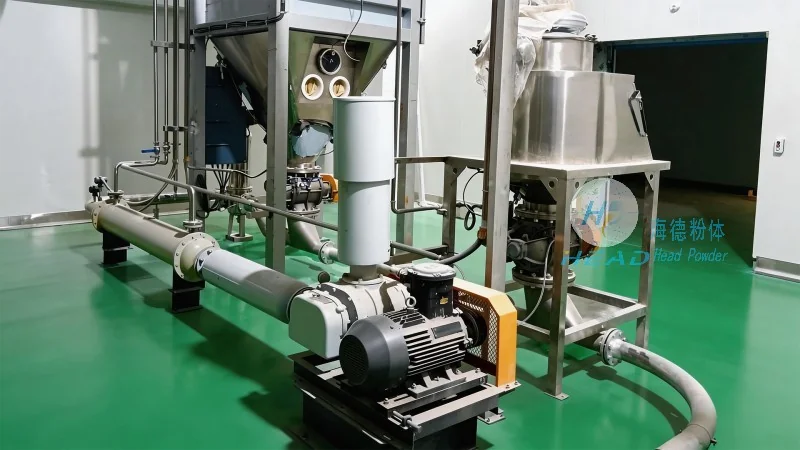
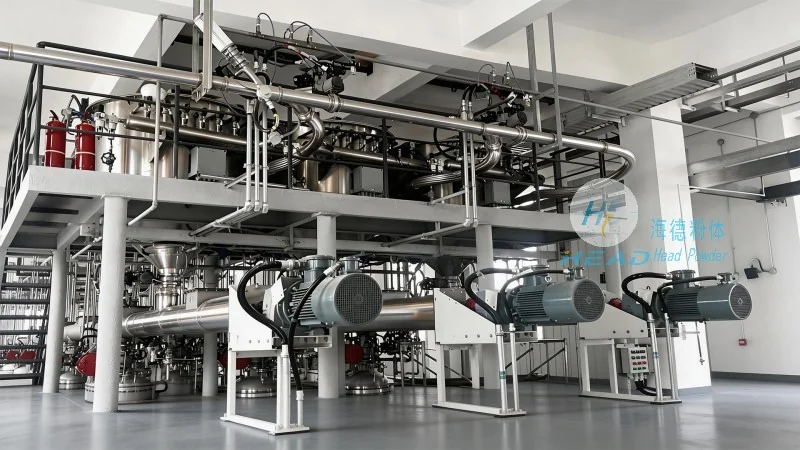
The core of a lithium hydroxide material pneumatic conveying system lies in its ability to transport bulk materials through a pipeline using a pressurized or vacuumed air stream. Unlike traditional mechanical conveyors, which rely on physical components like belts or buckets, pneumatic systems utilize air to move the material, offering advantages in terms of flexibility, scalability, and reduced risk of material contamination. The system typically consists of a material hopper, a conveyor line, a control unit, and a dust collection system. When the material is released from the hopper, it is entrained by the air flow and carried through the pipeline to the destination point. The pressure differential created by the air compressor or vacuum pump is crucial in maintaining the flow rate and ensuring efficient material transport. For lithium hydroxide, which is often a fine or powdery substance, the system must be designed to handle the specific properties of the material, such as its moisture content, particle size distribution, and reactivity. Proper air velocity and pipeline design are essential to prevent material degradation, blockages, or excessive wear on the system components. The control unit plays a vital role in regulating the air flow, pressure, and material feed rate, ensuring stable and continuous operation. It may include sensors to monitor parameters like pressure, flow rate, and material level, and can be integrated with automation systems for remote monitoring and control.
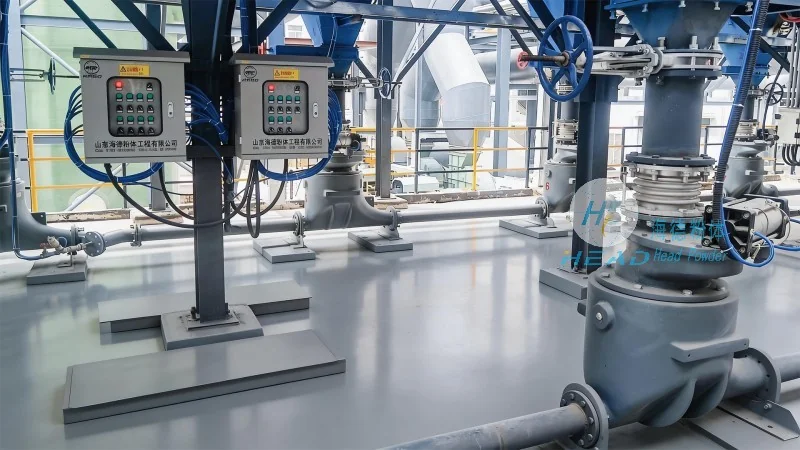
The operational environments where lithium hydroxide pneumatic conveying systems are deployed exhibit several distinct characteristics that influence system design and performance. First, the material handling requirements are often high-volume and continuous, as lithium hydroxide is a critical component in battery production and other industrial applications. This necessitates systems with high throughput capacity and reliable performance to meet production demands. Second, the systems must adhere to stringent safety and environmental standards due to the potential hazards associated with lithium hydroxide, such as dust explosion risks and environmental contamination. Therefore, features like explosion-proof designs, dust collection and filtration systems, and material containment measures are integral to the system. Third, the working scenes may vary from indoor processing facilities to outdoor storage and transfer points, requiring systems that can adapt to different environmental conditions, including temperature fluctuations and exposure to moisture or contaminants. The flexibility of pneumatic conveying systems allows for easy integration into existing production lines or new installations, making them suitable for both retrofitting and new projects. Additionally, the systems are designed to minimize downtime and maintenance, with components that are durable and easy to replace, ensuring long-term operational efficiency. The working scene characteristics also include the need for precise material control, as lithium hydroxide is often used in precise manufacturing processes where accurate dosing and mixing are critical. The pneumatic conveying system's ability to provide consistent material flow and pressure control supports these requirements, contributing to overall process reliability. Furthermore, the systems are often part of larger industrial ecosystems, interacting with other equipment like reactors, mixers, and packaging units. The integration of the pneumatic conveying system with these components is crucial for seamless material transfer and process optimization. In summary, the working scene characteristics of lithium hydroxide pneumatic conveying systems are defined by high-volume operation, safety compliance, environmental adaptability, and integration with complex industrial processes.
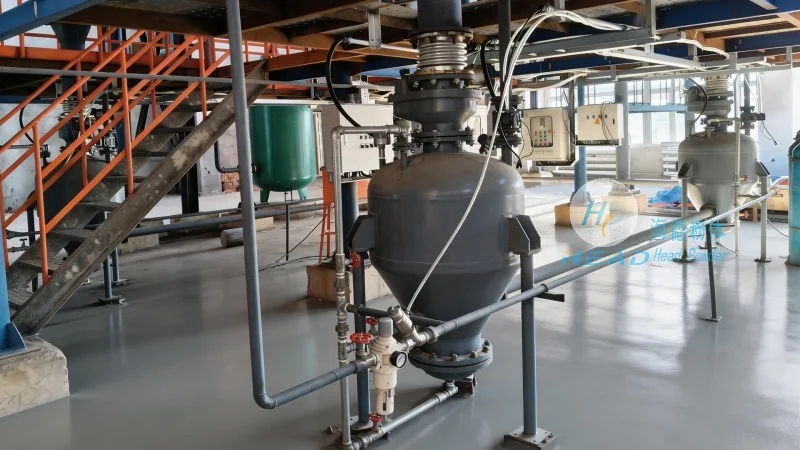
Lithium hydroxide material pneumatic conveying systems are widely used in various industrial sectors, primarily in the battery manufacturing industry, where lithium hydroxide is a key raw material for lithium-ion batteries. The systems are deployed in scenarios such as material transfer from storage silos to production lines, feeding of lithium hydroxide into reactors for chemical processing, and distribution to packaging units. In battery production facilities, the efficient and safe handling of lithium hydroxide is critical to ensure consistent battery performance and quality. The pneumatic conveying system's ability to transport the material without contamination or degradation is essential for maintaining product integrity. Another application scenario is in chemical processing plants where lithium hydroxide is used as an intermediate in the production of other lithium compounds. Here, the system must handle the material in a controlled environment, often under inert gas conditions, to prevent unwanted reactions. The working scene characteristics in these applications include high purity requirements, precise dosing, and integration with downstream processing equipment. Additionally, the systems are used in research and development laboratories for small-scale testing and prototyping of lithium hydroxide-based materials. In these scenarios, the system's flexibility and ability to handle small quantities of material are advantageous. The impact of these systems on the industry is significant, as they contribute to improved production efficiency, reduced labor costs, and enhanced safety in material handling. By providing a reliable and efficient means of transporting lithium hydroxide, the systems support the growth of the battery industry and other sectors that rely on lithium-based materials. The adoption of advanced pneumatic conveying technology also aligns with the industry's trend towards automation and process optimization, further enhancing the competitiveness of manufacturers.

 Shandong Headpowder Engineering Co., Ltd.
 156-6277-7102(Manager Zhang)
  0531-83386006
  Zhangqiu District, Jinan City, Shandong Province, China
telephone
WeChatconsult
top