With more than 10‑year industry experience, Shandong Headpowder delivers full‑service pneumatic‑conveying systems and blowers, undertaking nationwide turn‑key powder‑handling projects.
HeadPowder, a leading engineering company based in Shandong, China, specializes in the design and manufacturing of advanced pneumatic conveying systems tailored for the handling of bulk powders such as potassium chloride. This article explores the fundamental principles behind these systems and highlights the key characteristics of their operational environments.
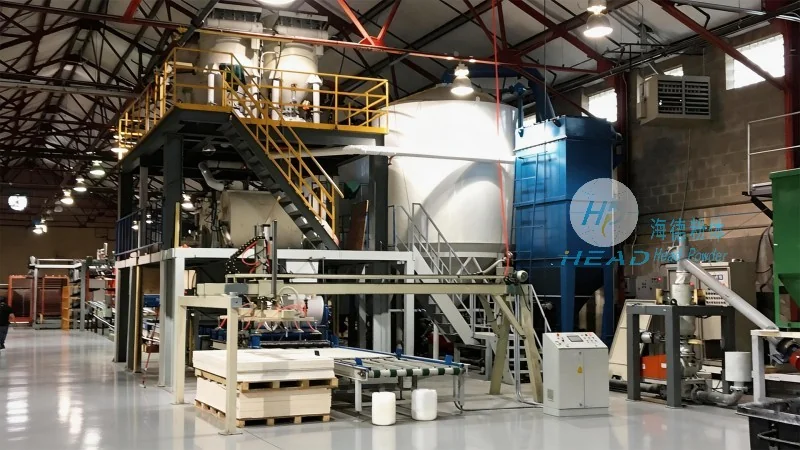
Pneumatic conveying systems utilize air or gas to transport bulk materials like potassium chloride powder through a pipeline network. The process typically involves creating a pressure differential or using vacuum to move the material from a source to a destination. For potassium chloride, which is a fine, free-flowing powder, this method offers several advantages over traditional mechanical conveying methods. The system generally consists of a hopper, a conveyor line, and a receiver, with air being introduced to create a flow of material. The principle is based on the interaction between the powder particles and the air stream, ensuring efficient and continuous movement without the need for mechanical components that could cause wear or contamination.

The operational environments for these systems are tailored to the specific demands of potassium chloride handling, which is commonly used in agriculture, food processing, and chemical industries. The equipment is designed to handle the material's properties, including its particle size, density, and flowability. In industrial settings, the systems are often integrated into larger production lines, requiring high reliability and minimal downtime. The working scenes may include applications such as transferring potassium chloride from storage silos to processing units, or from production lines to packaging areas. The characteristics of these scenes include the need for precise control over material flow rates, the ability to handle varying material loads, and the requirement for clean and efficient operation to maintain product quality. Additionally, the systems are built to withstand the corrosive or abrasive nature of potassium chloride, ensuring long-term durability and performance.
When designing pneumatic conveying equipment for potassium chloride, engineers at HeadPowder consider several critical factors to optimize performance. Particle size distribution is a key parameter, as finer particles may require higher air velocities to maintain flow. The system's pressure drop and air consumption are carefully calculated to balance efficiency and energy usage. The choice of materials for the pipeline and components is also crucial, as potassium chloride can be abrasive and may cause corrosion over time. Stainless steel or specialized coatings are often used to protect against wear and chemical attack. Furthermore, the system's integration with other equipment, such as mixers or reactors, must be seamless to ensure smooth production processes. The working scene characteristics, including the scale of operation and the distance between source and destination, influence the selection of system type—whether it's a dilute-phase or dense-phase system. Dilute-phase systems are suitable for short distances and high flow rates, while dense-phase systems are preferred for longer distances or when gentle handling is required to prevent product degradation.
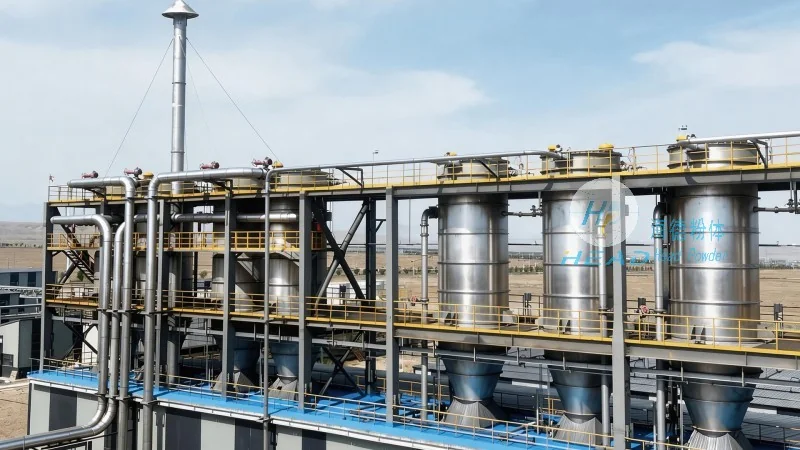
The adoption of pneumatic conveying systems for potassium chloride offers significant advantages in real-world industrial operations. These systems provide a closed-loop environment, reducing dust emissions and improving safety in the workplace. This is particularly important in environments where dust can be a health hazard or cause product contamination. The closed system also helps maintain the purity of the potassium chloride, which is critical for applications in food and pharmaceutical industries. Another advantage is the ability to handle materials in a hygienic manner, with components designed to prevent product buildup and ensure easy cleaning. From a maintenance perspective, pneumatic systems have fewer moving parts compared to mechanical conveyors, leading to lower maintenance costs and longer service intervals. However, the initial investment may be higher due to the need for air compressors and specialized equipment. The working scene characteristics, such as the need for continuous operation and high throughput, make the long-term benefits of these systems evident. Companies like HeadPowder Engineering Co., Ltd. in Shandong, China, have developed expertise in customizing these systems to meet the specific needs of their clients, ensuring optimal performance and reliability in diverse operational environments.

 Shandong Headpowder Engineering Co., Ltd.
 156-6277-7102(Manager Zhang)
  0531-83386006
  Zhangqiu District, Jinan City, Shandong Province, China
telephone
WeChatconsult
top