With more than 10‑year industry experience, Shandong Headpowder delivers full‑service pneumatic‑conveying systems and blowers, undertaking nationwide turn‑key powder‑handling projects.
For industrial applications involving manganese sulfate powder, efficient and reliable material handling is crucial. The air-driven pneumatic conveying equipment from Shandong HeadPowder Engineering Co., Ltd. offers a sophisticated solution tailored to the unique properties of this chemical compound. This article explores the underlying principles of such systems and highlights the key characteristics of their operational environments.
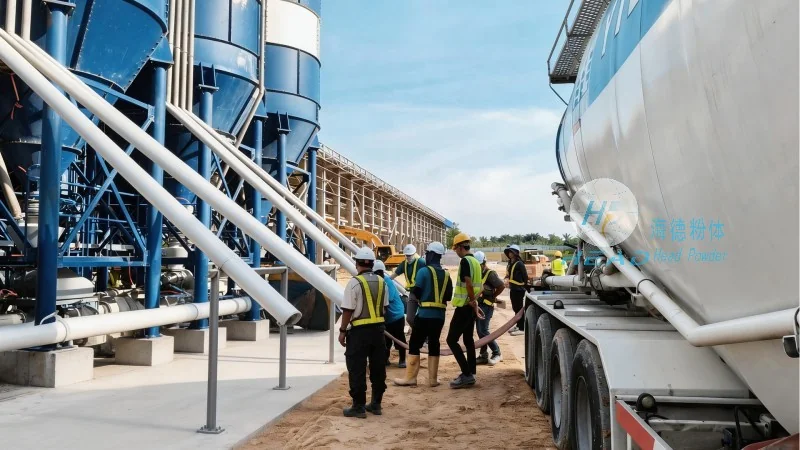
Pneumatic conveying systems are designed to transport bulk materials like manganese sulfate powder through a network of pipes using compressed air or vacuum. These systems are categorized into two main types: positive pressure (or pressure) systems and negative pressure (or vacuum) systems. Positive pressure systems utilize compressed air to push the material forward, while negative pressure systems employ suction to draw the material into the system. Both approaches are effective for manganese sulfate powder, but the choice depends on factors such as the required conveying distance, material properties, and system complexity.
The fundamental principle of air-driven pneumatic conveying is the creation of a gas-solid flow within the conveying pipeline. In this process, compressed air or vacuum creates a pressure differential that propels the manganese sulfate powder particles through the system. The velocity of the air and the size of the particles determine the flow regime, which can be either dilute phase (where particles are suspended in the air stream) or dense phase (where particles are more closely packed). For manganese sulfate powder, dilute phase conveying is often preferred due to its ability to handle long distances and varying particle sizes without excessive wear on the equipment.
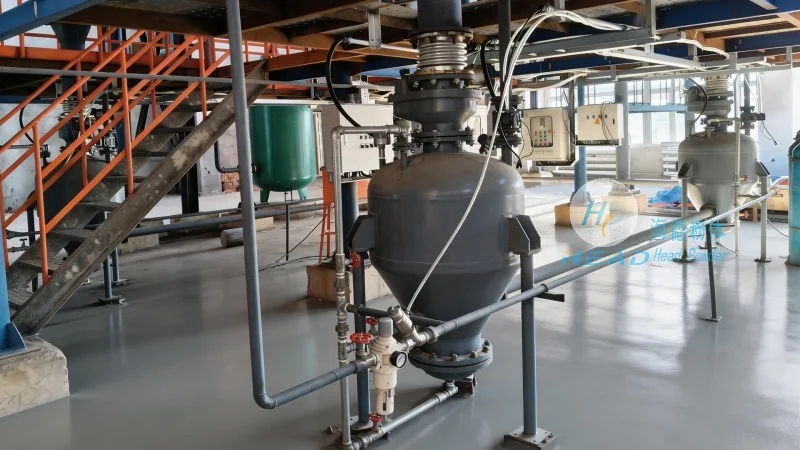
The operational characteristics of pneumatic conveying equipment for manganese sulfate powder are shaped by several factors that define the working environment. First, the material's hygroscopic nature means that moisture absorption can affect its flowability and dust generation. Therefore, systems are often equipped with moisture control measures or enclosed pipelines to prevent clumping and ensure consistent performance. Second, the abrasive properties of manganese sulfate powder require the use of high-quality materials for the conveying components, such as wear-resistant liners and robust pumps, to minimize maintenance and extend equipment lifespan. Third, the need for precise dosing and control in industrial processes demands advanced control systems that can regulate air pressure, flow rate, and material feed, ensuring accurate and repeatable delivery of the powder.
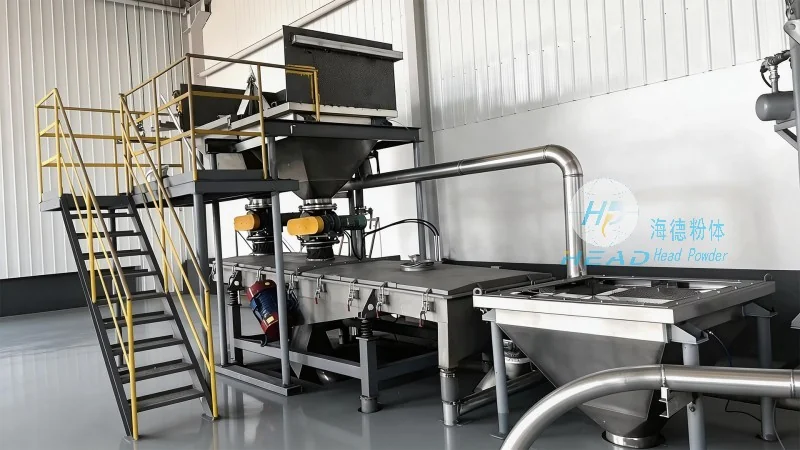
The working scenes where manganese sulfate powder pneumatic conveying equipment is deployed vary widely across industries. In the chemical manufacturing sector, these systems are used to transport raw materials to reactors or to transfer finished products from storage tanks. In the mining and metallurgical industries, they facilitate the movement of manganese ore and processed powders between processing stages. The efficiency of such systems is measured by factors like conveying capacity, energy consumption, and system reliability. Modern pneumatic conveying solutions from Shandong HeadPowder Engineering Co., Ltd. are engineered to optimize these metrics, providing high throughput while minimizing operational costs and environmental impact.
Understanding the principle and working scene characteristics of air-driven pneumatic conveying equipment for manganese sulfate powder is essential for selecting the right system for industrial applications. The systems from Shandong HeadPowder Engineering Co., Ltd., with their robust design and tailored solutions, address the unique challenges posed by this material. By leveraging advanced engineering and material science, these systems ensure efficient, reliable, and cost-effective material handling, supporting the operational needs of various industries. Based in Shandong, China, Shandong HeadPowder Engineering Co., Ltd. continues to innovate in the field of bulk material handling, providing solutions that meet the evolving demands of modern industrial processes.

 Shandong Headpowder Engineering Co., Ltd.
 156-6277-7102(Manager Zhang)
  0531-83386006
  Zhangqiu District, Jinan City, Shandong Province, China
telephone
WeChatconsult
top