With more than 10‑year industry experience, Shandong Headpowder delivers full‑service pneumatic‑conveying systems and blowers, undertaking nationwide turn‑key powder‑handling projects.
HeadPowder, a leading provider in the field of powder handling technology, specializes in the design and implementation of pneumatic conveying systems for cement additives. This article delves into the fundamental principles of pneumatic conveying and highlights the key characteristics of its application scenarios, offering insights into how these systems enhance operational efficiency and material handling in industrial settings.
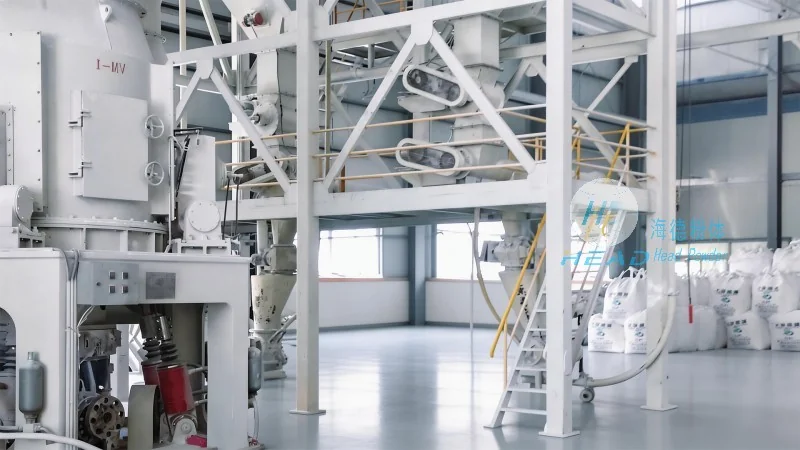
Pneumatic conveying, as a method for transporting bulk powders like cement additives, relies on the movement of particles within a gas stream. The process typically involves creating a pressure differential or utilizing suction to move material from a source to a destination. In the context of cement additives, such as fly ash, slag, or limestone, this technology ensures a reliable and efficient transfer, minimizing material degradation and loss. The system operates by injecting air or other gases into a pipeline, generating a flow that propels the powder particles through the system. This approach eliminates the need for mechanical components like belts or buckets, reducing maintenance requirements and enhancing safety in the workplace.
The application of pneumatic conveying systems for cement additives varies across different industrial environments, each presenting unique challenges and opportunities. For instance, in large-scale cement production facilities, these systems are crucial for transporting raw materials and additives over considerable distances with minimal downtime. The flexibility of pneumatic conveying allows for integration into existing production lines, adapting to changes in production rates and material types. In addition, the technology is particularly advantageous in environments where dust control and contamination prevention are critical, as enclosed systems can effectively contain particles and reduce environmental impact.
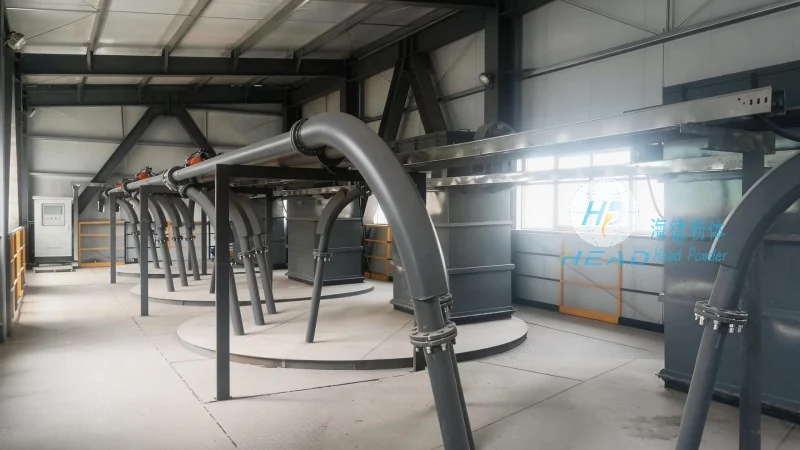
When applied to cement manufacturing, pneumatic conveying systems for additives offer several operational advantages. Firstly, they provide a continuous and consistent flow of material, which is essential for maintaining stable production processes. This consistency helps in achieving uniform product quality, as the additives are evenly distributed throughout the cement mix. Secondly, the systems are designed to handle a wide range of particle sizes and densities, ensuring compatibility with various cement additives. This versatility makes them suitable for different types of cement production, from ordinary Portland cement to specialized blends. Furthermore, the enclosed nature of the conveying process reduces the risk of dust exposure, contributing to a safer working environment and compliance with environmental regulations.
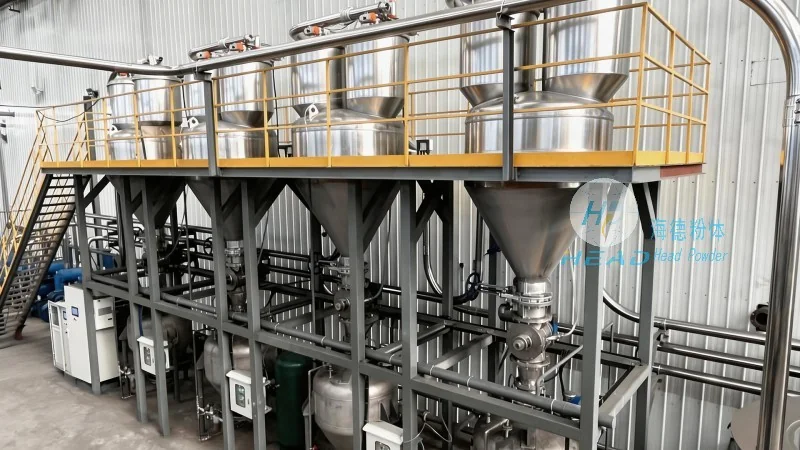
HeadPowder recognizes that each cement production facility has distinct requirements, which is why their pneumatic conveying solutions are highly customizable. The company offers tailored systems that can be scaled to meet the specific needs of a facility, whether it's a small-scale operation or a large industrial plant. Customization includes adjustments to the conveying velocity, pipeline design, and control systems to optimize performance and efficiency. Additionally, the systems are built with durability and longevity in mind, using high-quality materials that can withstand the abrasive nature of cement additives and the demanding conditions of industrial environments. This approach ensures that the systems provide long-term value and reliability, supporting the continuous operation of cement production processes.
In conclusion, pneumatic conveying systems for cement additives represent a sophisticated solution that combines efficiency, reliability, and adaptability. By understanding the fundamental principles of this technology and leveraging its application in diverse scenarios, cement manufacturers can enhance their operational performance and contribute to sustainable practices. HeadPowder, with its expertise in powder handling, continues to provide innovative solutions that meet the evolving needs of the cement industry, ensuring that material transport remains a critical yet efficient component of cement production.

 Shandong Headpowder Engineering Co., Ltd.
 156-6277-7102(Manager Zhang)
  0531-83386006
  Zhangqiu District, Jinan City, Shandong Province, China
telephone
WeChatconsult
top