With more than 10‑year industry experience, Shandong Headpowder delivers full‑service pneumatic‑conveying systems and blowers, undertaking nationwide turn‑key powder‑handling projects.
For industrial applications involving the handling of rice husk ash, an efficient and reliable material transport solution is crucial. The pneumatic conveying system designed specifically for rice husk ash offers a robust method to move this material from one location to another within a processing facility. This system leverages air pressure to transport the material, eliminating the need for mechanical components like belts or buckets that might be prone to wear and tear in high-abrasion environments. By understanding the components and operational principles of this system, users can appreciate its advantages in terms of maintenance, safety, and overall system efficiency.
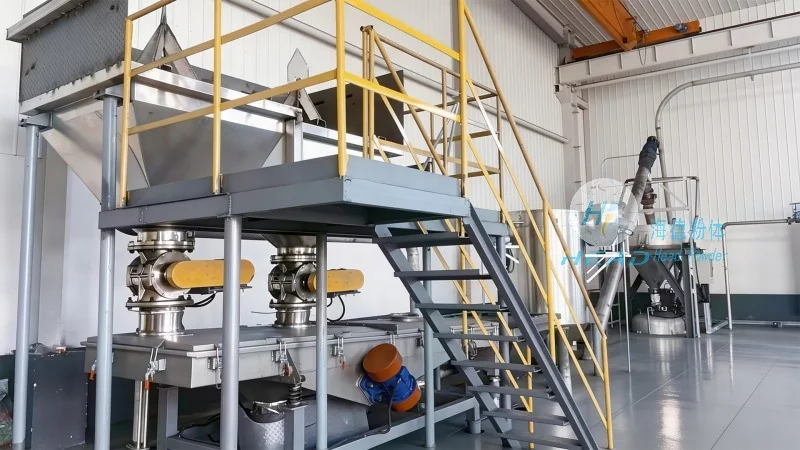
The pneumatic conveying system for rice husk ash consists of several essential components that work in tandem to ensure smooth material transport. The primary components include a hopper for material storage, a feeder to control the flow rate, a conveying line (often equipped with bends and straight sections), a receiver for the material's destination, and a dust collection system to manage airborne particles. Each component plays a critical role in maintaining the system's performance and safety. The hopper is designed to hold a sufficient quantity of rice husk ash, ensuring a consistent feed to the feeder. The feeder, typically a rotary valve or a screw feeder, regulates the material discharge rate, preventing overloading or underfeeding that could disrupt the conveying process. The conveying line, often made of metal or high-quality plastic, is engineered to withstand the abrasive nature of rice husk ash, minimizing wear and extending the system's lifespan. The bends and straight sections are strategically placed to guide the material along the desired path, with the receiver at the end to collect the transported ash. Additionally, a dust collection system, such as a cyclone or a baghouse, is integrated to capture any fine particles that may be released during the conveying process, ensuring compliance with environmental regulations and maintaining a clean working environment.
The pneumatic conveying system operates on the principle of using air to transport solid materials. In the case of rice husk ash, the system typically employs a positive displacement or pressure type of conveying method. The process begins with the material being fed from the hopper into the conveying line via the feeder. As the feeder opens, the material falls into the line, and a high-pressure air stream is introduced at the inlet. The air stream, moving at a velocity sufficient to entrain the material particles, carries them along the conveying line to the receiver. The air and material mixture then enters the receiver, where the material is separated from the air through a settling chamber or a cyclone separator. The separated material is collected in the receiver, while the air is either filtered and recirculated or discharged to the atmosphere, depending on the system design. The operational flow is continuous, with the feeder maintaining a steady flow rate, and the air pressure and velocity carefully controlled to ensure efficient transport without causing excessive pressure drops or material degradation. This continuous operation minimizes downtime and maximizes productivity in industrial settings where rice husk ash is processed.
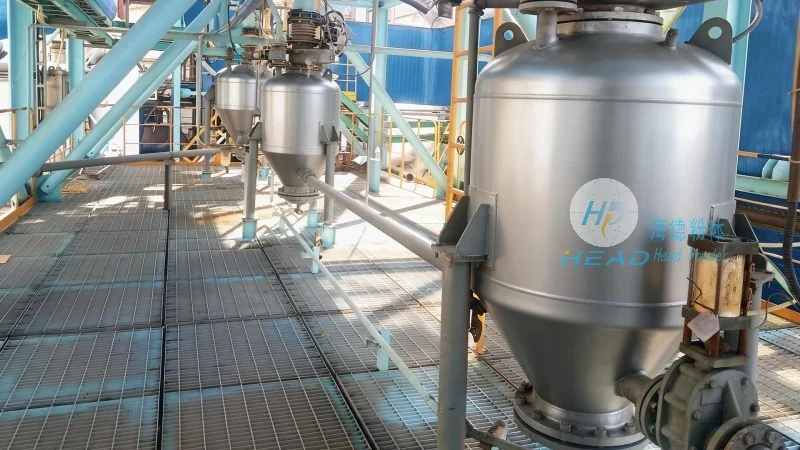
Compared to traditional mechanical conveying methods, the pneumatic conveying system for rice husk ash offers several distinct advantages. One of the most significant benefits is the reduction in mechanical wear and tear, as there are no moving parts in direct contact with the abrasive material. This leads to lower maintenance costs and longer system life. Additionally, the system provides a dust-free environment, as the material is enclosed within the conveying line and the dust collection system captures any particles that may escape. This not only improves workplace safety but also helps in maintaining the quality of the rice husk ash, which is important for downstream applications such as energy production or fertilizer manufacturing. The system also offers flexibility in terms of layout, as the conveying line can be installed in various configurations, including vertical and horizontal sections, to accommodate the spatial constraints of a processing facility. Furthermore, the pneumatic system allows for the integration of additional processing steps, such as drying or mixing, within the conveying line, enhancing the overall efficiency of the material handling process. These advantages make the pneumatic conveying system an ideal choice for industrial applications requiring reliable and efficient transport of rice husk ash.
The pneumatic conveying system for rice husk ash is widely used in various industries that process agricultural byproducts. The primary application is in the power generation sector, where rice husk ash is used as a fuel in biomass power plants. The system efficiently transports the ash from the boiler to the storage or disposal area, ensuring a continuous supply of fuel. In the fertilizer industry, rice husk ash is used as an ingredient in organic fertilizers, and the conveying system helps in moving the ash from processing units to packaging facilities. Additionally, in the construction industry, rice husk ash is used as a raw material for cement and concrete production, and the pneumatic system aids in transporting the ash to the mixing plants. Other applications include the use of rice husk ash in the production of activated carbon or as a soil amendment. The versatility of the system allows it to be adapted to different industrial processes, making it a valuable asset in facilities that handle rice husk ash as a byproduct or raw material.
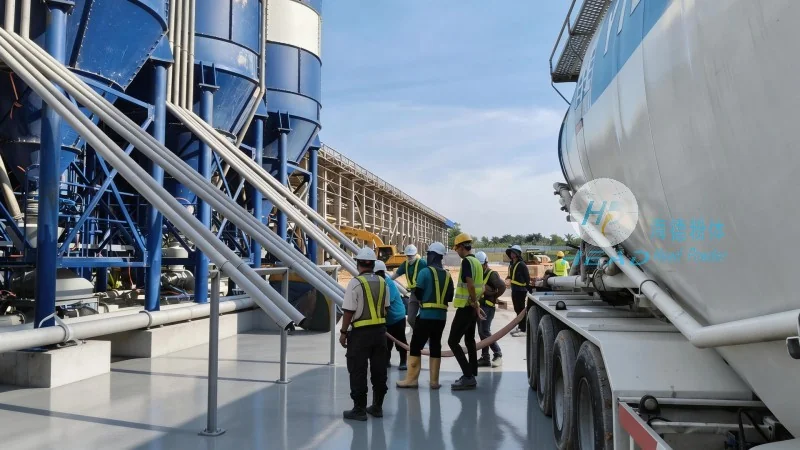
Proper installation and regular maintenance are essential to ensure the optimal performance and longevity of the pneumatic conveying system for rice husk ash. During installation, it is crucial to consider the layout of the conveying line, ensuring that the slope and bends are designed to facilitate smooth material flow without causing blockages or excessive pressure drops. The components, such as the hopper, feeder, and receiver, should be positioned at appropriate heights and angles to maintain the correct flow of material. The conveying line should be securely fastened and supported to prevent vibrations or movement that could affect the system's performance. Regular maintenance involves inspecting the components for wear and tear, cleaning the hopper and feeder to prevent material buildup, and checking the air pressure and flow rates to ensure they are within the recommended parameters. The dust collection system should also be inspected regularly to ensure it is functioning correctly and capturing all airborne particles. Additionally, the system should be checked for any leaks in the conveying line or air connections, as even small leaks can lead to pressure drops and reduced conveying efficiency. By following proper installation and maintenance procedures, users can maximize the system's performance and minimize downtime, ensuring consistent and reliable transport of rice husk ash.
Environmental and safety considerations are paramount when operating a pneumatic conveying system for rice husk ash. The system is designed to minimize the release of airborne particles, which can be harmful if inhaled or cause environmental pollution. The dust collection system, as mentioned earlier, plays a critical role in capturing fine particles and preventing their release into the atmosphere. This not only complies with environmental regulations but also protects the health of workers in the facility. The system is also designed with safety features to prevent accidents, such as pressure relief valves to avoid overpressure situations and emergency shut-off mechanisms in case of system failure. The use of enclosed conveying lines reduces the risk of material exposure to workers, and the absence of moving parts minimizes the risk of entanglement or injury. Additionally, the system can be equipped with sensors to monitor air pressure, flow rates, and material levels, providing real-time data to operators and allowing for quick response to any issues that may arise. These safety and environmental features make the pneumatic conveying system a responsible choice for industrial applications, ensuring that the handling of rice husk ash is conducted in a safe and environmentally friendly manner.

 Shandong Headpowder Engineering Co., Ltd.
 156-6277-7102(Manager Zhang)
  0531-83386006
  Zhangqiu District, Jinan City, Shandong Province, China
telephone
WeChatconsult
top