With more than 10‑year industry experience, Shandong Headpowder delivers full‑service pneumatic‑conveying systems and blowers, undertaking nationwide turn‑key powder‑handling projects.
Phosphorus pentachloride (PCl₅) is a highly reactive and corrosive chemical compound widely used in the production of various industrial chemicals. The efficient and safe handling of PCl₅ powder is crucial for industrial applications, and the powder conveying line designed for this purpose plays a vital role in ensuring the smooth operation of production processes. This article, produced by Shandong HeadPowder Engineering Co., Ltd. (headpowder), will explore the fundamental principles of the PCl₅ powder conveying line and highlight the key characteristics of its working scenes, providing insights into the technology and practical applications.
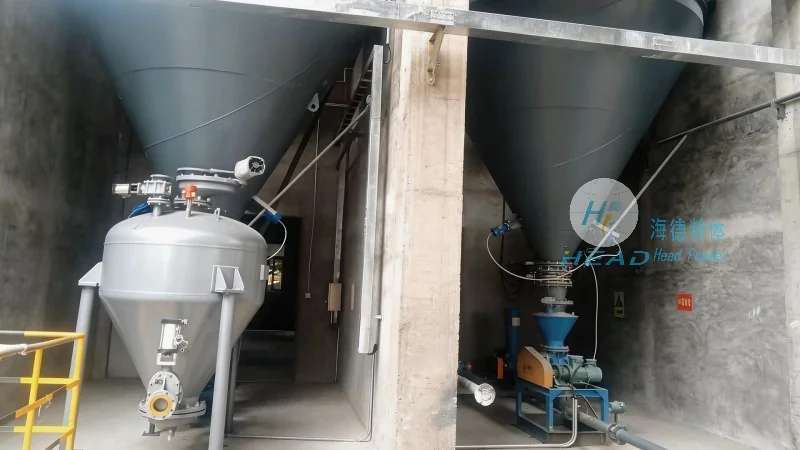
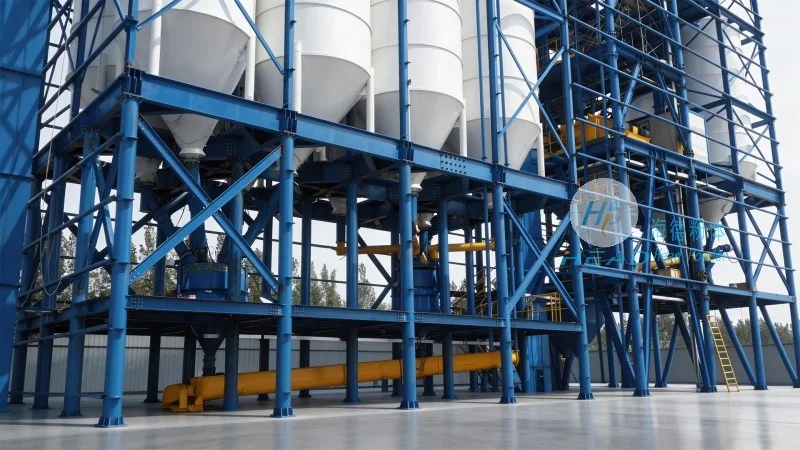
The PCl₅ powder conveying line operates based on the principles of pneumatic or mechanical conveying systems, tailored to handle the specific properties of phosphorus pentachloride. The system typically consists of several core components, including a hopper for material storage, a feeder to control the flow rate, a conveying pipeline, and a receiver for material discharge. The choice of conveying method—whether pneumatic (air-assisted) or mechanical (e.g., screw or belt conveyors)—depends on factors such as the material's density, flowability, and the required conveying distance. For PCl₅, which is a fine powder with low bulk density and potential for static charge accumulation, pneumatic conveying is often preferred due to its ability to handle fine powders and minimize material degradation. The conveying line may incorporate features like static elimination devices, filtration systems, and temperature control mechanisms to ensure the safe and efficient transport of PCl₅, preventing issues such as caking, agglomeration, or equipment corrosion.
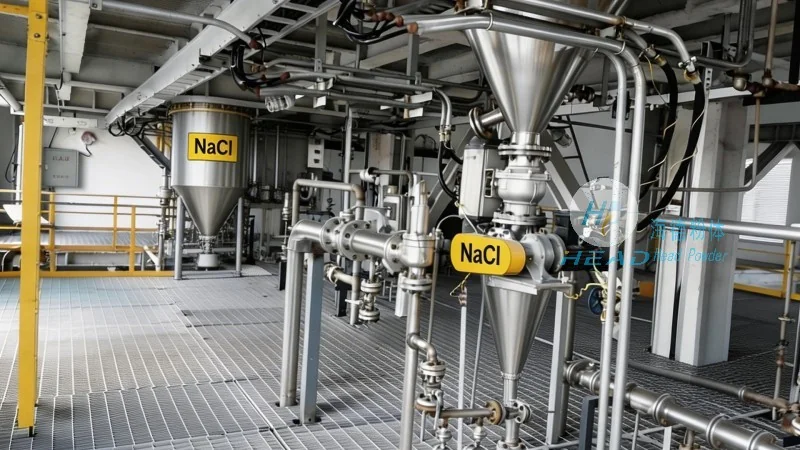
The working scene characteristics of the PCl₅ powder conveying line are shaped by the demanding nature of the material and the operational requirements of industrial facilities. One key characteristic is the need for a closed system to prevent PCl₅ from contacting air or moisture, as exposure to these elements can lead to hazardous reactions or product degradation. The conveying line is typically designed with airtight components, such as sealed hoppers and pipelines, to maintain a controlled environment. Additionally, the system must be equipped with safety measures, including pressure relief valves, explosion-proof components, and gas detection systems, to mitigate risks associated with the reactive nature of PCl₅. The working environment may also involve strict temperature and humidity controls, as PCl₅ is sensitive to changes in these conditions, which can affect its physical properties and handling behavior. In industrial settings, the conveying line is often integrated with other production equipment, such as reactors, reactors, or storage tanks, to form a seamless material flow process. The working scene may vary depending on the scale of the operation—ranging from small-scale laboratory setups to large-scale industrial plants—each requiring customized solutions to meet specific throughput and safety standards.
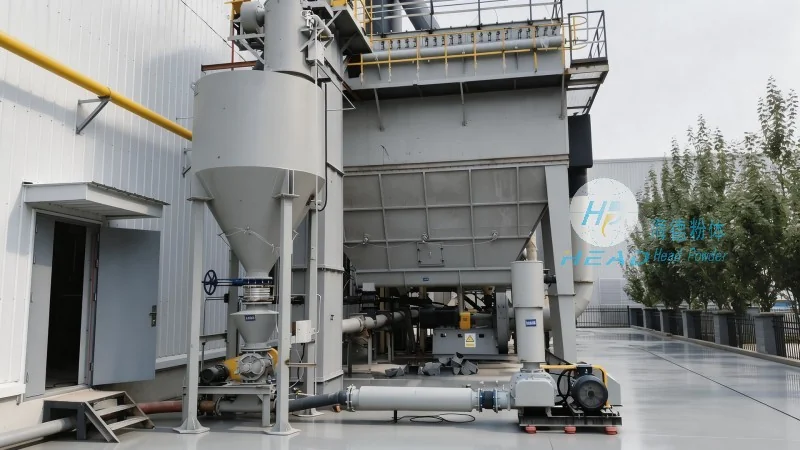
The PCl₅ powder conveying line is integral to the production processes of various industries, including pharmaceuticals, agrochemicals, and specialty chemicals. In the pharmaceutical industry, PCl₅ is used as a reagent in the synthesis of certain active pharmaceutical ingredients (APIs), and the conveying line ensures the precise and safe delivery of the powder to reactors. In agrochemical manufacturing, PCl₅ is employed in the production of herbicides and pesticides, where the conveying system must maintain strict purity and safety standards to avoid contamination or environmental hazards. The line's design and operation directly impact the efficiency and reliability of these production lines, making it a critical component in modern chemical manufacturing. By optimizing the conveying process, manufacturers can enhance productivity, reduce downtime, and minimize the risk of accidents, thereby improving overall operational performance.

 Shandong Headpowder Engineering Co., Ltd.
 156-6277-7102(Manager Zhang)
  0531-83386006
  Zhangqiu District, Jinan City, Shandong Province, China
telephone
WeChatconsult
top