With more than 10‑year industry experience, Shandong Headpowder delivers full‑service pneumatic‑conveying systems and blowers, undertaking nationwide turn‑key powder‑handling projects.
Tri-metal materials, such as lithium cobalt oxide (LiCoO₂), lithium iron phosphate (LiFePO₄), and lithium manganese oxide (LiMn₂O₄), are critical components in modern battery production. The efficient and safe handling of these materials is essential for optimizing production lines and ensuring product quality. Pneumatic conveying systems have emerged as a preferred solution for transporting tri-metal powders due to their ability to handle fine powders without contamination and with minimal product degradation.
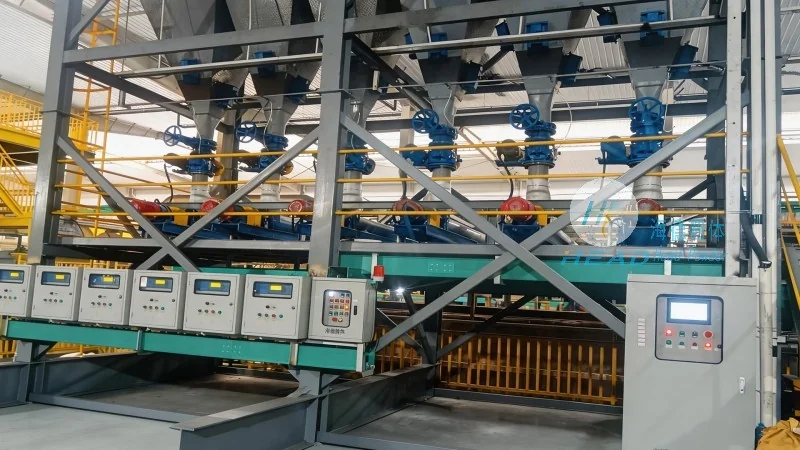
Pneumatic conveying operates by using compressed air to transport powders through a pipeline. The system typically consists of a hopper, a feeder, a conveying line, and a receiver. The hopper stores the tri-metal powder, and the feeder controls the flow rate. Compressed air is introduced into the conveying line, creating a pressure differential that propels the powder particles forward. The design of the conveying line, including the use of bends, expansions, and filters, is crucial for maintaining the flow and preventing blockages. The receiver collects the conveyed material, and the system may include a dust collection system to ensure environmental compliance.
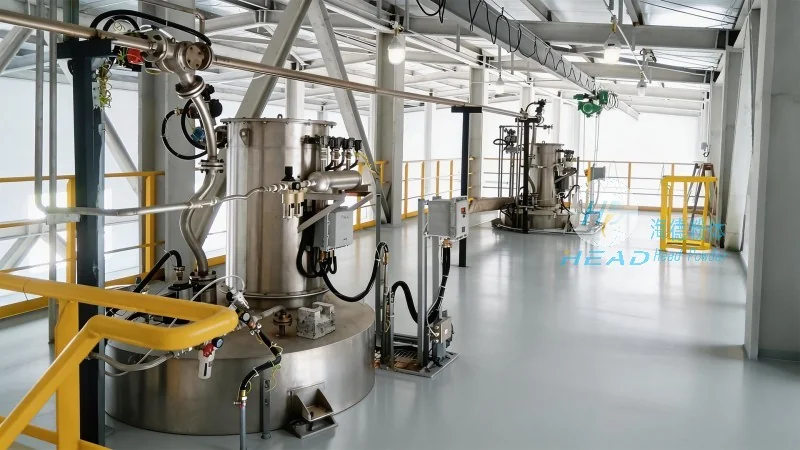
The tri-metal material pneumatic conveying equipment offers several advantages that make it suitable for battery manufacturing. These include high conveying efficiency, which minimizes material loss and downtime; minimal product contamination, as the closed system prevents exposure to external elements; and the ability to handle hygroscopic and static-charged powders without compromising material integrity. The equipment is also designed for scalability, allowing for integration into existing production lines or as standalone units for material transfer between different stages of the battery production process. Furthermore, the system can be customized to meet specific operational requirements, such as varying flow rates or material types, ensuring optimal performance in diverse industrial settings.
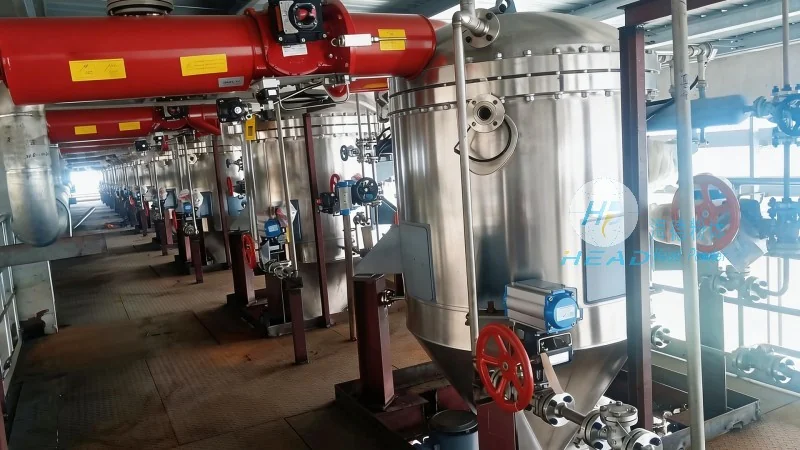
Tri-metal material pneumatic conveying equipment is widely used in various industrial settings, particularly in battery manufacturing facilities. The equipment is designed to handle the specific characteristics of tri-metal powders, including their fine particle size, hygroscopic nature, and potential for static charge. Key features include: high conveying efficiency, minimal product contamination, and the ability to operate in a closed system, which reduces dust exposure and improves workplace safety. The systems are also scalable, allowing for integration into existing production lines or as standalone units for material transfer between different stages of the battery production process.

 Shandong Headpowder Engineering Co., Ltd.
 156-6277-7102(Manager Zhang)
  0531-83386006
  Zhangqiu District, Jinan City, Shandong Province, China
telephone
WeChatconsult
top