With more than 10‑year industry experience, Shandong Headpowder delivers full‑service pneumatic‑conveying systems and blowers, undertaking nationwide turn‑key powder‑handling projects.
Desulfurization gypsum, a byproduct of flue gas desulfurization in thermal power plants and other industrial facilities, requires efficient and reliable transportation systems to meet industrial processing needs. The pneumatic conveying equipment for desulfurization gypsum is a key component in the overall process, enabling the safe and effective movement of this material from the desulfurization unit to storage or further processing sites. This article explores the underlying principles of such equipment and the specific characteristics of its application scenarios, providing insights into how these systems operate and where they are most effectively utilized.
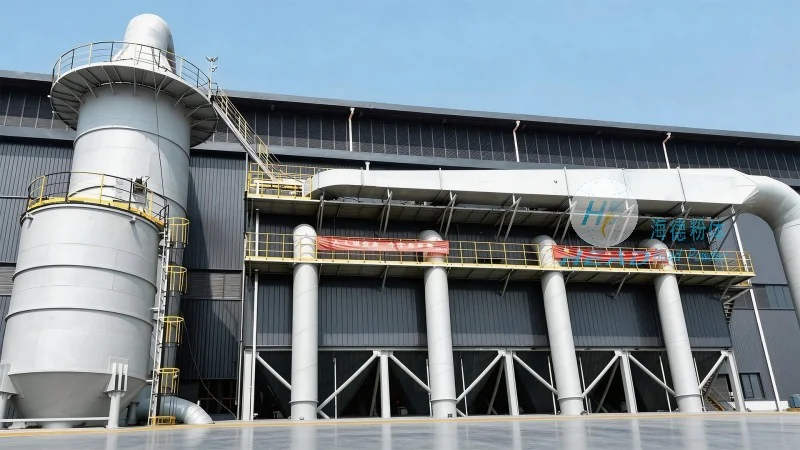
HeadPowder, a leading manufacturer in the field of powder handling and conveying solutions, specializes in developing advanced pneumatic conveying systems tailored to the unique demands of desulfurization gypsum. With a focus on innovation and industrial application, the company's products are designed to address the challenges associated with handling this material, including its moisture content, particle size distribution, and the need for environmental compliance. The following sections delve into the technical principles and operational characteristics of desulfurization gypsum pneumatic conveying equipment, highlighting the expertise and solutions offered by Shandong HeadPowder Engineering Co., Ltd., headquartered in Shandong, China.
The core principle of pneumatic conveying for desulfurization gypsum involves the use of air to transport the material through a pipeline system. This method can be categorized into two main types: positive pressure (or pressure) systems and negative pressure (or vacuum) systems. Positive pressure systems operate by blowing air into the conveying line, while negative pressure systems draw air out of the line to create a vacuum that pulls the material along. Both systems rely on the interaction between the air flow and the gypsum particles to achieve efficient transport.
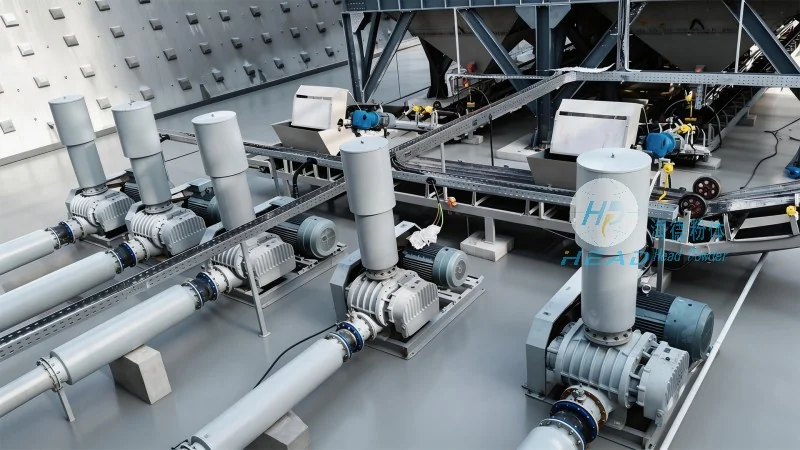
In a typical positive pressure system, a blower or compressor generates high-pressure air that is introduced into the material feed point. The air then mixes with the gypsum, creating a slurry-like mixture that is propelled through the pipeline. The equipment includes components such as a rotary valve or screw feeder to control the flow of gypsum into the conveying line, a pulse jet filter to remove dust from the air stream, and a silo or storage tank at the discharge end. The design of the pipeline, including the use of bends, elbows, and expansion joints, is critical to minimize pressure loss and ensure smooth material movement.
For negative pressure systems, a vacuum pump creates a low-pressure environment at the discharge end, drawing the gypsum and air mixture through the pipeline. This approach is often preferred in applications where dust control is a priority, as the vacuum helps to capture and filter particles before they are released into the environment. The system typically includes a dust collector or cyclone separator to separate the gypsum from the air, with the air being recirculated or discharged after filtration. The choice between positive and negative pressure depends on factors such as the distance to be conveyed, the volume of material, and the need for environmental protection.
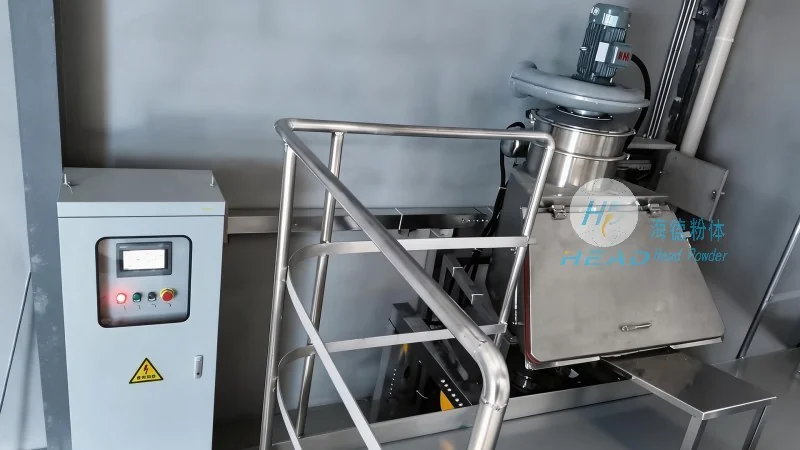
The pneumatic conveying process for desulfurization gypsum is also influenced by the physical properties of the material. Desulfurization gypsum typically has a moisture content of 5-10% and a particle size range from 10 to 200 microns, which can affect the flow characteristics and the required air velocity for effective transport. The equipment must be designed to handle these properties, ensuring that the material does not clog the pipeline or cause excessive wear on components. Advanced systems may incorporate features such as air classification or moisture control to optimize the conveying process and maintain the quality of the gypsum.
The application scenarios for desulfurization gypsum pneumatic conveying equipment vary widely, depending on the industrial setting and the specific requirements of the facility. In thermal power plants, for example, the equipment is used to transport gypsum from the desulfurization tower to a storage silo or to a cement production line for use as a raw material. The distance between these points can range from a few hundred meters to several kilometers, requiring high-capacity conveying systems capable of handling large volumes of material.
In cement factories, desulfurization gypsum is often used as a supplementary cementitious material (SCM), replacing a portion of the clinker in the production process. The pneumatic conveying system must be integrated with the existing cement production line, ensuring that the gypsum is delivered to the mixing or grinding stage in a controlled manner. The equipment must also be compatible with the other components of the cement plant, such as the raw material handling system and the clinker storage facilities.
Another common application is in the production of gypsum board, where the desulfurization gypsum is used as the main raw material. The conveying equipment must be able to deliver the material to the board production line with minimal loss of moisture and particle size, as these factors directly impact the quality of the final product. The system may include additional components such as a dryer or a preheater to adjust the moisture content of the gypsum before it is used in the board manufacturing process.
In addition to industrial applications, the equipment is also used in waste management and recycling facilities, where desulfurization gypsum is processed and repurposed for various uses. The working scene characteristics in these settings include the need for high efficiency and low maintenance, as the equipment operates continuously and must handle varying material qualities. The systems are often designed with modular components that can be easily upgraded or replaced, ensuring long-term reliability and performance.
The working scene characteristics also include considerations related to environmental regulations and safety. Desulfurization gypsum is a non-hazardous material, but its handling must comply with local and national standards for dust emission and air quality. The pneumatic conveying equipment is designed to minimize dust generation and to capture any particles that may be released during the process. This is achieved through the use of sealed systems, dust filters, and proper ventilation, ensuring that the operation is both efficient and environmentally responsible.
HeadPowder offers a comprehensive range of pneumatic conveying solutions specifically designed for desulfurization gypsum applications. The company's products are engineered to meet the unique challenges of handling this material, including its moisture content, particle size, and the need for reliable, long-distance transport. The equipment is manufactured with high-quality materials and advanced technology, ensuring durability and low maintenance costs over the life of the system.
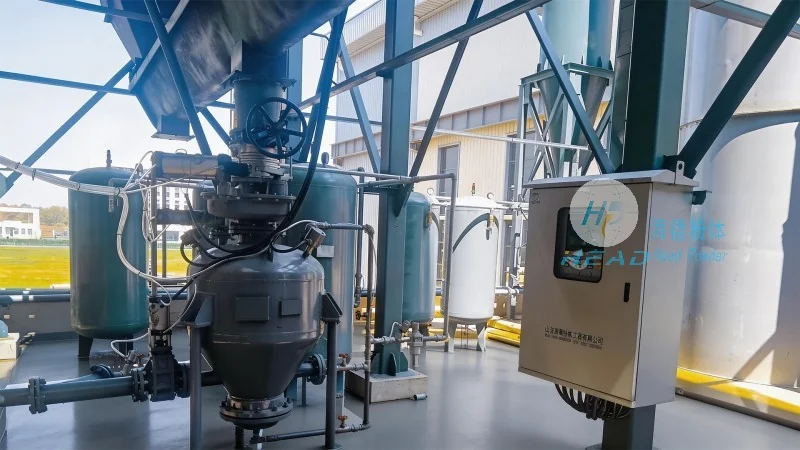
Key features of HeadPowder's desulfurization gypsum pneumatic conveying equipment include: a robust and efficient blower or vacuum pump system, a high-capacity rotary valve or screw feeder for precise material control, a pulse jet filter or cyclone separator for effective dust removal, and a flexible pipeline design that accommodates varying conveying distances and layouts. The systems are available in both positive and negative pressure configurations, allowing customers to choose the most suitable option based on their specific operational needs.
The company's products are designed with user-friendly controls and monitoring systems, enabling operators to adjust the conveying parameters in real-time and optimize the performance of the equipment. This includes features such as pressure monitoring, flow rate control, and alarm systems that alert operators to any issues or deviations from the normal operating conditions. The equipment is also equipped with safety features, such as emergency shut-off valves and dust explosion prevention measures, to ensure the safety of the personnel and the facility.
HeadPowder's desulfurization gypsum pneumatic conveying equipment is backed by a team of experienced engineers and technicians who provide comprehensive support throughout the entire process, from system design and installation to maintenance and troubleshooting. The company's commitment to quality and customer satisfaction has made it a trusted partner for many industrial facilities, helping them to improve their operational efficiency and reduce costs associated with material handling.
With headquarters in Shandong, China, Shandong HeadPowder Engineering Co., Ltd. leverages its local expertise and manufacturing capabilities to deliver high-performance pneumatic conveying systems that meet the global standards of quality and reliability. The company's products are widely used in thermal power plants, cement factories, and other industrial settings, where the efficient handling of desulfurization gypsum is critical to the overall operation of the facility.

 Shandong Headpowder Engineering Co., Ltd.
 156-6277-7102(Manager Zhang)
  0531-83386006
  Zhangqiu District, Jinan City, Shandong Province, China
telephone
WeChatconsult
top