With more than 10‑year industry experience, Shandong Headpowder delivers full‑service pneumatic‑conveying systems and blowers, undertaking nationwide turn‑key powder‑handling projects.
HeadPowder, a leading manufacturer based in Shandong, China, specializes in providing advanced solutions for the efficient handling and transportation of fertilizer materials. The company's expertise lies in the design and production of pneumatic conveying systems that are tailored to meet the specific demands of the fertilizer industry. This article delves into the working principles and key features of these equipment, offering insights into how they enhance operational efficiency and reliability in fertilizer processing and distribution.
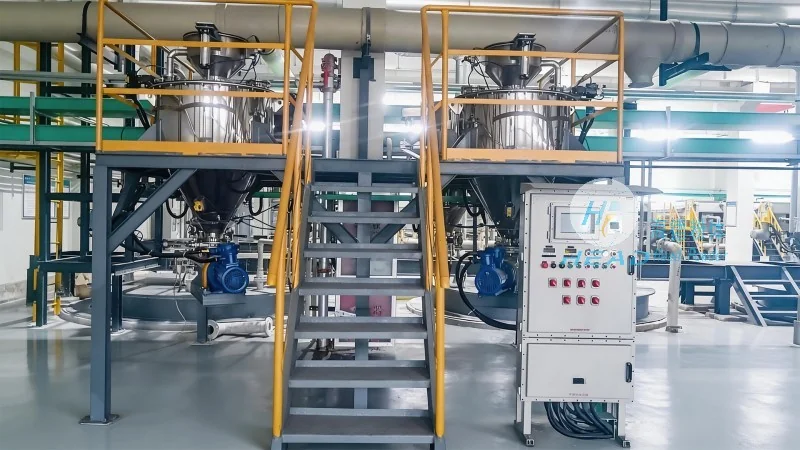
The core mechanism of fertilizer material pneumatic conveying equipment involves the use of air as the conveying medium to transport bulk materials. The process typically operates under either positive or negative pressure, depending on the system design and the material characteristics. In a positive pressure system, compressed air is introduced into the material feed point, creating a high-pressure environment that propels the fertilizer particles through the pipeline. Conversely, negative pressure systems draw air and material from the discharge point, creating a vacuum that pulls the material forward. The equipment includes components such as feeders, airlocks, pipelines, and receivers, all working in tandem to ensure a continuous and controlled flow of fertilizer. The selection of the appropriate pressure type depends on factors like material density, particle size, and the distance to be covered, ensuring optimal performance and minimal energy consumption.
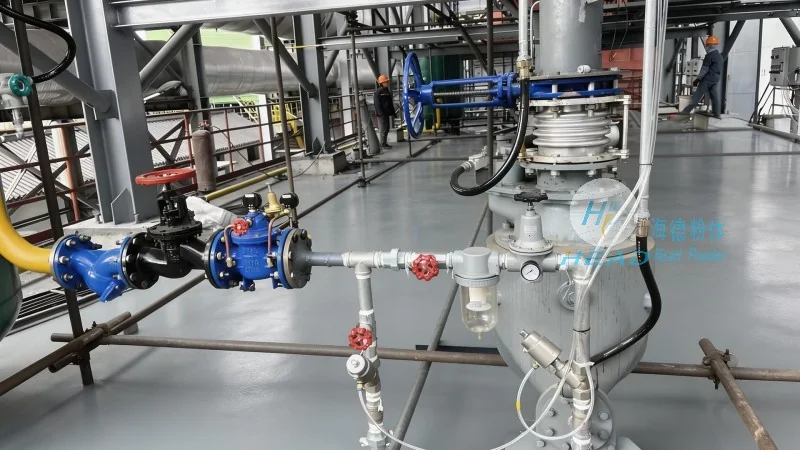
HeadPowder's fertilizer material pneumatic conveying equipment is characterized by several notable features that set them apart in the industry. Firstly, the systems are designed for high efficiency, with minimal material degradation and loss during transport. This is achieved through the use of specialized airlocks and feed mechanisms that prevent product spillage and ensure a smooth flow. Secondly, the equipment offers excellent flexibility, allowing for easy integration into existing production lines and the ability to handle a wide range of fertilizer types, from granular to powdered forms. Thirdly, the systems are built for durability and reliability, with robust construction that can withstand the harsh conditions of the fertilizer industry, including high abrasion and corrosive environments. Additionally, the equipment is equipped with advanced control systems that provide real-time monitoring and adjustment of conveying parameters, ensuring consistent performance and reducing downtime. The use of high-quality materials, such as stainless steel and wear-resistant components, further enhances the longevity and maintenance efficiency of the systems.
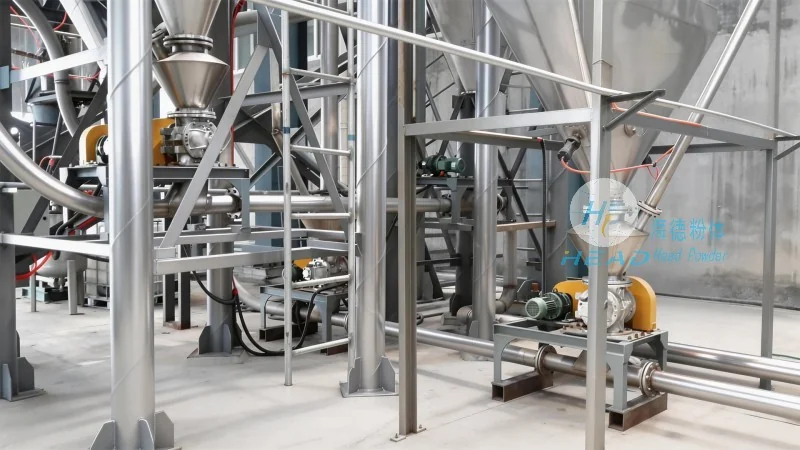
Implementing pneumatic conveying systems for fertilizer handling offers numerous advantages over traditional methods like belt conveyors or bucket elevators. One of the primary benefits is the ability to handle materials in a completely enclosed system, which prevents dust emissions and contamination, ensuring compliance with environmental regulations and maintaining product quality. This enclosed design also improves workplace safety by eliminating the risk of dust explosions and providing a cleaner working environment. Another significant advantage is the reduced labor costs associated with manual handling and loading. Pneumatic systems automate the entire conveying process, minimizing the need for manual intervention and reducing the risk of human error. Furthermore, the systems offer greater flexibility in terms of layout and space utilization, as they can be installed in various configurations to fit the specific requirements of a facility. The ability to transport materials over long distances without the need for intermediate storage or transfer points also streamlines the production process and improves overall operational efficiency.
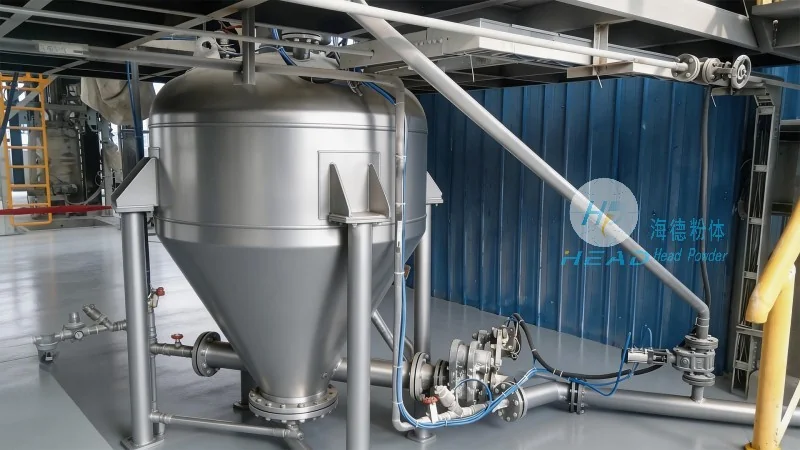
HeadPowder understands that each fertilizer production facility has unique requirements, and therefore, offers customized pneumatic conveying solutions tailored to specific applications. The company's engineers work closely with clients to assess their material characteristics, processing needs, and operational constraints to design a system that maximizes efficiency and minimizes costs. The equipment can be adapted for various fertilizer types, including urea, ammonium nitrate, phosphate, and potassium-based fertilizers, as well as for different particle sizes and moisture contents. The systems are also suitable for both new installations and retrofits in existing facilities, providing a cost-effective solution for upgrading or expanding fertilizer handling capabilities. Whether for small-scale operations or large industrial plants, HeadPowder's pneumatic conveying equipment can be scaled to meet the specific demands of the application, ensuring optimal performance and reliability.

 Shandong Headpowder Engineering Co., Ltd.
 156-6277-7102(Manager Zhang)
  0531-83386006
  Zhangqiu District, Jinan City, Shandong Province, China
telephone
WeChatconsult
top