With more than 10‑year industry experience, Shandong Headpowder delivers full‑service pneumatic‑conveying systems and blowers, undertaking nationwide turn‑key powder‑handling projects.
Bottom-discharge powder pneumatic conveying machines are essential equipment in modern powder handling systems, designed to efficiently transport bulk powders from storage silos or hoppers to processing units. This article provides a detailed overview of the operation process and working principle of such machines, highlighting the key components and the step-by-step procedures involved in their functionality.
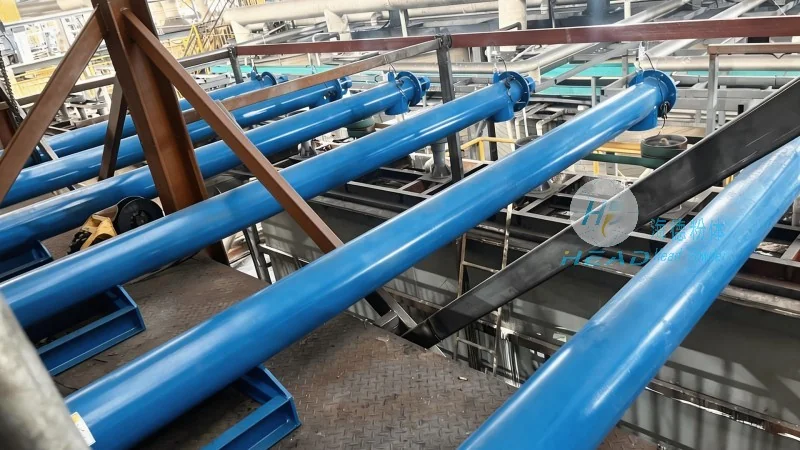
Bottom-discharge powder pneumatic conveying machines, commonly used in industries like pharmaceuticals, food processing, and chemical manufacturing, offer a reliable and flexible solution for transporting fine powders. The system typically consists of a hopper or silo at the top, a conveying line, and a discharge unit at the bottom. The design allows for continuous or intermittent operation, depending on the application requirements. The machine is manufactured by Shandong HeadPowder Engineering Co., Ltd., a leading company in the field, with the brand name often referred to as headpowder.
Shandong HeadPowder Engineering Co., Ltd. is a professional manufacturer specializing in powder handling equipment. The company, operating from China, has built a strong reputation for producing high-quality bottom-discharge powder pneumatic conveying machines. With years of experience and a team of skilled engineers, HeadPowder ensures that their products meet the stringent standards of various industries, providing durability, efficiency, and safety in powder transportation.
The operation process of a bottom-discharge powder pneumatic conveying machine involves several key steps that ensure smooth and efficient powder transfer. The process begins with the loading of the powder into the storage hopper or silo. The powder then flows into the conveying line under the influence of air pressure. The machine uses a combination of positive pressure or negative pressure (suction) to move the powder through the pipeline. At the discharge end, the powder is collected in the receiving container or processing unit. The entire process is controlled by a system of valves, regulators, and sensors that monitor the flow rate and pressure, ensuring optimal performance.
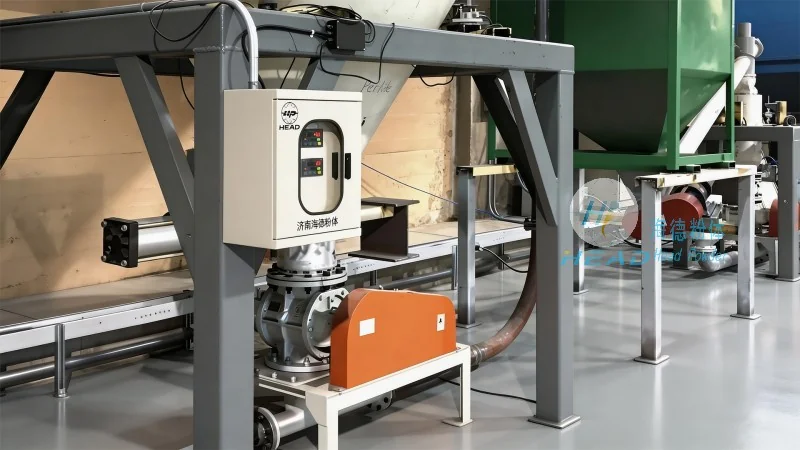
The working principle of a bottom-discharge powder pneumatic conveying machine is based on the fundamental concept of pneumatic transport, where air is used as the medium to move the powder particles. The machine operates by creating a pressure differential between the hopper and the discharge point. In a positive pressure system, compressed air is introduced into the hopper, pushing the powder through the conveying line. In a negative pressure (suction) system, a vacuum is created at the discharge end, drawing the powder from the hopper. The bottom-discharge design allows for the powder to be discharged directly from the bottom of the hopper, eliminating the need for additional equipment like gates or valves at the bottom, which simplifies the system and reduces maintenance.
Several critical components work together to ensure the proper operation of a bottom-discharge powder pneumatic conveying machine. These include the storage hopper or silo, which holds the bulk powder; the air compressor or vacuum pump, which provides the necessary air pressure or suction; the conveying line, typically made of flexible or rigid tubing; the control valves and regulators, which manage the air flow and pressure; and the discharge unit, which collects the powder at the end of the line. Each component plays a vital role in maintaining the efficiency and reliability of the system.
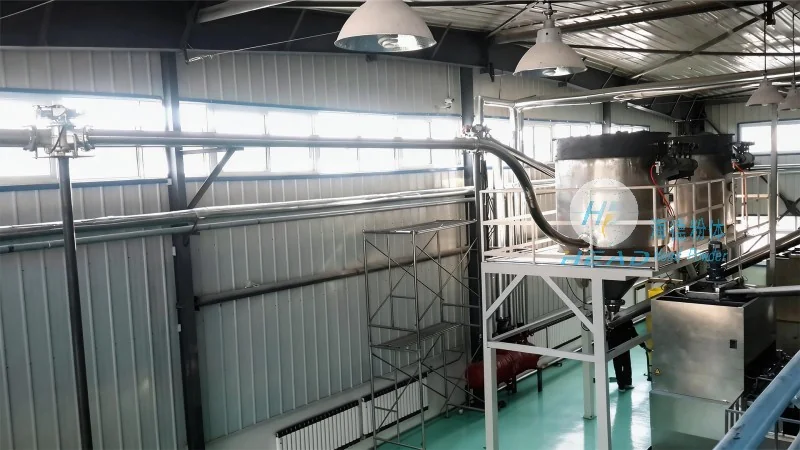
Bottom-discharge powder pneumatic conveying machines offer several advantages over traditional methods of powder handling. They provide a clean and dust-free environment, reducing the risk of contamination and improving product quality. The system is also flexible, allowing for changes in the powder flow rate and direction without major modifications. Additionally, the bottom-discharge design minimizes the risk of material buildup and blockages, as the powder is continuously moved through the line. The equipment is also relatively easy to install and maintain, making it a cost-effective solution for many industrial applications.
Bottom-discharge powder pneumatic conveying machines are widely used in various industries. In the pharmaceutical industry, they are used to transport active pharmaceutical ingredients (APIs) and excipients with high purity requirements. In the food processing industry, they handle powders like flour, sugar, and spices, ensuring that the products remain fresh and uncontaminated. In the chemical industry, they transport raw materials and intermediates, providing a safe and efficient way to move hazardous powders. The versatility of the system makes it suitable for a wide range of applications, from small-scale operations to large industrial plants.
Bottom-discharge powder pneumatic conveying machines are a critical component in modern powder handling systems, offering efficient, reliable, and safe transportation of bulk powders. Shandong HeadPowder Engineering Co., Ltd. continues to innovate and improve its products to meet the evolving needs of the industry, ensuring that their machines remain at the forefront of powder handling technology. With a focus on quality, performance, and customer satisfaction, HeadPowder provides solutions that enhance productivity and reduce operational costs for its clients.

 Shandong Headpowder Engineering Co., Ltd.
 156-6277-7102(Manager Zhang)
  0531-83386006
  Zhangqiu District, Jinan City, Shandong Province, China
telephone
WeChatconsult
top