With more than 10‑year industry experience, Shandong Headpowder delivers full‑service pneumatic‑conveying systems and blowers, undertaking nationwide turn‑key powder‑handling projects.
Graphene powder, a high-performance material with exceptional mechanical, electrical, and thermal properties, often requires specialized handling systems to ensure efficient and safe transportation. Gaseous conveying lines, also known as pneumatic conveying systems, have emerged as a reliable solution for moving graphene powder from one location to another. These systems utilize air or other gases to transport the powder, offering advantages such as reduced contamination, improved process control, and enhanced safety compared to traditional methods like bulk handling or manual transfer.
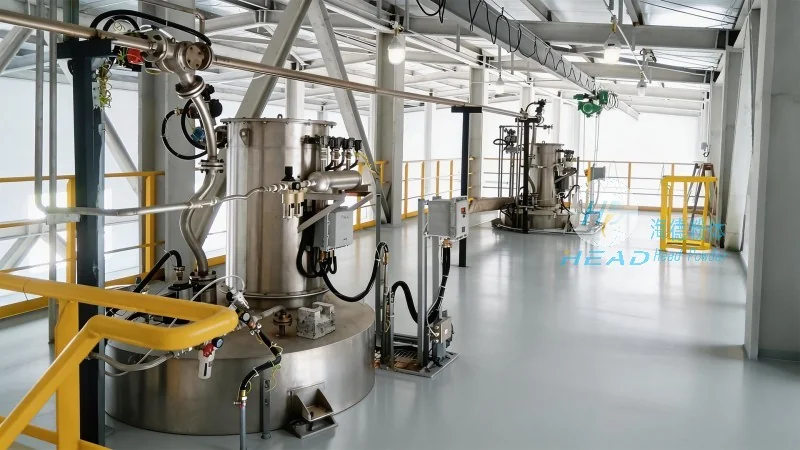
The operation of a gaseous conveying line for graphene powder involves several critical components that work in tandem to achieve efficient material transport. The primary components include a hopper or feeder for storing and feeding the powder, a compressor or blower to generate the conveying air, a pipeline system to direct the flow, and a receiver or discharge unit to collect the material at the destination. Each component plays a vital role in maintaining the integrity of the graphene powder and ensuring smooth operation of the system.
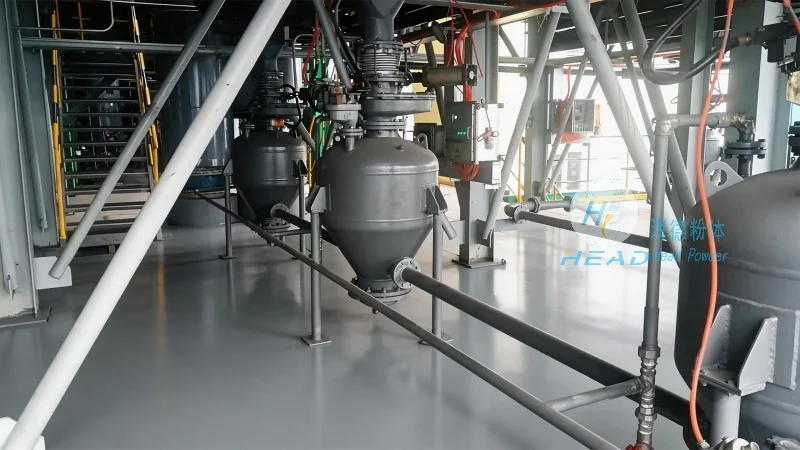
The operation process of a gaseous conveying line for graphene powder typically begins with the loading of the powder into the hopper. The feeder then regulates the flow of the powder into the pipeline, where it is mixed with the conveying air. The air-powder mixture is then propelled through the pipeline by the compressor or blower, moving the graphene powder to the receiver. The receiver may include a filter or separator to remove any excess air and ensure the powder is deposited in a controlled manner. This process is continuous and can be adjusted to handle varying quantities of graphene powder, making it suitable for both small-scale and large-scale applications.
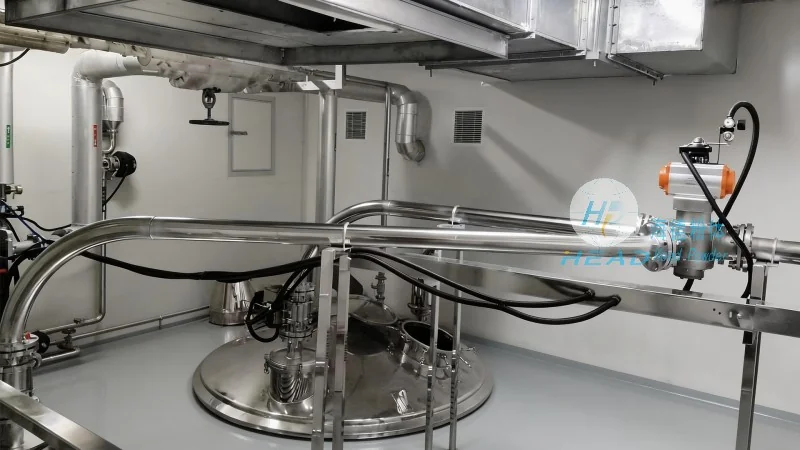
The working principle of a gaseous conveying line for graphene powder is based on the principle of fluidization and pneumatic transport. When air is introduced into the pipeline at a sufficient velocity, it creates a fluidized state for the graphene powder, allowing it to be carried along with the air stream. The velocity of the air must be maintained above the minimum conveying velocity to prevent the powder from settling or clogging the pipeline. The system uses positive pressure or negative pressure (vacuum) to move the material, with positive pressure being more common for longer distances and higher material loads. The design of the pipeline, including the diameter and length, is crucial to ensure the air velocity remains within the optimal range for efficient transport.
Employing a gaseous conveying line for graphene powder offers several advantages that make it a preferred choice in industrial applications. First, it minimizes the risk of contamination, as the powder is enclosed within the pipeline and does not come into direct contact with the environment. This is particularly important for high-purity graphene powder, which is sensitive to impurities. Second, the system provides better process control, allowing operators to adjust the flow rate and pressure to meet specific requirements. Third, it enhances safety by eliminating the need for manual handling of the powder, reducing the risk of dust explosions or inhalation hazards. Additionally, gaseous conveying systems are more energy-efficient compared to other bulk handling methods, as they use air as the primary medium, which is readily available and cost-effective.
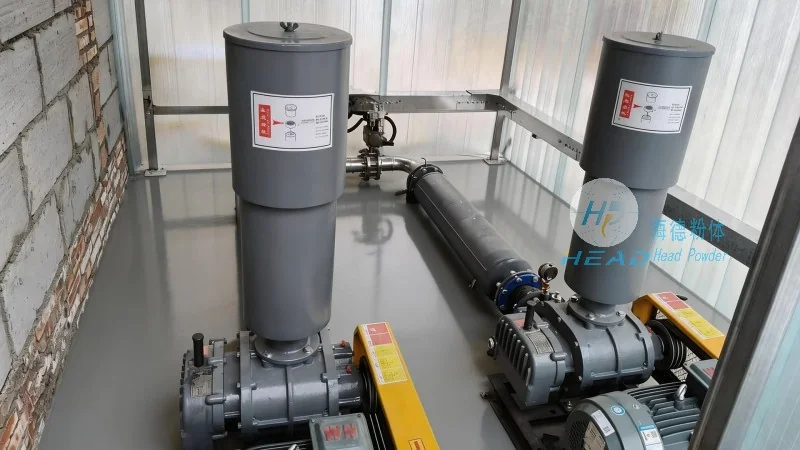
Gaseous conveying lines for graphene powder are widely used in various industries that require the handling of high-performance materials. These include the electronics industry, where graphene is used in flexible electronics and sensors; the energy sector, for applications in batteries and supercapacitors; and the composite materials industry, where graphene is incorporated into polymers and ceramics to enhance their properties. The versatility of the gaseous conveying system makes it suitable for both research and production environments, allowing for the efficient transfer of graphene powder from processing facilities to manufacturing lines.

 Shandong Headpowder Engineering Co., Ltd.
 156-6277-7102(Manager Zhang)
  0531-83386006
  Zhangqiu District, Jinan City, Shandong Province, China
telephone
WeChatconsult
top