With more than 10‑year industry experience, Shandong Headpowder delivers full‑service pneumatic‑conveying systems and blowers, undertaking nationwide turn‑key powder‑handling projects.
Bauxite, a primary raw material for aluminum production, requires efficient and reliable transport methods to ensure smooth industrial operations. Pneumatic conveying systems have emerged as a crucial solution for bauxite handling, offering advantages such as reduced maintenance, lower energy consumption, and enhanced safety compared to traditional methods. However, a common challenge in bauxite pneumatic conveying is the risk of pipeline blockages, which can significantly disrupt production and increase operational costs. Understanding and implementing the right design parameters are essential to mitigate these risks and maintain optimal system performance.

Before delving into system design, it is vital to comprehend the physical and chemical properties of bauxite that influence pneumatic conveying. Bauxite is typically a heterogeneous material composed of various minerals, including gibbsite, boehmite, and diaspore, along with impurities like clay and iron oxides. The particle size distribution, moisture content, and density of bauxite play critical roles in determining the system's performance. For instance, larger particles may require higher air velocities to prevent settling, while high moisture content can lead to agglomeration, increasing the likelihood of blockages. Therefore, accurate characterization of bauxite is the first step in designing an effective pneumatic conveying system.
Several critical design parameters must be carefully considered to prevent pipeline blockages in bauxite pneumatic conveying systems. These parameters are interrelated and must be optimized based on the specific material properties and operational requirements. The primary factors include air velocity, pipeline diameter, solids loading ratio, and the use of appropriate bends and fittings.
Air velocity is one of the most critical parameters in pneumatic conveying. It determines the ability of the air stream to transport bauxite particles through the pipeline. Insufficient air velocity can cause particles to settle and accumulate, leading to blockages. Conversely, excessively high air velocity may increase energy consumption and cause wear on system components. For bauxite, the recommended air velocity typically ranges from 20 to 30 meters per second, depending on the particle size and density. The flow rate must be adjusted to maintain a consistent velocity throughout the system, ensuring that particles are fully entrained and transported without deposition.
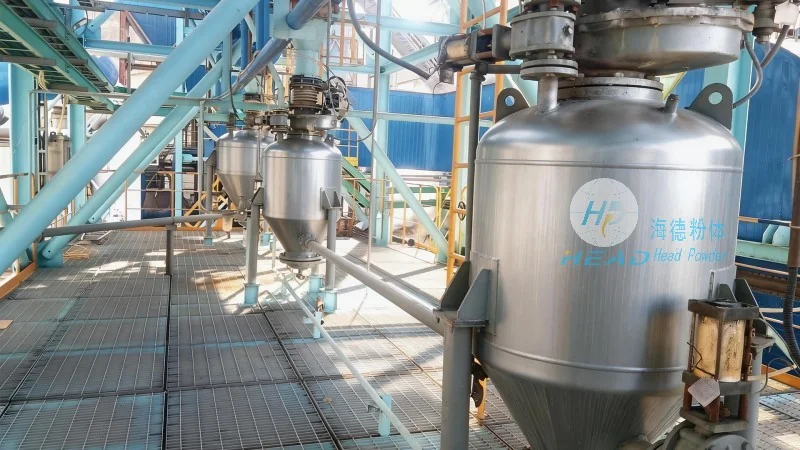
The diameter of the conveying pipeline is directly proportional to the system's capacity and the risk of blockages. Larger diameters reduce the frictional resistance and allow for lower air velocities, which can help prevent particle settling. However, overly large diameters may increase capital costs and require more space. The optimal diameter is determined by balancing the required throughput with the need to maintain sufficient air velocity. Additionally, the pipeline configuration, including the number and angle of bends, must be designed to minimize pressure losses and prevent particle accumulation. Sharp bends and sudden changes in direction can cause particles to impact the pipe walls, leading to abrasion and potential blockages. Therefore, using smooth bends and gradual transitions is essential.
Solids loading ratio, which is the ratio of the mass of solids to the mass of air, is another critical parameter. A higher solids loading ratio indicates a more dense flow, which can improve system efficiency but also increases the risk of blockages. Excessive solids loading can cause the air stream to lose its ability to entrain particles, leading to settling and clogging. For bauxite, the optimal solids loading ratio typically ranges from 0.1 to 0.3, depending on the particle size and air velocity. Monitoring and controlling the solids loading ratio in real-time is crucial to maintain system stability and prevent blockages.
The design of bends and fittings in the conveying pipeline significantly impacts the risk of blockages. Abrupt changes in direction can cause particles to impact the pipe walls, leading to abrasion and potential blockages. To mitigate this, using smooth, large-radius bends and avoiding sharp angles is recommended. Additionally, incorporating expansion joints or flexible connectors can help absorb vibrations and reduce stress on the system components, further minimizing the risk of blockages. The use of special fittings, such as those with anti-wear coatings, can also extend the system's lifespan and reduce maintenance needs.
Moisture content in bauxite is a major contributor to blockages, as it can cause particles to agglomerate and form clumps. Controlling moisture levels is therefore essential for preventing blockages. This can be achieved through pre-drying the bauxite or using desiccant systems to remove moisture from the air stream. Additionally, maintaining consistent air temperature and humidity can help prevent condensation inside the pipeline, which can further contribute to blockages. Proper air conditioning and moisture control measures are critical for ensuring the long-term reliability of the pneumatic conveying system.
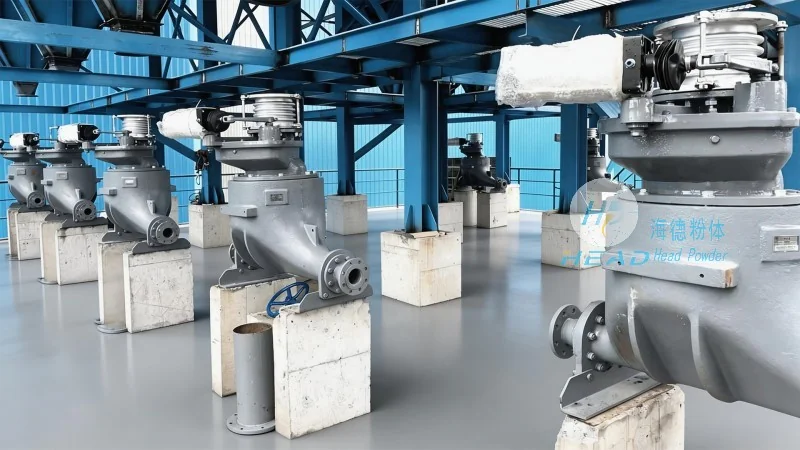
Proper system sizing and capacity planning are essential to prevent overloading and subsequent blockages. The conveying system must be designed to handle the maximum expected throughput while maintaining the required air velocity and solids loading ratio. Overloading the system can cause particles to settle and accumulate, leading to blockages and system failure. Therefore, accurate estimation of the bauxite feed rate and the system's capacity is crucial. Regular monitoring of the system's performance, including flow rates and pressure drops, can help identify potential issues before they lead to blockages.
Implementing best practices is key to ensuring the long-term operation of bauxite pneumatic conveying systems without blockages. Regular maintenance and inspection of system components, such as filters, cyclones, and bends, are essential to prevent clogging and wear. Using high-quality materials for pipeline construction, such as stainless steel or abrasion-resistant coatings, can extend the system's lifespan and reduce the risk of blockages. Additionally, training operators on proper system operation and troubleshooting can help identify and resolve issues promptly. By following these best practices, bauxite processing facilities can minimize downtime, reduce maintenance costs, and ensure consistent production.
Preventing pipeline blockages in bauxite pneumatic conveying systems requires a comprehensive approach that considers the material properties, system design, and operational parameters. By optimizing air velocity, pipeline diameter, solids loading ratio, and bend design, along with proper moisture control and system sizing, the risk of blockages can be significantly reduced. The expertise of companies like Shandong HeadPowder Engineering Co., Ltd. is invaluable in designing and implementing effective pneumatic conveying solutions tailored to the specific needs of bauxite processing facilities. With the right design parameters and best practices, bauxite can be transported efficiently and reliably, ensuring smooth industrial operations and sustainable production of aluminum.

 Shandong Headpowder Engineering Co., Ltd.
 156-6277-7102(Manager Zhang)
  0531-83386006
  Zhangqiu District, Jinan City, Shandong Province, China
telephone
WeChatconsult
top