With more than 10‑year industry experience, Shandong Headpowder delivers full‑service pneumatic‑conveying systems and blowers, undertaking nationwide turn‑key powder‑handling projects.
Your current position:首页 >> Case Studies >> Food & Pharmaceutical Industry Conveying Case Studies

PneumaticConveyingforAutomatedStarchFeeding,CarlowIE

Release time:2026-08-14 16:30:34
name of the company:Shandong Headpowder Engineering Co., Ltd.
telephone:156-6277-7102
contacts:Manager Zhang

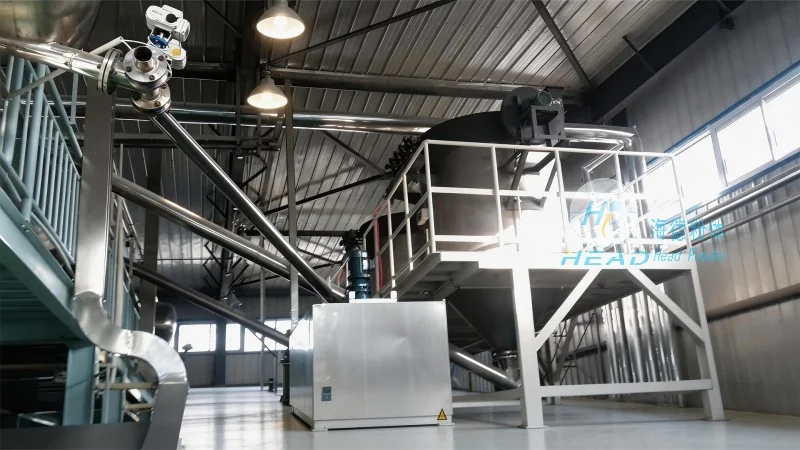
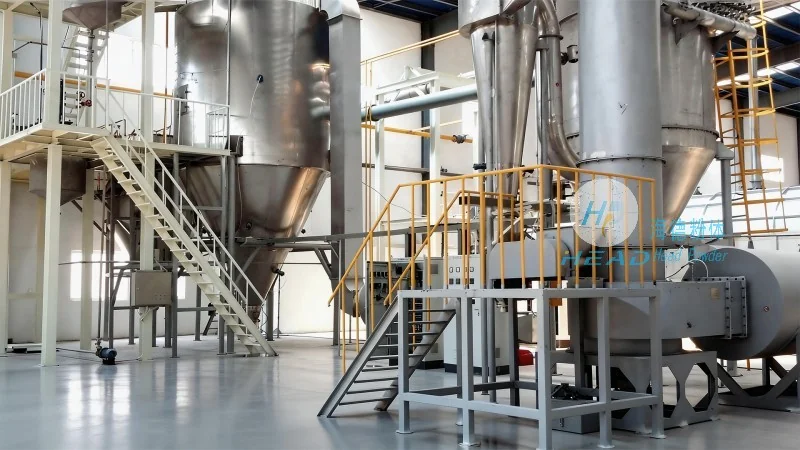
Pneumatic conveying systems have become an indispensable part of modern industrial processing, particularly when precise, automated feeding of bulk materials is required. The project completed by Shandong Headpowder Engineering Co., Ltd. at a starch processing facility in Carlow, Ireland, stands as a remarkable example of how advanced pneumatic conveying technology can transform traditional material handling operations. This article provides an in-depth look at this European pneumatic conveying case, highlighting the design philosophy, technical solutions, and operational benefits that make it a benchmark for automated starch feeding systems.

The Carlow project was initiated to address the growing need for a fully automated, hygienic, and reliable method of transferring starch from storage silos to multiple processing points. In many older facilities, starch is manually weighed and transported using bags or mechanical conveyors, which not only consumes significant labor but also risks product contamination and inconsistent feed rates. The client in Carlow wanted to eliminate these issues by adopting a closed, dust-free, and automated conveying solution. After evaluating several international suppliers, they selected Shandong Headpowder Engineering Co., Ltd. (headpowder), a company headquartered in Shandong, China, with extensive experience in designing and manufacturing pneumatic conveying systems for the food, pharmaceutical, and chemical industries.

The core system designed for this Irish facility is a dense-phase pneumatic conveying system. Unlike dilute-phase conveying, which uses high air velocities and low pressure, dense-phase conveying moves starch at low velocities using high-pressure air. This is particularly advantageous for starch because it is a fine, powdery material that can degrade or become dusty if handled too aggressively. The dense-phase approach gently pushes the starch through the pipeline in slugs or plugs, significantly reducing product degradation and minimizing wear on the pipeline. Furthermore, the system operates under a completely closed condition, ensuring that no fine starch particles escape into the surrounding environment, which greatly improves workplace safety and complies with stringent European hygiene and explosion prevention regulations.

The automation aspect of this pneumatic conveying project is another milestone. The entire feeding process, from silo discharge to the final dosing point, is controlled by a centralized PLC-based control system. Operators can monitor material flow, air pressure, motor status, and filter conditions in real time on a touch screen interface. The system supports fully automated recipe management, allowing the plant to pre-set different feed rates and sequences for different starch grades or production batches. When a particular processing line requests starch, the control system automatically activates the appropriate conveying route, opens the required rotary valves, and adjusts the blowing pressure to ensure a consistent and accurate feed rate. This level of automation reduces human intervention to a minimum, ensuring that the starch is fed exactly as required by the downstream processes, thereby improving product uniformity and reducing waste.

One of the critical challenges in this starch conveying project was the material's tendency to absorb moisture and form agglomerates. Starch is hygroscopic, and any condensation inside the conveying line could lead to blockages. To overcome this, headpowder engineers incorporated a series of moisture control measures. The air supplied to the system is passed through a desiccant dryer and a precision filter, ensuring it is completely dry and contamination-free. Additionally, the pipeline is designed with a slight slope and minimal bends to reduce resistance and prevent accumulation. Quick-open inspection ports and a purging function allow operators to clear any residual material after each batch, further reducing the risk of caking. These design details, though subtle, are crucial for the long-term reliable operation of a starch pneumatic conveying system in a humid European climate.

From an economic perspective, the automated starch feeding system has delivered substantial cost savings for the Carlow plant. By replacing manual handling with pneumatic conveying, labor costs have been drastically reduced. The previous method required several workers to carry and empty bags of starch into hoppers, a tiring and repetitive job. Now, a single operator can oversee the entire system from a control room. Moreover, the closed conveying system eliminates spillage and product loss. Since starch is a valuable commodity, even a small reduction in waste leads to significant annual savings. Energy consumption is also optimized, as the dense-phase system uses compressed air more efficiently than conventional dilute-phase systems, and the variable speed drives on the air compressors adjust output based on real-time demand.

Safety and compliance were top priorities in this European pneumatic conveying project. Starch dust is classified as a combustible dust, and any static discharge or overheated component could cause a dust explosion. To mitigate this risk, the entire conveying line is grounded, and all electrical equipment is rated for explosive atmospheres (ATEX certified). The system also incorporates pressure relief panels and a nitrogen purging option for enhanced inertization when required. These features ensure that the installation fully complies with the EU ATEX directive and local Irish health and safety regulations. The headpowder team provided comprehensive documentation, including risk assessments, installation manuals, and operational training, which helped the Carlow facility pass all required inspections without any issues.

Another notable aspect of this project is the close collaboration between Shandong Headpowder Engineering Co., Ltd. and the Irish client. Since the installation was carried out in a greenfield expansion area of an existing plant, careful planning was required to avoid disrupting ongoing production. The headpowder project team worked in conjunction with the local contractors to coordinate the delivery of major components, such as the pressure vessels, rotary feeders, and pipeline sections. Because most of the system was pre-fabricated and shop-tested in China, the on-site installation time was minimized. The project was completed and commissioned within the agreed schedule, with the system reaching full production capacity almost immediately after startup. This demonstrated the reliability of headpowder's engineering and project management capabilities in an international context.

What makes this case particularly valuable for other companies in Europe and beyond is the proof that high-quality pneumatic conveying technology can be successfully exported from China and integrated into demanding Western manufacturing environments. The starch feeding system in Carlow is not just a simple conveyor; it is a complete, turnkey solution that includes air generation, drying, filtration, conveying, dosing, and intelligent control. It serves as a compelling reference for food processors, starch producers, and any industry dealing with fine powders. The lessons learned from this project – particularly regarding moisture control, dense-phase optimization, and automated batch feeding – have been incorporated into headpowder's subsequent designs, further strengthening their expertise in European pneumatic conveying applications.

In terms of technical specifications, the system is designed for a conveying capacity of up to 5 tons per hour, with a conveying distance exceeding 200 meters and a vertical lift of 15 meters. The pipeline is constructed from stainless steel to meet food-grade standards, with an inner surface polished to a smooth finish to minimize friction and material buildup. The receiving hoppers are equipped with high-efficiency cartridge filters and reverse pulse jet cleaning, ensuring that the conveying air leaving the system contains less than 1 mg/m³ of dust, well below the European emission limits. The system also features a highly accurate weighing platform at the discharge point, enabling a feed accuracy of ±0.5%, which is essential for recipes that require precise starch ratios. This level of precision improves the final product quality and enables the plant to maximize the yield of its high-value end products.

The success of the Carlow project has had a multiplier effect for Shandong Headpowder Engineering Co., Ltd. in the European market. Following the smooth operation of this starch feeding line, the same client has ordered a second system for a new production line, and several other European food manufacturers have visited the Carlow site to see the system in action. This word-of-mouth reputation is a testament to the performance and durability of headpowder equipment. In addition, the company has established a local service partnership in Ireland to provide spare parts and maintenance support, ensuring that the client enjoys the same level of after-sales service as if they had purchased from a European manufacturer. This hybrid model—Chinese manufacturing with local service—has proven extremely effective in bridging the gap between cost competitiveness and high service standards.

For plant managers and engineers considering an automated starch feeding system, the Carlow project offers several key takeaways. First, dense-phase pneumatic conveying is the optimal choice for fragile, fine powders like starch, as it minimizes degradation and energy consumption. Second, fully automated control is not a luxury but a necessity in today's competitive market, as it directly impacts consistency, traceability, and labor efficiency. Third, moisture and dust control must be addressed from the very beginning of the system design; retrofits are costly and less effective. Finally, choosing a partner with proven international experience, such as headpowder, can substantially reduce the risks associated with equipment procurement, installation, and commissioning.

In conclusion, the pneumatic conveying for automated starch feeding at the Carlow, Ireland facility demonstrates the maturity and adaptability of modern Chinese engineering in meeting the highest European standards. From the initial concept to the final commissioning, every step was executed with meticulous attention to detail. The system not only solves the client's immediate material handling needs but also provides a scalable, future-proof platform that can accommodate increased production capacities or new process requirements. As the global food industry continues to move toward greater automation and sustainability, this successful case will undoubtedly serve as a reference point for many similar projects across Europe and the rest of the world. Shandong Headpowder Engineering Co., Ltd. remains committed to delivering innovative, reliable, and cost-effective pneumatic conveying solutions, and the Carlow project is a proud milestone in that ongoing journey.article-imgarticle-imgarticle-imgarticle-img

recommend

Copyright © Shandong Headpowder Engineering Co., Ltd.    Publicity of business license

top