Sodium metabisulfite, also known as sodium pyrosulfite, is a widely used inorganic chemical compound with the formula Na2S2O5. It appears as a white or yellowish crystalline powder with a pungent sulfur odor. Due to its strong reducing and antioxidant properties, it is extensively utilized in food preservation, winemaking, water treatment, textile bleaching, and various industrial chemical processes. However, handling sodium metabisulfite requires specialized equipment because the material is prone to decomposition when exposed to moisture, heat, or acidic conditions, releasing sulfur dioxide gas. This makes the design of a safe, efficient, and reliable pneumatic conveying system essential for manufacturers and processors who handle this material in bulk.
Pneumatic conveying is the preferred method for transferring sodium metabisulfite powder and granular forms within a processing facility. Unlike mechanical conveyors, pneumatic systems use air flow to move material through sealed pipelines, offering numerous advantages such as dust-free operation, flexible routing, low maintenance, and the ability to transport material over long distances. For sodium metabisulfite, a well-engineered pneumatic conveying system must account for the material's hygroscopic nature, its tendency to cake or agglomerate, and the potential for sulfur dioxide generation under certain conditions. Therefore, the system design must incorporate moisture-controlled air supply, proper material velocity selection, and the use of compatible materials of construction to ensure product integrity and operational safety.
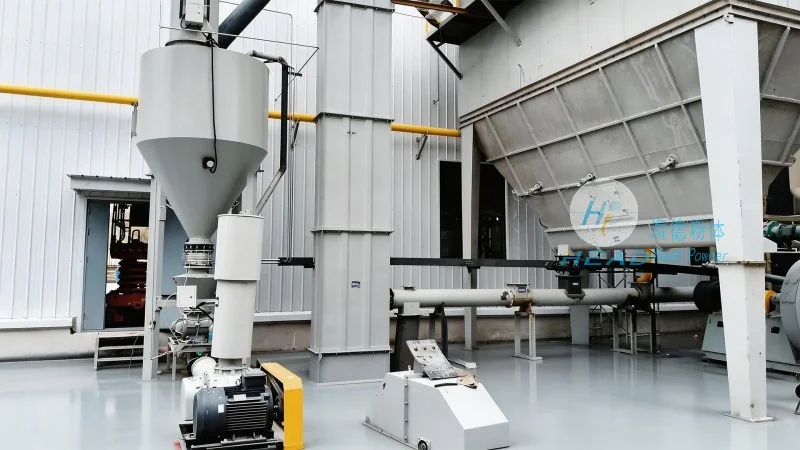
There are two primary types of pneumatic conveying systems: dilute phase and dense phase. In dilute phase conveying, the sodium metabisulfite is suspended in a high-velocity air stream and conveyed at speeds typically between 18 and 35 meters per second. This method is suitable for short to medium distances and when the material is free-flowing and non-fragile. However, high velocities can cause particle degradation and increased pipeline wear, especially for abrasive materials. For sodium metabisulfite, dilute phase systems are often used for simple transfer applications where the material is already in a stable powder form. The system typically includes a rotary airlock valve, a positive displacement blower, a conveying pipeline, and a cyclone or filter receiver for product separation.
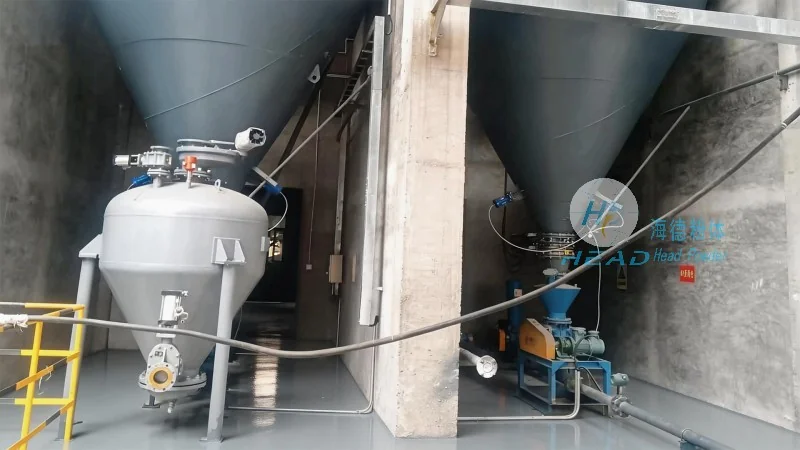
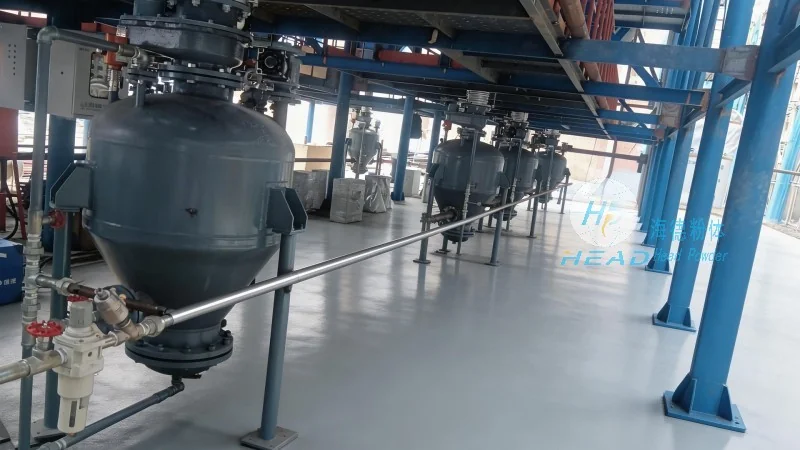
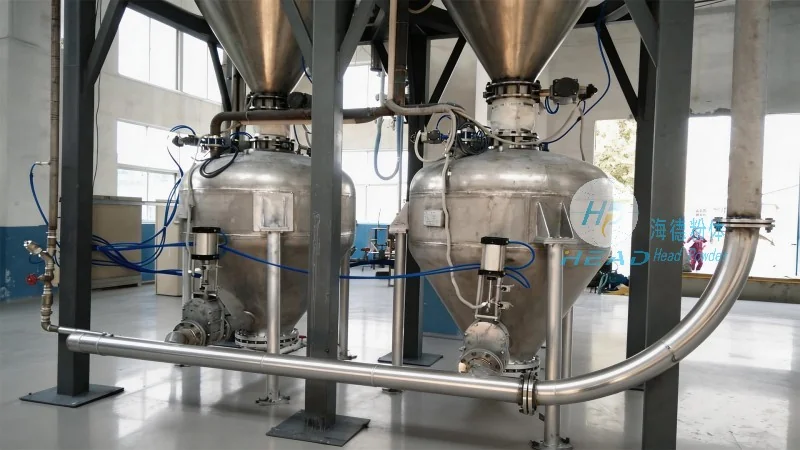
Dense phase conveying, on the other hand, uses low-velocity high-pressure air to push or fluidize the material in waves or plugs. This method operates at much lower speeds, usually below 15 meters per second, which minimizes particle attrition and pipeline erosion. Dense phase systems are ideal for sodium metabisulfite because they preserve the crystal structure and flow characteristics of the product. They also allow for longer conveying distances and higher throughput rates. Dense phase conveying can be implemented as a pressure system, where a pressure vessel feeds the product into the pipeline, or as a vacuum system, which is particularly useful for drawing material from multiple sources such as bulk bags or storage silos into a central processing area. The choice between dense and dilute phase depends heavily on material properties, conveying distance, required capacity, and the specific layout of the plant.
When designing a sodium metabisulfite pneumatic conveying system, several critical parameters must be evaluated. First, the particle size distribution and bulk density of the material influence the air velocity and pressure requirements. Fine powders may require higher filtration efficiency to prevent dust emissions, while granular forms might need lower velocities to reduce breakage. Second, the moisture content of both the material and the conveying air must be strictly controlled. Sodium metabisulfite is highly hygroscopic, and even small amounts of moisture can lead to caking or premature decomposition. Therefore, dehumidified or dried compressed air is often recommended, especially in humid climates or during long storage periods. Third, the temperature of the conveying air should be kept moderate to avoid thermal decomposition of the product. Inlet air temperature should be monitored and controlled to prevent localized heating from friction or compression.
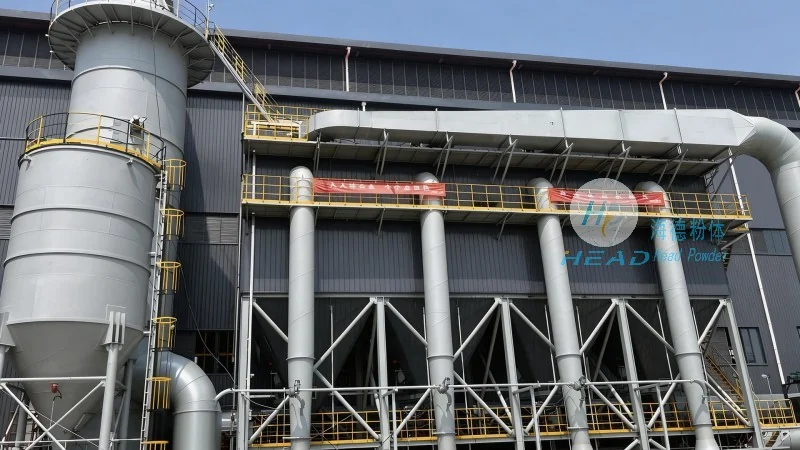
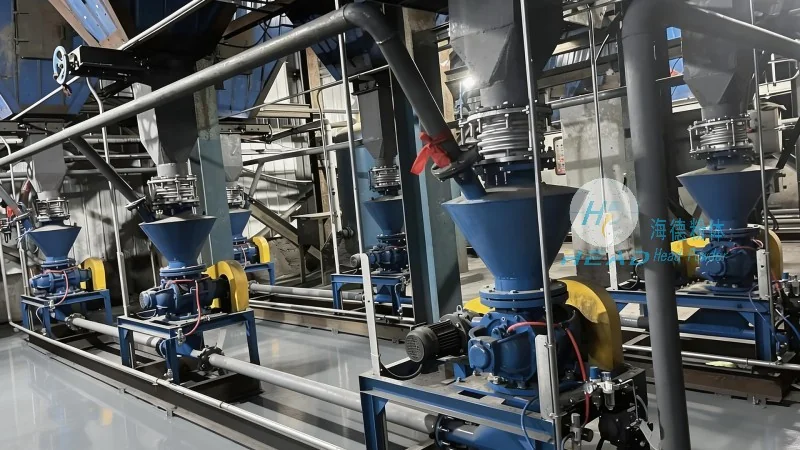
The mechanical components of the system are equally important. The rotary airlock valve, which meters the material into the conveying line, must be made from corrosion-resistant materials such as stainless steel or special alloys. Seals and bearings should be designed to prevent ingress of moisture or contaminants. The conveying pipeline should have smooth interior surfaces to reduce friction and avoid material buildup. Bends should use long-radius elbows or wear-resistant designs to minimize particle impact and maintain flow. Additionally, the filter receiver or dust collector at the discharge point must be equipped with efficient filter cartridges or bags that can handle the fine dust generated during conveying, along with a suitable cleaning mechanism such as pulsed jet air to maintain filter permeability and system performance.
Safety is a paramount consideration for sodium metabisulfite handling. The dust generated during pneumatic conveying can form explosive mixtures when suspended in air at certain concentrations. Thus, the system must include explosion protection measures such as explosion-relief panels, flame-arresting devices, and earthing/grounding to dissipate static electricity. Since sodium metabisulfite decomposes to release sulfur dioxide, which is toxic and irritating, the conveying system must be fully sealed to prevent gas leakage. Local exhaust ventilation should be provided at transfer points where the material is introduced into or discharged from the system. In addition, all equipment should be designed in accordance with relevant standards and regulations, such as ATEX directives for explosive atmospheres and local occupational health and safety guidelines.
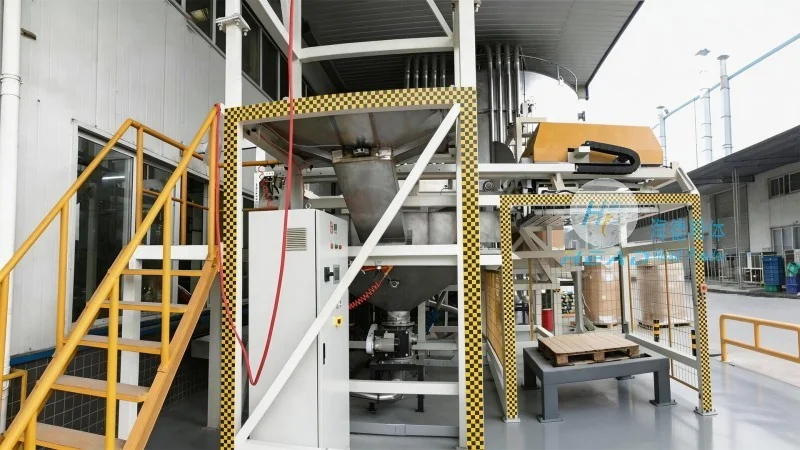
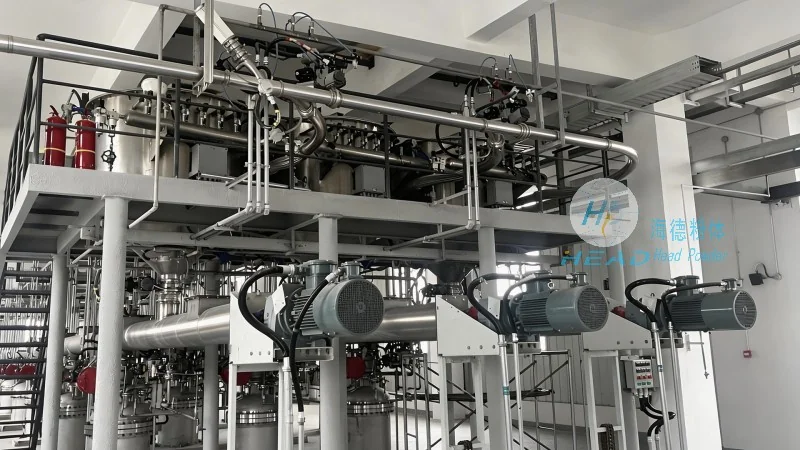
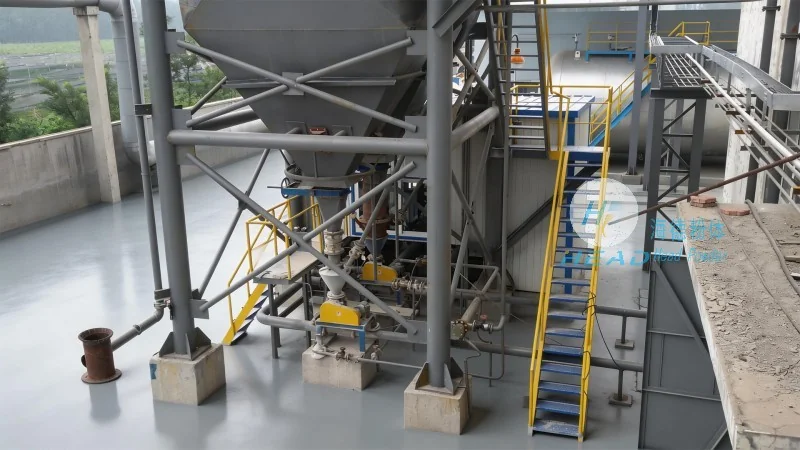
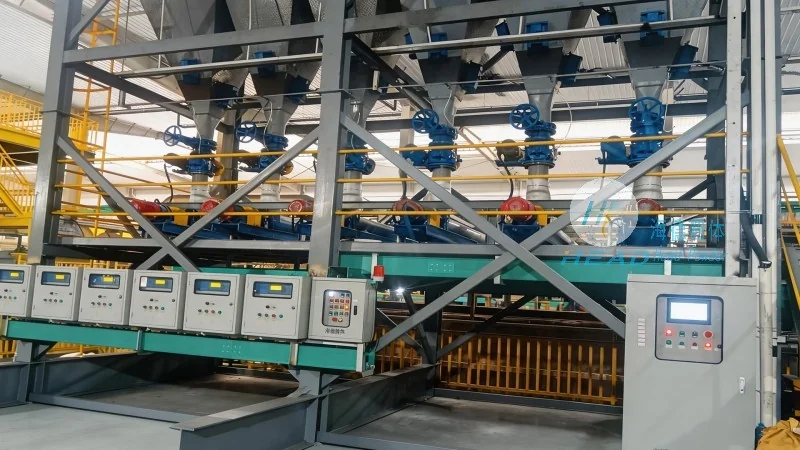
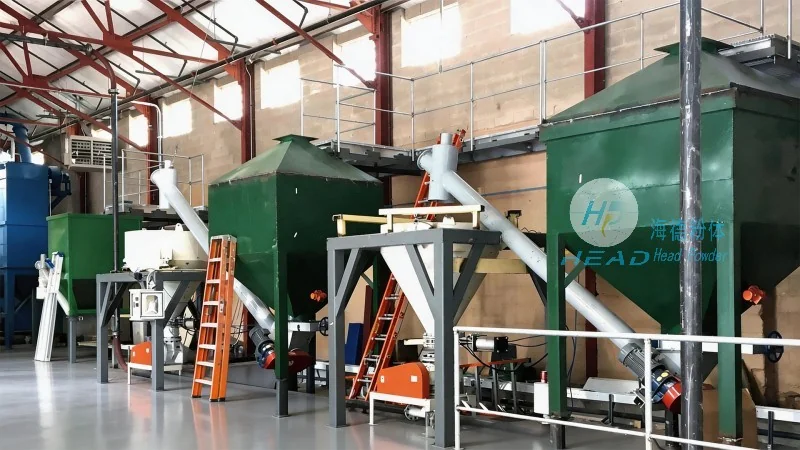
A typical sodium metabisulfite pneumatic conveying system comprises several integrated components: a storage bin or bulk bag unloading station, a material feeding device (such as a rotary valve or screw feeder), a blower or compressor for air supply, a conveying pipeline, a receiver with a filter, and a control system. For pressure conveying, the blower is placed before the feed point, creating a positive pressure that pushes the material to the destination. For vacuum conveying, the blower is placed after the receiver, pulling air and material through the line. The control system coordinates all operations, including start/stop sequences, safety interlocks, and monitoring of pressures, temperatures, and flow rates. Modern systems often incorporate variable frequency drives (VFDs) to adjust the air speed and pressure, optimizing energy consumption and preventing material degradation.
The customization of sodium metabisulfite conveying systems is essential because every plant layout, production capacity, and regulatory requirement differs. A well-designed custom system takes into account the available space, the distance between batch or continuous process stations, the need for multiple discharge points, and the level of automation required. For example, a food-grade processing line may require an entirely enclosed system with sanitary construction and wash-down capability. In contrast, a chemical production facility might prioritize maximum throughput and resistance to corrosive environments. Customization also extends to the choice of construction materials, such as 316L stainless steel for all contact surfaces, PTFE-lined pipelines for high purity, or optional tanker unloading connections for bulk deliveries.
When selecting a sodium metabisulfite pneumatic conveying manufacturer, it is crucial to choose a supplier with proven experience in handling similar hygroscopic and mildly toxic chemicals. A qualified manufacturer will provide a comprehensive material testing service, analyzing the material's flowability, particle size, and compatibility with conveying air. They will also offer complete engineering, fabrication, installation, and commissioning support. Detailed documentation, including GA drawings, P&ID diagrams, operation manuals, and food-safety certificates, should be provided. In addition, after-sales services such as spare parts availability, maintenance schedules, and technical assistance are vital to ensure long-term reliable operation of the equipment.
The benefits of a properly engineered sodium metabisulfite pneumatic conveying system are numerous. It eliminates manual handling, reducing labor costs and operator exposure to hazardous dust. It minimizes product loss and spillage, ensuring that all material is delivered cleanly to the processing equipment. It also maintains the product quality by preventing contamination and moisture pickup during transfer. Furthermore, pneumatic conveying systems are highly flexible and can be easily expanded or modified to accommodate future production increases. With the integration of smart sensors and automation, the system can provide real-time data on material flow, air pressure, and filter condition, enabling predictive maintenance and improving overall plant efficiency.
In conclusion, sodium metabisulfite pneumatic conveying is a critical process for industries that rely on this versatile chemical. The design and customization of such systems demand a deep understanding of the material properties, operational constraints, and safety regulations. By partnering with an experienced conveying solution provider, manufacturers can achieve a highly efficient, safe, and durable system that not only meets current production requirements but also supports sustainable growth. Whether the application involves a simple transfer from a bulk bag to a mixing vessel, or a complex multi-point distribution network integrated into a full-scale production line, a tailored pneumatic conveying solution will deliver reliable performance and peace of mind.
Shandong Headpowder Engineering Co., Ltd.
156-6277-7102(Manager Zhang)
0531-83386006
Zhangqiu District, Jinan City, Shandong Province, China 

telephone
WeChatconsult
top