With more than 10‑year industry experience, Shandong Headpowder delivers full‑service pneumatic‑conveying systems and blowers, undertaking nationwide turn‑key powder‑handling projects.
In the complex industrial landscape of North America, particularly within the province of Ontario, the efficient and safe transportation of powdered materials is a critical operational requirement. Among these materials, catalyst particles are particularly challenging due to their physical fragility and high value. Traditional mechanical conveying methods, such as screw conveyors or belt systems, often generate excessive shear and impact, leading to significant particle breakage. This not only results in financial losses but can also alter the chemical properties of the material, rendering it unusable for downstream processes. To address this specific challenge, a specialized approach to pneumatic conveying is required, one that prioritizes the integrity of the granules while maintaining high throughput. This is where advanced engineering solutions come into play, offering a robust framework for handling sensitive powders with precision.
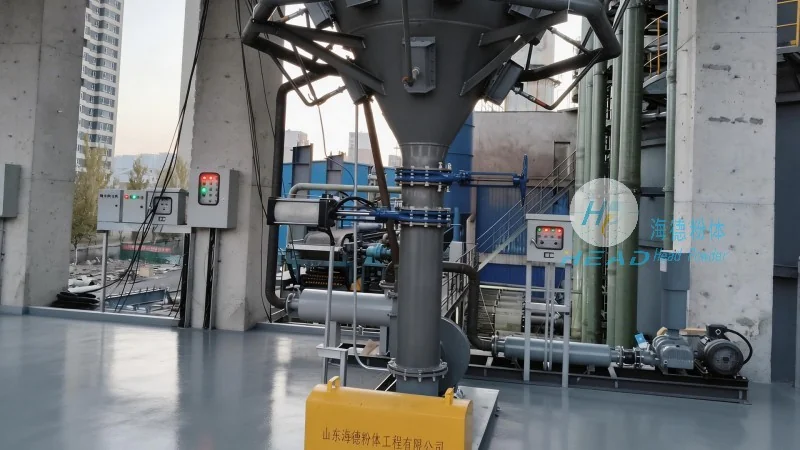
The core of this solution lies in the implementation of a low-pressure, dilute-phase pneumatic conveying system. Unlike high-pressure dense-phase systems, which force materials through pipes at high velocities, dilute-phase systems operate at lower velocities and pressures, significantly reducing the impact force exerted on the catalyst particles. This technology is essential for preserving the original particle size distribution and structural integrity of the material. By utilizing specialized components such as rotary valves and venturi tubes, the system ensures a smooth, continuous flow of catalyst from the storage silo to the processing unit. This method represents a pinnacle of modern **pneumatic conveying case studies**, demonstrating how engineering innovation can solve age-old material handling problems.
For facilities in Ontario looking to upgrade their material handling infrastructure, the choice of technology is paramount. A dedicated **North American pneumatic conveying** system tailored to the specific needs of the region ensures reliability and compliance with local environmental and safety standards. These systems are designed to handle the distinct challenges of the Canadian climate and industrial environment, which can include extreme temperatures and high humidity, all of which can affect powder flow characteristics. By implementing a low-crushing system, operators can maintain consistent product quality, reduce waste, and improve the overall efficiency of their production lines. The adaptability of these systems allows them to integrate seamlessly into existing plant layouts, minimizing downtime during installation.
Behind the successful implementation of these sophisticated systems is Shandong Headpowder Engineering Co., Ltd., a company headquartered in Shandong, China. With extensive experience in the field of powder handling, Shandong Headpowder Engineering Co., Ltd. has established itself as a trusted partner for international clients. The company combines deep technical knowledge with practical manufacturing expertise to deliver systems that are not only efficient but also durable and cost-effective. Their engineering team focuses on the minutiae of fluid dynamics and material science to design systems that perform optimally under various operating conditions. Whether dealing with fine powders or granular materials, their solutions are engineered to meet the highest standards of performance and reliability.
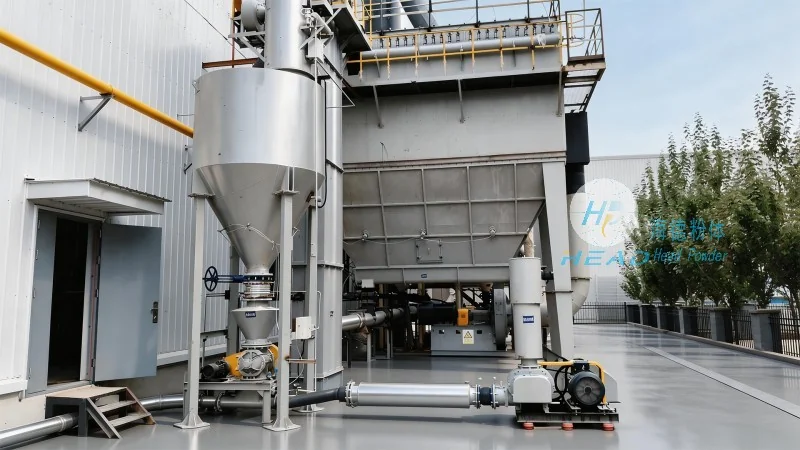
A typical low-crushing pneumatic conveying system involves several critical stages: feeding, conveying, and separation. The system begins with a precision feeder that introduces the catalyst particles into the conveying line at a controlled rate. As the air moves through the pipeline, it carries the particles to the destination. Crucially, the system is equipped with advanced separators and dust collectors to ensure that no product is lost and that the environment remains clean. The control logic is sophisticated, allowing operators to monitor pressure, flow rate, and blockage status in real-time. This level of control is vital for maintaining the delicate balance required to keep the particles intact. Such detailed engineering is a hallmark of the **pneumatic conveying case** studies that Shandong Headpowder Engineering Co., Ltd. regularly publishes and implements.
Investing in a low-crushing pneumatic conveying system offers numerous benefits beyond mere material preservation. One of the most significant advantages is the reduction of dust emissions. Because the system operates under controlled pressure and uses closed-loop piping, there is minimal risk of dust leakage, which is a major concern in many industrial settings. Additionally, these systems are energy-efficient compared to older mechanical methods, leading to lower operational costs over the long term. The smooth, continuous operation of the system also reduces wear and tear on equipment, extending the lifespan of the machinery. For industries in Ontario where operational continuity is key, these factors contribute to a more stable and profitable business model.
Every industrial facility has unique requirements, and a one-size-fits-all approach rarely works in material handling. Shandong Headpowder Engineering Co., Ltd. prides itself on its ability to provide customized solutions. The engineering team works closely with clients to analyze their specific material properties, such as particle size, bulk density, and flowability. Based on this analysis, they design a bespoke system that addresses the specific challenges of the client's operation. This client-centric approach ensures that the final product is a perfect fit for the application, maximizing efficiency and minimizing the risk of operational hiccups. This dedication to customization is a cornerstone of their success in the global market.
If you are looking to optimize your material handling processes in Ontario or anywhere in North America, Shandong Headpowder Engineering Co., Ltd. is ready to assist you. Their team of experts is equipped to guide you through the selection and implementation of the best pneumatic conveying system for your needs. To discuss your specific requirements or to request a detailed **pneumatic conveying case** analysis, please contact Mr. Zhang, the project manager. You can reach him directly via WeChat at 15662777102. By connecting with the right engineering partner, you can ensure that your catalyst transportation is efficient, safe, and cost-effective.

 Shandong Headpowder Engineering Co., Ltd.
 156-6277-7102(Manager Zhang)
  0531-83386006
  Zhangqiu District, Jinan City, Shandong Province, China
telephone
WeChatconsult
top