With more than 10‑year industry experience, Shandong Headpowder delivers full‑service pneumatic‑conveying systems and blowers, undertaking nationwide turn‑key powder‑handling projects.
Desulfurization and denitrification agents are crucial components in modern industrial processes, particularly in power generation and chemical manufacturing, where they play a vital role in reducing sulfur dioxide (SO₂) and nitrogen oxides (NOₓ) emissions. The efficient handling and transportation of these agents are essential to ensure optimal performance of the pollution control systems. This article provides an in-depth look at the operation process and working principle of material handling systems designed for desulfurization and denitrification agents, highlighting key components, operational procedures, and the technical aspects that contribute to their effectiveness.
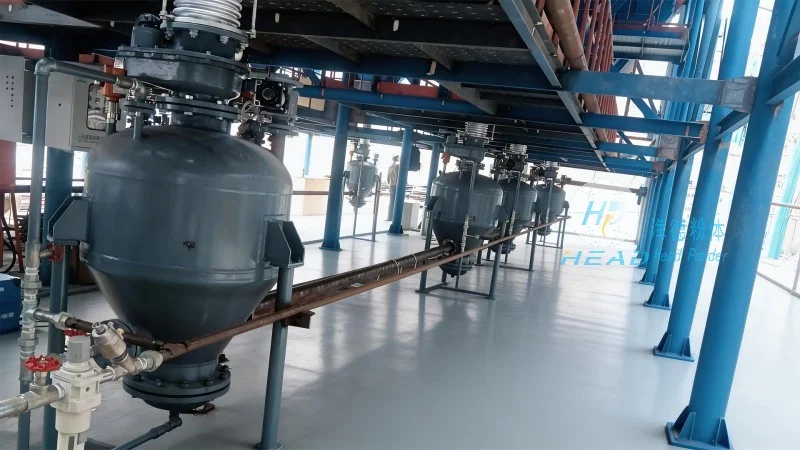
Desulfurization agents, such as limestone or calcium carbonate, are commonly used in flue gas desulfurization (FGD) processes to neutralize acidic gases. Denitrification agents, often in the form of urea or ammonia, are employed in selective catalytic reduction (SCR) systems to reduce nitrogen oxides. These agents must be transported from storage to the reaction points with precision and reliability to maintain the efficiency of the pollution control equipment. The material handling systems for these agents are engineered to meet the specific chemical and physical properties of the materials, ensuring safe and efficient operation.
The material handling system for desulfurization and denitrification agents, as designed by Shandong HeadPowder Engineering Co., Ltd., typically consists of several integrated components. These include bulk storage silos or hoppers, conveying equipment such as screw conveyors or pneumatic transport systems, feeding mechanisms, and control systems. Each component is engineered to handle the specific chemical and physical properties of the agents, such as their particle size, moisture content, and reactivity. The storage silos are usually made of corrosion-resistant materials to prevent degradation of the agents and to ensure long-term storage stability. The conveying equipment is selected based on the flow rate, distance, and the need for dust control, as many desulfurization and denitrification agents are fine powders that can generate dust during handling.
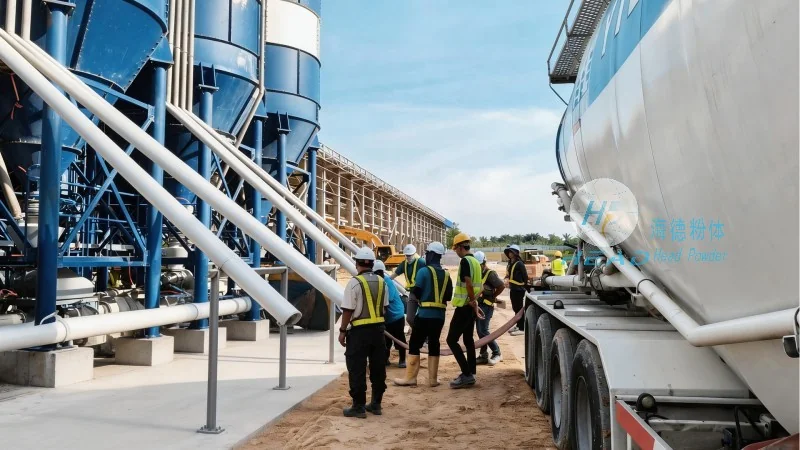
The operation process of the material handling system for desulfurization and denitrification agents involves several sequential steps. First, the agents are stored in the bulk silos. The control system monitors the inventory levels and initiates the feeding process when the level reaches a predetermined threshold. The feeding mechanism, such as a rotary valve or a feeder, regulates the flow of the agent from the silo to the conveying equipment. The conveying equipment then transports the agent to the reaction point, where it is mixed with the flue gas or other reactants. The entire process is automated and controlled by a programmable logic controller (PLC) or a distributed control system (DCS), which ensures precise control over the flow rate, pressure, and temperature. The system also includes safety features, such as dust collection systems and emergency shutdown mechanisms, to prevent accidents and ensure operator safety.
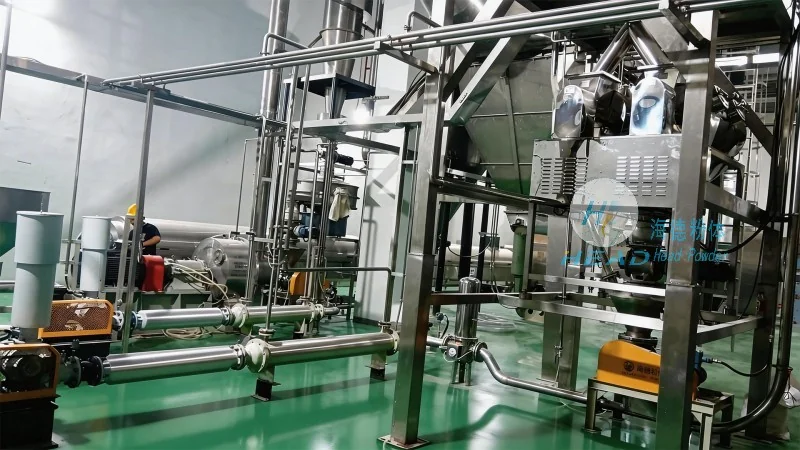
The working principle of the material handling system is based on the principles of fluidization and pneumatic transport for solid materials. In the case of bulk storage, the agents are stored in a hopper or silo under a slight pressure to maintain a stable flow. The feeding mechanism then introduces the agent into the conveying line, where it is mixed with air or other gases to create a slurry or a pneumatic stream. The conveying equipment, such as a screw conveyor or a pneumatic pipeline, moves the agent to the destination. The control system adjusts the flow rate and pressure to maintain a consistent flow and to prevent blockages or overloading. The system also incorporates sensors and feedback loops to monitor the process parameters and to adjust the operation in real-time, ensuring optimal performance and minimal downtime.
Systems developed by Shandong HeadPowder Engineering Co., Ltd. are widely deployed in power plants, chemical factories, and other industrial facilities that prioritize emission control. The benefits of these systems include enhanced efficiency of pollution control equipment, reduced downtime due to maintenance, and improved operator safety. The systems are capable of handling large volumes of agents, with some models transporting up to several tons per hour. The automated control systems minimize the need for manual intervention, reducing the risk of human error. Additionally, the robust construction of the equipment ensures long service life and low maintenance costs, making them a cost-effective solution for industrial emission control.

 Shandong Headpowder Engineering Co., Ltd.
 156-6277-7102(Manager Zhang)
  0531-83386006
  Zhangqiu District, Jinan City, Shandong Province, China
telephone
WeChatconsult
top