With more than 10‑year industry experience, Shandong Headpowder delivers full‑service pneumatic‑conveying systems and blowers, undertaking nationwide turn‑key powder‑handling projects.
HeadPowder, a leading engineering firm based in Shandong, China, specializes in the design and implementation of advanced pneumatic conveying systems tailored for petroleum coke powder material handling. This article delves into the fundamental principles behind these systems and highlights the key characteristics of their operational environments.
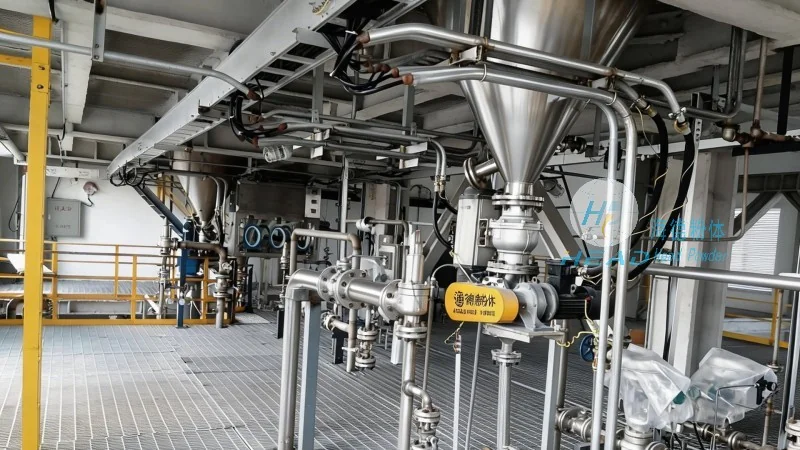
Pneumatic conveying systems utilize air or gas as the primary medium to transport bulk materials like petroleum coke powder through a network of pipes. The technology operates on two main principles: positive pressure and negative pressure (or vacuum) systems. In positive pressure systems, a blower or fan generates pressurized air that forces the material through the pipeline. This method is particularly effective for transporting dry, free-flowing powders over short to medium distances, ensuring consistent flow rates and minimal material degradation. Negative pressure systems, on the other hand, use a vacuum to draw material from a hopper or storage vessel into the pipeline. This approach is ideal for applications requiring dust control and material recovery, as it prevents dust emissions from the source.
The design of a pneumatic conveying line for petroleum coke powder involves several critical components. These include a material feed hopper equipped with a rotary valve to control the flow rate, a conveying pipeline with appropriate diameter and bends to minimize pressure drop, a dust collection system to capture any airborne particles, and a receiver or discharge hopper at the destination. The selection of these components is crucial for optimizing system efficiency, ensuring material integrity, and maintaining operational safety.
The operational environments for petroleum coke powder pneumatic conveying systems exhibit distinct characteristics that influence system performance and design. One of the primary considerations is the material's physical properties, such as its density, particle size distribution, and moisture content. Petroleum coke powder typically has a high bulk density and can be abrasive, which necessitates the use of durable materials for pipeline and component construction to prevent wear and tear. Additionally, the material may be prone to static electricity, requiring grounding measures to prevent sparks and ensure safe handling.
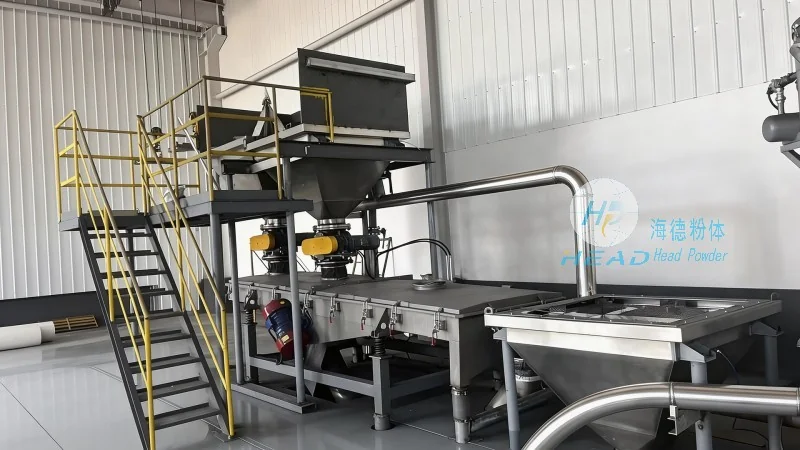
Another critical aspect is the system's integration with existing industrial processes. Pneumatic conveying lines are often part of larger material handling networks, connecting storage silos, processing units, and transportation facilities. The flexibility of these systems allows for seamless integration, enabling efficient material transfer between different stages of production. For instance, in a petrochemical plant, a pneumatic conveying system can transport petroleum coke powder from a storage silo to a furnace or a blending unit, streamlining the overall production workflow.
Operational efficiency and reliability are paramount in industrial settings. Pneumatic conveying systems for petroleum coke powder are designed to operate continuously with minimal downtime, ensuring consistent material supply to downstream processes. The use of automated control systems, such as variable frequency drives (VFDs) for blowers and sensors to monitor pressure and flow rates, enhances system performance and reduces the risk of operational disruptions. Furthermore, the systems are engineered to handle varying material loads, adapting to fluctuations in production demand without compromising performance.
The working scene characteristics of petroleum coke powder pneumatic conveying systems are directly linked to their application scenarios across various industries. In the petrochemical sector, these systems play a vital role in the transportation of petroleum coke, a byproduct of crude oil refining, to power plants and steel mills where it is used as a fuel or raw material. The ability to handle large volumes of material efficiently and safely makes pneumatic conveying an indispensable technology in these applications.
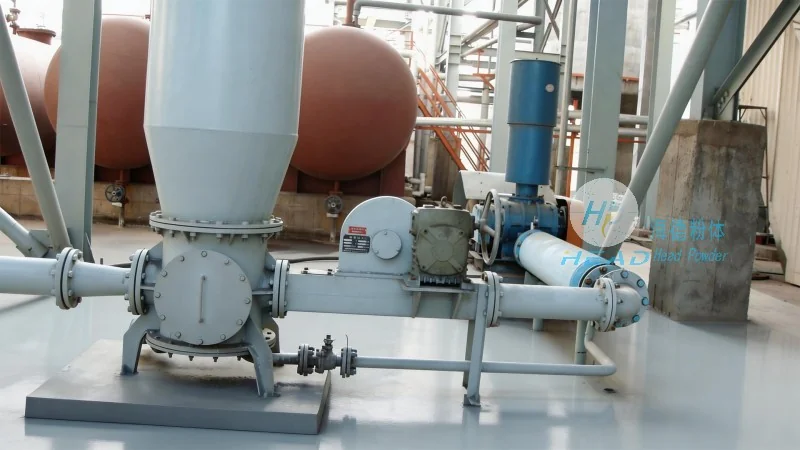
In power generation facilities, for example, pneumatic conveying systems are used to transport petroleum coke powder from storage silos to boilers. The systems ensure a steady supply of fuel, contributing to the reliable operation of power plants. Similarly, in steel manufacturing, petroleum coke is a key ingredient in the production of steel, and efficient material handling is critical to maintaining production rates. The pneumatic conveying systems designed by HeadPowder are tailored to meet these specific industry requirements, providing robust and reliable solutions.
Moreover, the operational environments of these systems highlight the importance of safety and environmental compliance. Pneumatic conveying systems are equipped with dust collection and filtration systems to minimize airborne particulate emissions, adhering to environmental regulations. The use of enclosed pipelines and controlled discharge points further reduces the risk of dust exposure to personnel and the surrounding environment. This focus on safety and environmental responsibility is a hallmark of HeadPowder's engineering approach, ensuring that its systems not only enhance operational efficiency but also contribute to sustainable industrial practices.
HeadPowder Engineering Co., Ltd., with its headquarters in Shandong, China, leverages decades of expertise in material handling engineering to develop and implement state-of-the-art pneumatic conveying systems for petroleum coke powder. By understanding the unique principles and working scene characteristics of these systems, HeadPowder delivers customized solutions that meet the specific needs of industrial clients. The company's commitment to innovation, quality, and safety ensures that its pneumatic conveying systems not only optimize material transport but also contribute to the long-term success and sustainability of its clients' operations.

 Shandong Headpowder Engineering Co., Ltd.
 156-6277-7102(Manager Zhang)
  0531-83386006
  Zhangqiu District, Jinan City, Shandong Province, China
telephone
WeChatconsult
top