

Principle and Working Scene Characteristics of Alumina (Aluminum Sulfate) Pneumatic Conveying Equipm
Alumina, also known as aluminum sulfate, is a widely used chemical compound in various industrial applications. The efficient and safe transportation of this material from one location to another is crucial for maintaining production efficiency and operational safety. Pneumatic conveying equipment has emerged as a preferred solution for handling alumina, offering advantages such as dust-free operation, low maintenance, and the ability to transport materials over long distances. This article explores the fundamental principles behind alumina pneumatic conveying systems and highlights the key working scene characteristics that make them effective in industrial settings.
Introduction to Alumina and Pneumatic Conveying
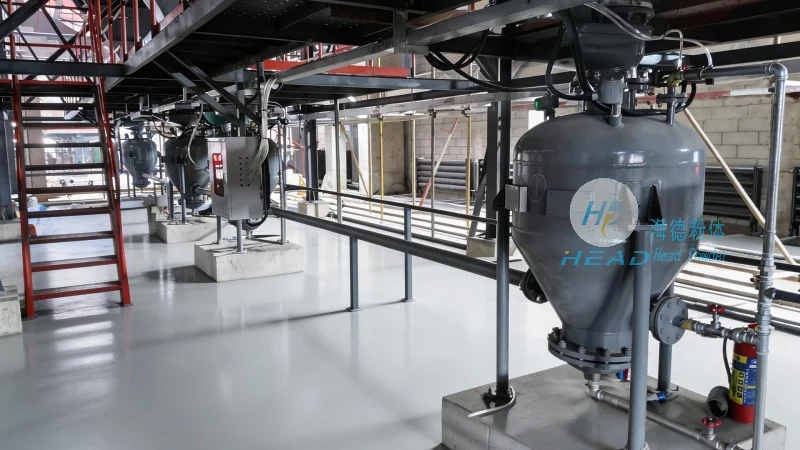
Alumina, with the chemical formula Al₂(SO₄)₃·18H₂O, is commonly used in water treatment, paper manufacturing, and as a coagulant in various processes. Traditional methods of transporting alumina, such as manual handling or mechanical conveyors, often pose challenges like dust generation, material degradation, and safety hazards. Pneumatic conveying systems address these issues by utilizing air pressure to move the material through a pipeline. The core components of a pneumatic conveying system include a material hopper, a rotary valve, a conveying line, a dust collector, and a receiver. These components work in tandem to ensure the smooth and controlled transport of alumina.
Principle of Pneumatic Conveying for Alumina
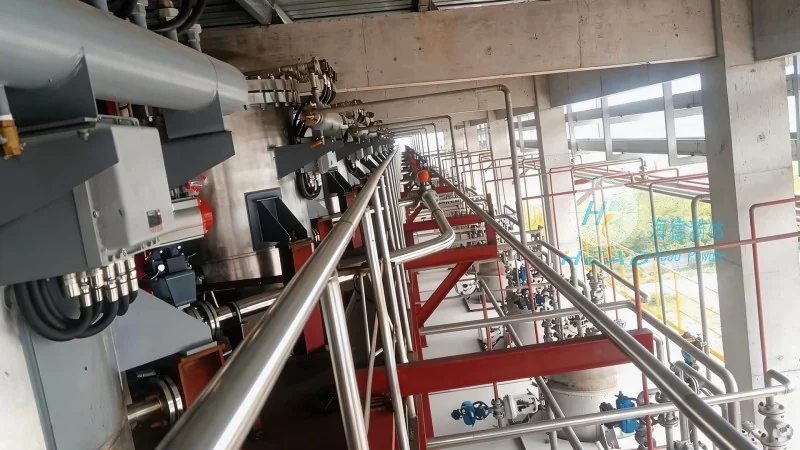
The operation of alumina pneumatic conveying equipment is based on the principle of air flow and material suspension. In a typical system, the material is fed into the hopper and then discharged into the conveying line through a rotary valve. The air, often supplied by a blower or compressor, is introduced into the line at a high velocity, creating a stream that lifts and transports the alumina particles. The velocity of the air must be sufficient to overcome the gravitational force acting on the particles and to maintain them in suspension. This process is known as "fluidization" or "air suspension," where the material behaves like a fluid under the influence of the air flow. The key parameters that determine the efficiency of the system include air velocity, material feed rate, and the size and density of the alumina particles. Proper adjustment of these parameters is essential to prevent blockages, ensure consistent flow, and minimize energy consumption.
Working Scene Characteristics of Alumina Pneumatic Conveying Equipment
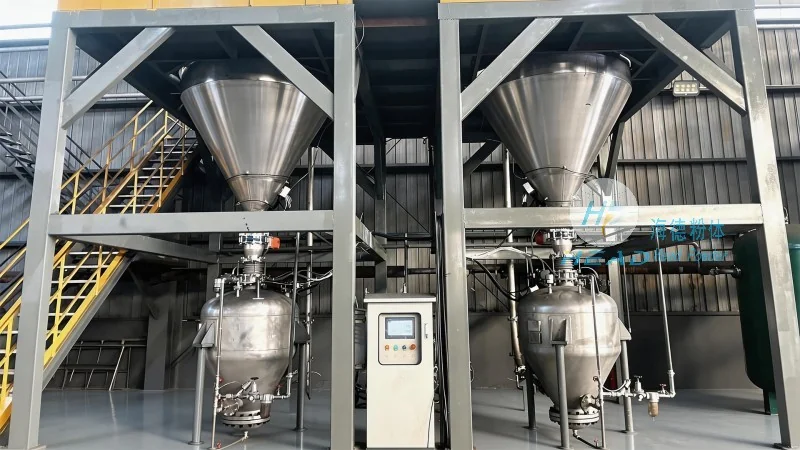
The effectiveness of alumina pneumatic conveying systems is significantly influenced by the working scene characteristics, which include the environment, material properties, and operational requirements. In industrial settings, these systems are often deployed in environments where dust control is paramount, such as in water treatment plants or paper mills. The dust-free operation of pneumatic conveyors helps maintain a clean and safe working environment, reducing the risk of respiratory issues and equipment contamination. Additionally, the ability to transport alumina over long distances without the need for intermediate storage or manual handling makes these systems ideal for large-scale production facilities. The working scene also includes considerations for material handling capacity, where the system must be capable of handling varying feed rates to accommodate fluctuations in production demand. Another important characteristic is the system's adaptability to different alumina grades, such as different particle sizes or moisture content, ensuring consistent performance across various applications.
Advantages and Applications in Industrial Settings
Alumina pneumatic conveying equipment offers several advantages that make it a preferred choice for industrial applications. One of the primary benefits is the elimination of dust and the associated health and safety risks. Unlike mechanical conveyors, which can generate significant dust, pneumatic systems keep the material contained within the pipeline, reducing exposure to workers and minimizing environmental impact. Another advantage is the low maintenance requirement, as there are fewer moving parts and less wear and tear compared to traditional systems. This leads to lower operational costs and increased system reliability. The flexibility of pneumatic conveying systems allows for easy integration into existing production lines, enabling seamless material transport from storage to processing units. In the context of alumina applications, these systems are commonly used in water treatment facilities to transport coagulants to treatment tanks, in paper mills to supply alumina for paper sizing, and in chemical plants for material transfer between processing stages.
Conclusion
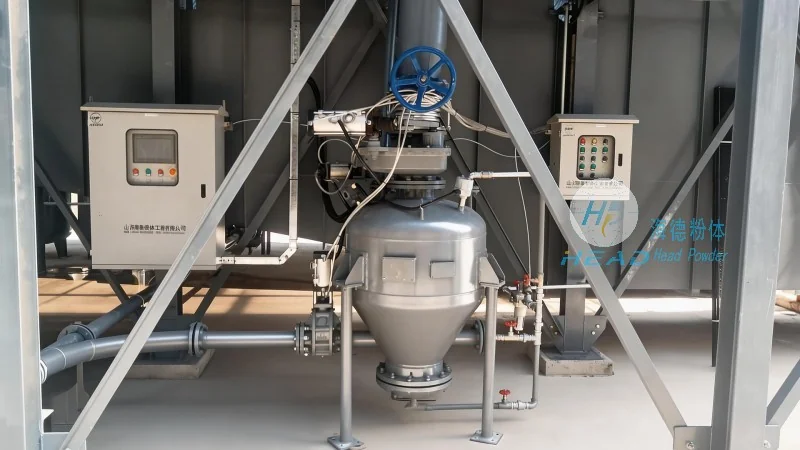
In conclusion, alumina pneumatic conveying equipment operates on the principle of air flow and material suspension, providing an efficient and safe method for transporting this critical chemical compound. The working scene characteristics, including dust control, long-distance transport, and adaptability to varying material properties, make these systems highly effective in industrial settings. As a leading provider in the field, Shandong HeadPowder Engineering Co., Ltd. specializes in designing and manufacturing customized pneumatic conveying solutions tailored to the specific needs of alumina handling applications. With a focus on quality and reliability, the company ensures that its equipment meets the highest standards of performance and safety, supporting the operational efficiency of industrial facilities worldwide.