With more than 10‑year industry experience, Shandong Headpowder delivers full‑service pneumatic‑conveying systems and blowers, undertaking nationwide turn‑key powder‑handling projects.
Calcium hydroxide powder, commonly known as slaked lime, is a widely used chemical in various industrial applications. The efficient and safe transportation of this fine powder from one location to another is crucial for maintaining production efficiency and operational safety. Pneumatic conveying systems have emerged as a preferred method for handling calcium hydroxide powder due to their ability to transport powders in a closed system, minimizing dust emissions and ensuring product integrity. This article provides an overview of calcium hydroxide powder pneumatic conveying, exploring the fundamental principles and components of powder handling systems, with a focus on the expertise of Shandong HeadPowder Engineering Co., Ltd. in providing advanced powder handling solutions.
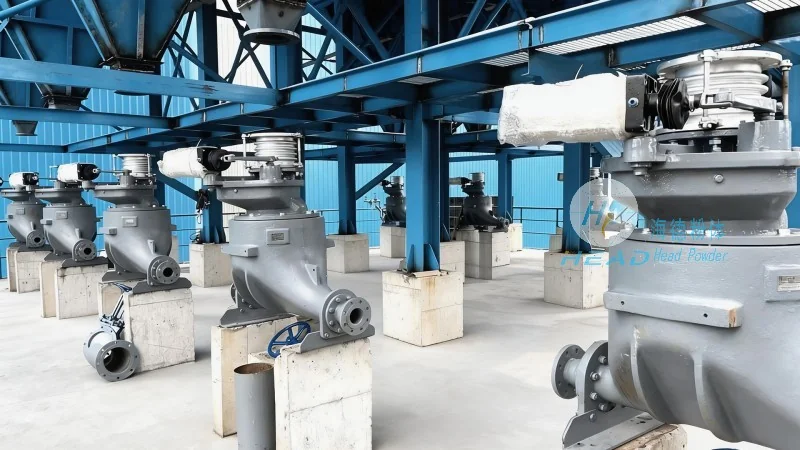
Pneumatic conveying, or powder pneumatic transport, is a technology that uses compressed air or other gases to move bulk materials, such as powders, through a pipeline. The system typically consists of a series of components, including a material feed hopper, a conveying line, a receiver, and a dust collector. The process involves creating a pressure differential between the feed and the receiver, which propels the powder particles through the system using the force of the air flow. There are two main types of pneumatic conveying systems: pressure and vacuum. Pressure systems use compressed air to push the powder from the source to the destination, while vacuum systems use a vacuum to pull the powder from the source to the receiver.
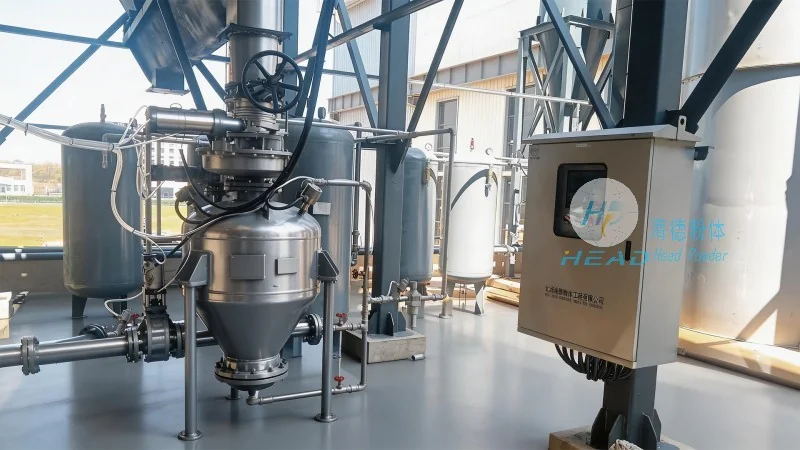
The effectiveness of a pneumatic conveying system for calcium hydroxide powder depends on the proper selection and integration of several key components. The material feed hopper is the initial point where the powder is loaded into the system. It is designed to store and feed the powder at a controlled rate, preventing clogging and ensuring a consistent flow. The conveying line, usually made of stainless steel or other corrosion-resistant materials, is the pathway through which the powder and air travel. The choice of material for the pipeline is critical, as calcium hydroxide is a reactive chemical that can cause corrosion if not properly protected. The receiver is the final destination where the powder is deposited. It is typically equipped with a discharge valve to control the release of the material. Additionally, a dust collector may be included to capture any fine particles that escape during the conveying process, ensuring environmental compliance and product purity.
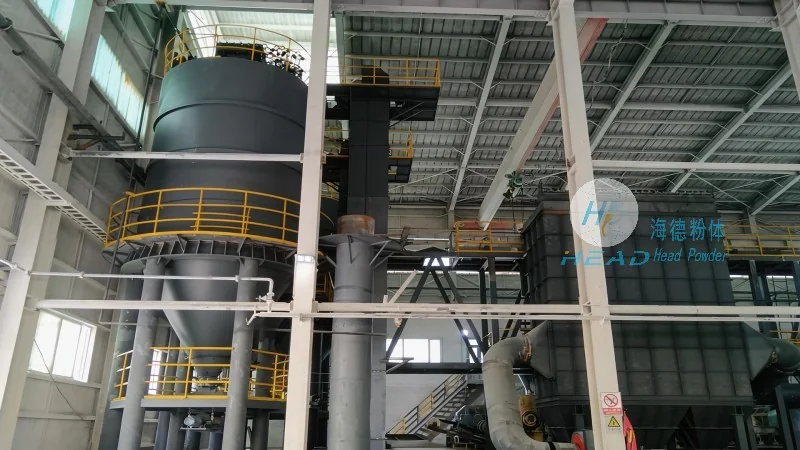
The operation of a pneumatic conveying system for calcium hydroxide powder involves several sequential steps. First, the powder is fed from the hopper into the conveying line. The compressed air is then introduced at the feed point, creating a high-velocity air stream that entrains the powder particles. As the air and powder mixture travels through the pipeline, the powder is suspended and transported to the receiver. The air flow continues until the powder is fully deposited in the receiver, after which the air is either vented or recycled back into the system. The pressure differential between the feed and receiver determines the velocity and distance the powder can be conveyed. For calcium hydroxide powder, which is a fine and abrasive material, the system must be designed to handle these characteristics, ensuring minimal wear and tear on the components.
Implementing a pneumatic conveying system for calcium hydroxide powder offers several advantages over traditional methods, such as bucket elevators or belt conveyors. One of the primary benefits is the reduction of dust exposure, which is critical for worker safety and environmental protection. By operating in a closed system, the system minimizes the release of fine particles into the air, preventing respiratory issues and contamination of the surrounding environment. Another advantage is the improved product quality, as the closed system prevents contamination from external sources and maintains the chemical integrity of the powder. Additionally, pneumatic conveying systems are more flexible in terms of layout and can be easily integrated into existing production facilities. They also offer higher efficiency in terms of material handling, as they can transport large quantities of powder over long distances with minimal labor requirements.
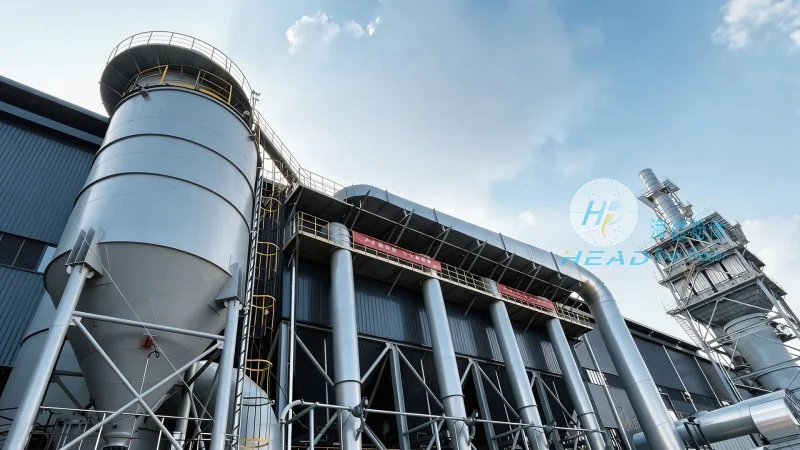
The use of pneumatic conveying systems for calcium hydroxide powder is prevalent in various industries. In the construction industry, calcium hydroxide is used as a component in cement and mortar, and the system is used to transport it from storage silos to mixing plants. In the chemical industry, it is used as a raw material in the production of other chemicals, and the system ensures a continuous supply to the production line. The food and pharmaceutical industries also utilize calcium hydroxide powder, often as a food additive or a component in pharmaceutical formulations, and the pneumatic conveying system maintains the purity and quality of the material throughout the transportation process. In each of these applications, the system's ability to handle fine powders efficiently and safely is essential for meeting industry standards and regulatory requirements.

 Shandong Headpowder Engineering Co., Ltd.
 156-6277-7102(Manager Zhang)
  0531-83386006
  Zhangqiu District, Jinan City, Shandong Province, China
telephone
WeChatconsult
top