With more than 10‑year industry experience, Shandong Headpowder delivers full‑service pneumatic‑conveying systems and blowers, undertaking nationwide turn‑key powder‑handling projects.
Adipic acid, a critical raw material in the production of nylon and other polymers, requires efficient and reliable material handling solutions to ensure smooth industrial operations. The pneumatic conveying system designed for adipic acid material transport plays a vital role in modern chemical processing facilities, offering a safe and effective method to move bulk materials over long distances or within complex plant layouts.
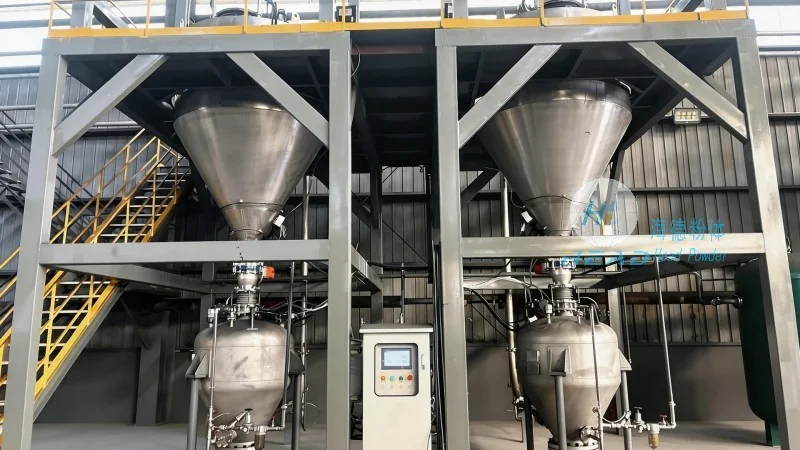
HeadPowder, a leading engineering company based in Shandong, China, specializes in the design, manufacturing, and installation of advanced material handling systems. With a strong commitment to quality and innovation, HeadPowder has developed a comprehensive pneumatic conveying solution tailored for adipic acid applications, ensuring optimal performance and minimal downtime.
Understanding the operating process and working principle of this system is essential for operators and engineers to maintain efficient material flow and prevent system failures. The following sections provide a detailed overview of how the system functions, from material intake to discharge, and the underlying mechanisms that enable its operation.
The operation of the adipic acid pneumatic conveying system involves several key steps, each designed to ensure the safe and efficient transport of material. The process begins with the intake of adipic acid from a storage silo or hopper. A rotary valve or feeder is used to control the flow rate, preventing overloading and maintaining consistent material delivery. The material is then fed into a vertical or horizontal pipeline, where it is mixed with compressed air under controlled conditions.
As the material travels through the pipeline, the air flow velocity is maintained at a level sufficient to keep the particles suspended, preventing blockages and ensuring uniform movement. The system utilizes a combination of positive and negative pressure zones to transport the material, with the air pressure adjusted to match the material's density and particle size. The conveying line may include bends, elbows, and expansion joints to accommodate the plant layout, with each component designed to minimize pressure loss and maintain material flow.
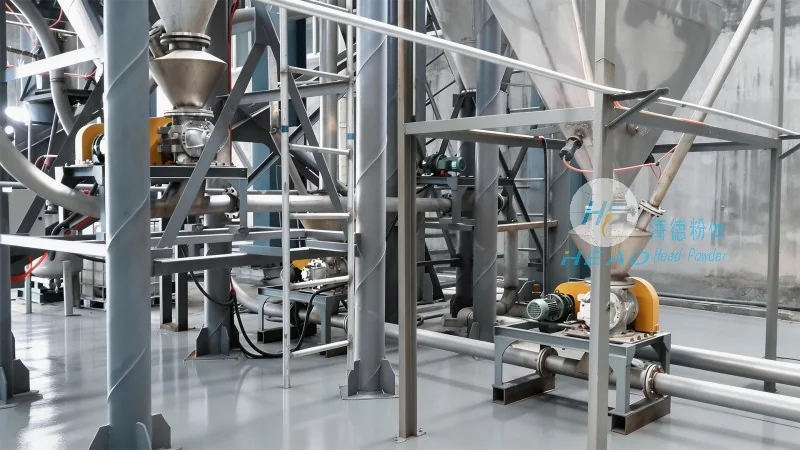
Upon reaching the discharge point, the material is separated from the air using a cyclone separator or a filter system. The separated adipic acid is collected in a receiving hopper or silo, while the air is either recirculated back into the system or vented to the atmosphere, depending on the system design. The entire process is monitored by a control panel that tracks pressure, flow rate, and material level, allowing for real-time adjustments and system optimization.
The working principle of the pneumatic conveying system for adipic acid relies on the interaction between the material particles and the air stream. The system operates on the principle of fluidization, where the compressed air creates a turbulent flow that suspends the solid particles, allowing them to be transported as a slurry. This method is particularly effective for fine or powdery materials like adipic acid, as it eliminates the need for mechanical conveyors that can cause material degradation or contamination.
The system uses a positive pressure or negative pressure approach, depending on the application. In positive pressure systems, air is blown into the pipeline, pushing the material forward. In negative pressure systems, air is drawn out of the pipeline, creating a vacuum that pulls the material. Both methods are used in adipic acid handling, with the choice depending on the distance to be covered and the plant layout. The air velocity is critical, as it must be high enough to keep the particles suspended but low enough to prevent excessive wear on the pipeline and components.
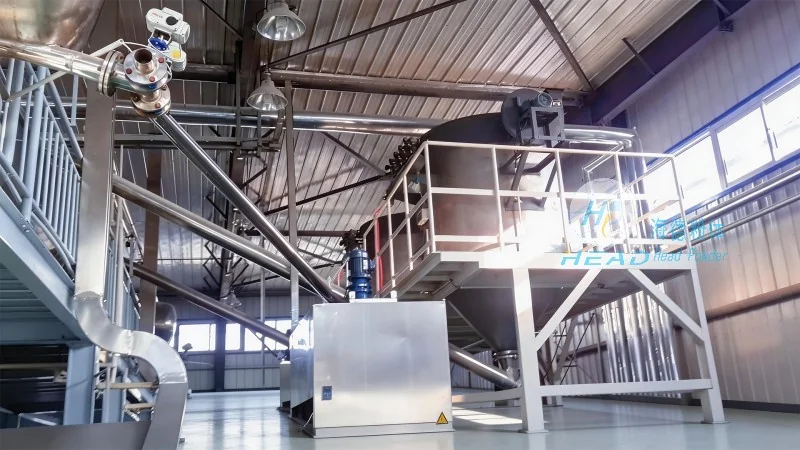
The system also incorporates features such as airlocks, check valves, and pressure relief valves to ensure safe operation. Airlocks prevent the backflow of material and air, while check valves maintain the direction of flow. Pressure relief valves protect the system from overpressure, which can occur due to blockages or sudden changes in material flow. These components work together to maintain the integrity of the system and ensure the safe transport of adipic acid.
The adipic acid pneumatic conveying system from HeadPowder offers several advantages over traditional material handling methods. One of the primary benefits is the ability to transport material in a closed system, which minimizes dust emissions and protects the material from contamination or moisture. This is particularly important for adipic acid, as it is sensitive to moisture and can degrade if exposed to the air for extended periods.
Another key feature is the system's flexibility, which allows it to be integrated into existing plant layouts or adapted to new facilities. The modular design enables easy expansion or modification, ensuring that the system can grow with the company's production needs. The system also provides high material throughput, with the ability to transport large quantities of adipic acid efficiently, reducing the need for manual handling and increasing overall productivity.
Furthermore, the system is designed for low maintenance and long service life. The use of high-quality materials and components, such as stainless steel pipelines and wear-resistant liners, minimizes wear and tear, reducing the frequency of repairs and replacements. The control system is user-friendly, with clear indicators and alarms that alert operators to any issues, allowing for quick troubleshooting and minimizing downtime.

 Shandong Headpowder Engineering Co., Ltd.
 156-6277-7102(Manager Zhang)
  0531-83386006
  Zhangqiu District, Jinan City, Shandong Province, China
telephone
WeChatconsult
top