With more than 10‑year industry experience, Shandong Headpowder delivers full‑service pneumatic‑conveying systems and blowers, undertaking nationwide turn‑key powder‑handling projects.
Continuous metering feeding pneumatic conveying lines are advanced industrial equipment designed to efficiently transport bulk materials over long distances with precise control and minimal maintenance. These systems are widely used in various industries, including food processing, chemical manufacturing, and pharmaceutical production, where accurate material handling is critical for operational efficiency and product quality. Developed by Shandong HeadPowder Engineering Co., Ltd., a leading manufacturer headquartered in Shandong, China, these systems combine cutting-edge technology with robust engineering to meet the demanding requirements of modern industrial applications.
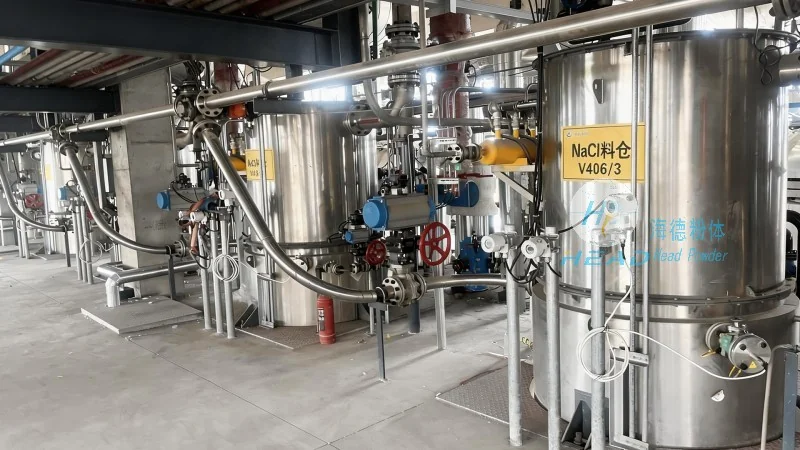
At the core of these systems is a continuous feeding mechanism that ensures a steady flow of material into the conveying line. The system typically consists of a hopper, a metering feeder, a pneumatic conveying pipeline, and a discharge unit. The metering feeder, often a screw or rotary valve, regulates the material flow rate, allowing for precise control over the quantity being transported. This precision is essential for applications where exact material measurement is required, such as in batching processes or quality control steps.

The operation of a continuous metering feeding pneumatic conveying line begins with the material being loaded into the hopper. The hopper acts as a storage container, providing a consistent supply of material to the metering feeder. As the material falls from the hopper, the metering feeder adjusts its rotation speed or opening size to maintain a constant flow rate. This controlled flow is then introduced into the pneumatic conveying pipeline, where compressed air or gas propels the material through the system. The pipeline is designed with appropriate bends and valves to direct the material to the discharge point, ensuring smooth and uninterrupted transport. The discharge unit, such as a rotary valve or a bagging machine, collects the material at the end of the line, completing the process.
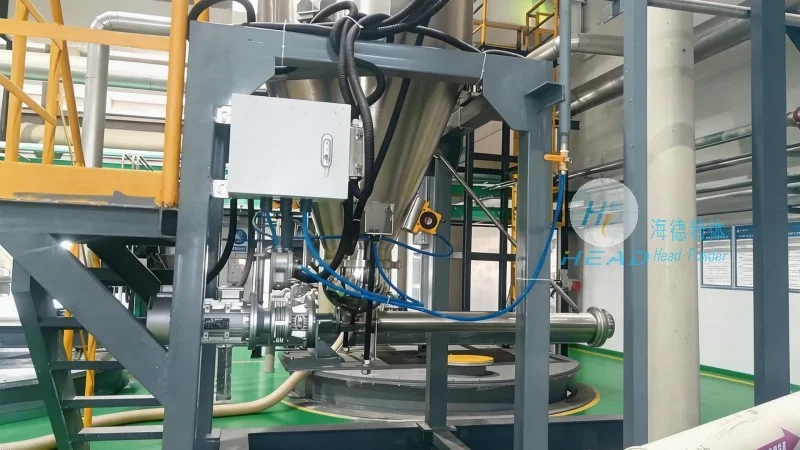
The working principle of the continuous metering feeding pneumatic conveying line relies on the combination of mechanical feeding and pneumatic transport. The metering feeder provides the mechanical component by controlling the material's flow rate, while the pneumatic system uses air pressure to move the material through the pipeline. The key to efficient operation is the balance between the material's density, the air velocity, and the pipeline diameter. Proper air velocity ensures that the material is fully suspended and transported without clogging or degradation. The system's design, including the hopper's shape and the pipeline's layout, is optimized to minimize pressure losses and maximize conveying efficiency. This balance is crucial for maintaining consistent material flow and preventing issues like blockages or material degradation during transport.
Continuous metering feeding pneumatic conveying lines offer several advantages over traditional batch or manual feeding methods. The primary benefit is the ability to achieve precise and consistent material flow, which is essential for accurate batching and quality control. These systems also reduce labor costs by automating the feeding process, allowing operators to focus on other tasks. Additionally, the pneumatic transport method minimizes material contamination and degradation, as the material is not in direct contact with the conveying equipment for extended periods. The compact design of these systems makes them suitable for installations with limited space, and their low maintenance requirements contribute to long-term operational efficiency. The integration of advanced control systems further enhances the system's performance, enabling real-time monitoring and adjustment of the flow rate to adapt to changing production demands.
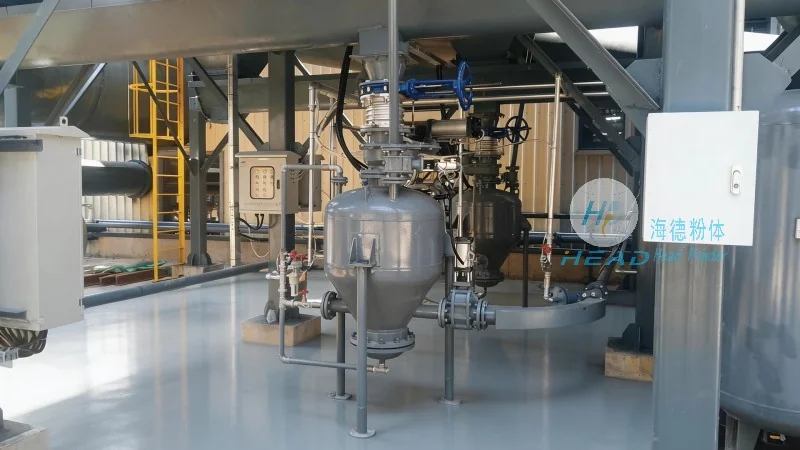
Continuous metering feeding pneumatic conveying lines are versatile and can be applied to a wide range of industrial processes. In the food industry, they are used to transport powders like flour, sugar, and spices with high precision, ensuring consistent product quality. In the chemical industry, these systems handle various powders and granules, such as pigments, catalysts, and polymers, while maintaining strict safety and contamination control. The pharmaceutical industry benefits from the system's ability to handle sensitive materials, as the enclosed design prevents cross-contamination and ensures compliance with regulatory standards. Other applications include the transport of minerals, fertilizers, and construction materials, where the system's efficiency and reliability are critical for production continuity.

 Shandong Headpowder Engineering Co., Ltd.
 156-6277-7102(Manager Zhang)
  0531-83386006
  Zhangqiu District, Jinan City, Shandong Province, China
telephone
WeChatconsult
top