With more than 10‑year industry experience, Shandong Headpowder delivers full‑service pneumatic‑conveying systems and blowers, undertaking nationwide turn‑key powder‑handling projects.
HeadPowder, a leading engineering firm based in Shandong, China, specializes in the design, manufacturing, and installation of advanced pneumatic conveying systems. Among their portfolio is the nitrogen circulation pneumatic conveying line, a sophisticated solution that efficiently transports bulk materials while maintaining a controlled inert atmosphere. This article delves into the operational process and underlying working principles of such systems, highlighting their key components, operational steps, and the technical advantages they offer.
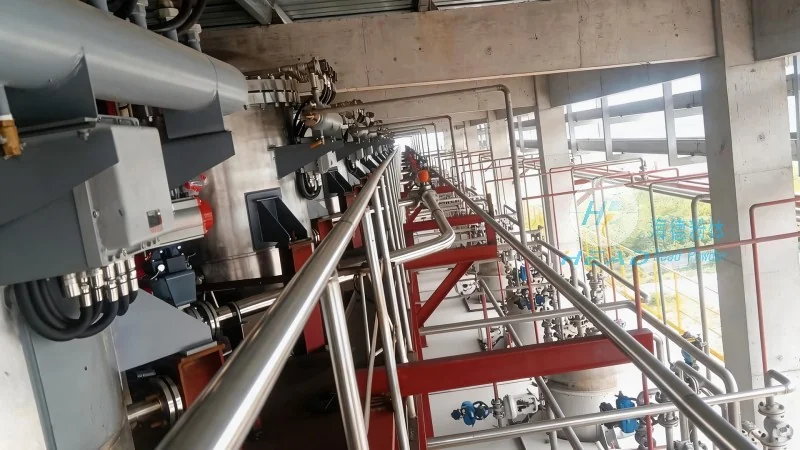
The nitrogen circulation pneumatic conveying system is engineered to transport dry bulk materials, such as powders or granules, through a sealed pipeline using a pressurized nitrogen gas stream. The system typically comprises several critical components, including a material hopper, a rotary airlock feeder, a conveying pipeline, a receiver, and a nitrogen circulation unit. The material hopper stores the bulk material, while the rotary airlock feeder controls the flow of material into the conveying pipeline. The conveying pipeline transports the material, and the receiver collects the material at the destination. The nitrogen circulation unit, often equipped with a blower or compressor, maintains the necessary pressure and provides the inert gas to ensure the material is conveyed without oxidation or contamination.
The operation of a nitrogen circulation pneumatic conveying line involves a series of coordinated steps to ensure efficient and reliable material transport. The process begins with the loading of the material hopper, which is typically filled via manual or automated means. Once the hopper is charged, the rotary airlock feeder is activated to regulate the flow of material into the conveying pipeline. Simultaneously, the nitrogen circulation unit is started, which draws in ambient air, filters it to remove contaminants, and then pressurizes it to the required level. The pressurized nitrogen is then introduced into the pipeline, creating a positive pressure environment that propels the material forward.
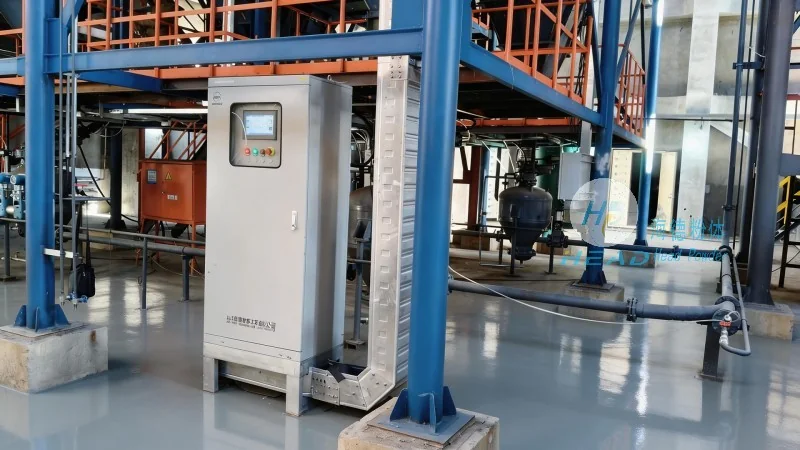
As the material moves through the pipeline, it is carried by the nitrogen gas stream in a suspended state, preventing clogging and ensuring consistent flow rates. The receiver at the end of the pipeline collects the material, and the system may include a pressure relief valve or a vacuum pump to manage the pressure differential. The nitrogen gas, after conveying the material, is recirculated back to the circulation unit, where it is filtered and reused, enhancing energy efficiency and reducing operational costs.
The working principle of the nitrogen circulation pneumatic conveying system is rooted in fluid dynamics and the principles of gas-solid two-phase flow. The system operates on the basis of creating a pressure differential between the inlet and outlet of the conveying pipeline. The pressurized nitrogen gas provides the necessary kinetic energy to lift and transport the material particles. The key to efficient operation lies in maintaining a consistent gas velocity and pressure within the pipeline, which depends on factors such as the material's density, particle size, and the system's design specifications.
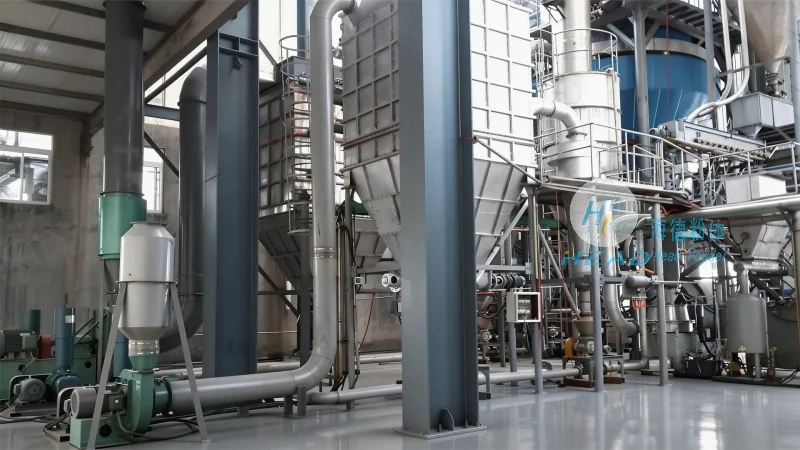
The nitrogen gas acts as a carrier medium, suspending the material particles and preventing them from settling or sticking to the pipeline walls. This suspension is achieved by ensuring the gas velocity is sufficient to overcome the gravitational force acting on the particles. The system's design, including the diameter of the pipeline and the length of the conveying line, is optimized to minimize energy consumption while maximizing material throughput. Additionally, the use of nitrogen, an inert gas, ensures that the conveyed material remains stable and free from oxidation or moisture absorption, which is particularly important for sensitive materials like pharmaceuticals or food products.
Nitrogen circulation pneumatic conveying systems offer several technical advantages that make them ideal for a wide range of industrial applications. These include the ability to transport materials over long distances with minimal loss, the maintenance of a controlled environment (e.g., inert atmosphere), and the reduction of dust emissions compared to traditional methods like belt conveyors. The system's flexibility allows for easy integration into existing production lines and can be customized to handle various material types, including powders, granules, and even fine particles.
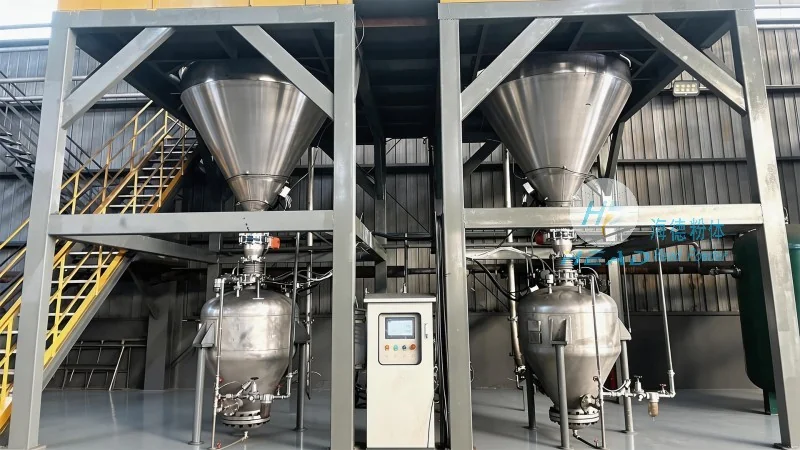
HeadPowder's expertise in engineering and manufacturing ensures that their nitrogen circulation pneumatic conveying lines are designed to meet the specific needs of each client. By leveraging advanced technology and rigorous testing, the company provides systems that are reliable, energy-efficient, and cost-effective. The systems are suitable for industries such as pharmaceuticals, food processing, chemical manufacturing, and mining, where the transport of bulk materials requires precision and environmental control.
In summary, the nitrogen circulation pneumatic conveying line is a sophisticated and efficient solution for bulk material transport. Through a combination of precise engineering, controlled gas circulation, and optimized system design, these systems ensure reliable operation while maintaining the integrity of the conveyed material. HeadPowder, with its headquarters in Shandong, China, continues to lead in the development and implementation of such advanced systems, providing industries with a trusted partner for their material handling needs.

 Shandong Headpowder Engineering Co., Ltd.
 156-6277-7102(Manager Zhang)
  0531-83386006
  Zhangqiu District, Jinan City, Shandong Province, China
telephone
WeChatconsult
top