With more than 10‑year industry experience, Shandong Headpowder delivers full‑service pneumatic‑conveying systems and blowers, undertaking nationwide turn‑key powder‑handling projects.
HeadPowder, a leading provider in the field of material handling solutions, specializes in the design, manufacturing, and installation of advanced pneumatic conveying systems. This article focuses on the principle and working scene characteristics of borax granule pneumatic conveying equipment, highlighting its technical aspects and practical applications in industrial settings.
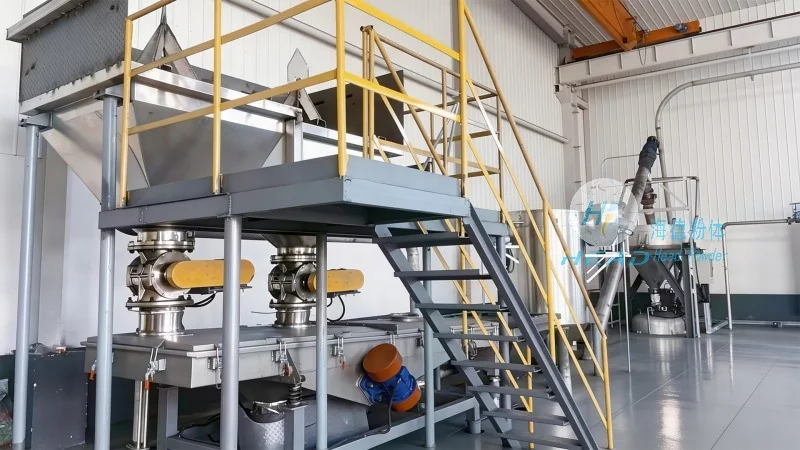
Borax granule pneumatic conveying equipment is a specialized system engineered to transport borax granules efficiently and safely through a pipeline using air or other gas as the conveying medium. This technology offers a dust-free, hygienic, and continuous method of material transfer, which is particularly valuable in industries where product purity and operational efficiency are critical. The system typically consists of several key components, including a feed hopper, a rotary airlock valve, a conveying line, a dust collector, and a discharge hopper. Each component plays a crucial role in ensuring the smooth and reliable operation of the entire conveying process.
The fundamental principle behind borax granule pneumatic conveying is the use of air pressure to move the material through the pipeline. There are two primary types of pneumatic conveying systems: pressure and vacuum. In pressure systems, air is compressed and introduced into the conveying line at a higher pressure than the ambient air, pushing the material forward. In vacuum systems, a vacuum is created at the discharge end, pulling the material from the feed point towards the receiver. For borax granules, which are relatively fine and can be prone to dust generation, a pressure system is often preferred as it provides better control over the material flow and reduces the risk of product degradation or contamination.
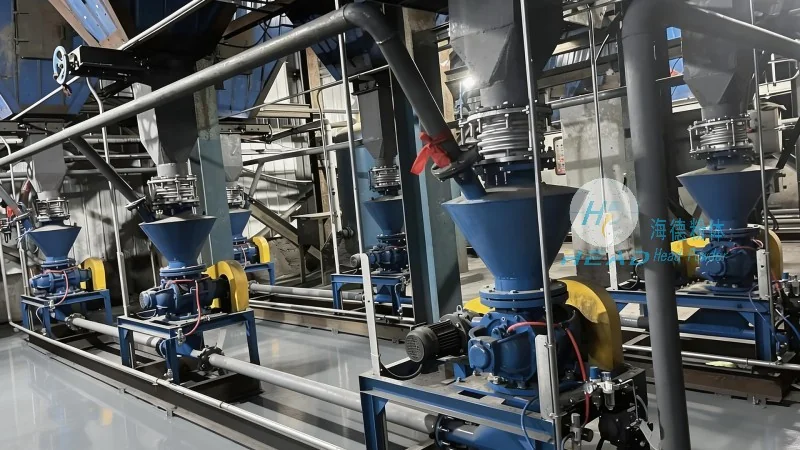
The effectiveness of borax granule pneumatic conveying equipment relies on the proper integration and operation of its core components. The feed hopper is designed to store and feed the borax granules into the system at a controlled rate, preventing overfilling and ensuring a steady supply of material. The rotary airlock valve, positioned at the discharge end of the hopper, acts as a seal to prevent backflow and maintain the pressure differential necessary for conveying. It also controls the flow rate of the material, allowing for precise regulation of the conveying speed. The conveying line, usually made of stainless steel or other corrosion-resistant materials, is the main pathway for the material and air mixture. Its diameter and length are carefully selected based on the material characteristics, conveying distance, and desired flow rate. The dust collector, often equipped with a filtration system, captures any fine particles that may escape from the conveying line, ensuring compliance with environmental regulations and maintaining a clean working environment. Finally, the discharge hopper receives the material at the end of the conveying line and stores it until it is further processed or packaged.
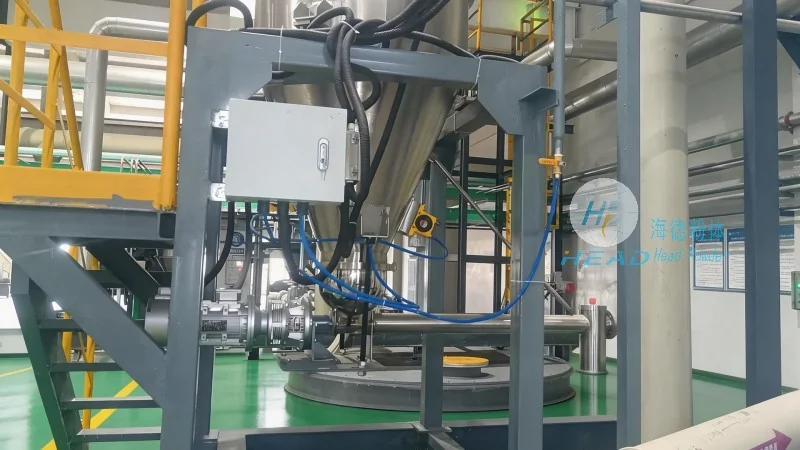
The working scene characteristics of borax granule pneumatic conveying equipment are tailored to meet the specific demands of industrial applications. One of the primary advantages is its ability to handle granular materials like borax without the need for mechanical components that could cause wear or contamination. This results in lower maintenance costs and longer equipment lifespan. Additionally, the system operates in a closed environment, which minimizes dust exposure and improves workplace safety. The continuous operation of the equipment allows for high throughput rates, making it suitable for large-scale production facilities. The flexibility of the system also enables it to be integrated with other processing equipment, such as mixers, dryers, or packaging machines, creating a seamless material handling workflow. In terms of energy efficiency, pneumatic conveying systems are generally more energy-efficient than traditional belt or bucket elevators, especially for long-distance or high-volume material transport. The system's ability to handle varying material loads and flow rates makes it adaptable to different production schedules and operational needs.

Borax granule pneumatic conveying equipment is widely used in various industries where borax is a key raw material. In the chemical industry, it is commonly employed in the production of detergents, glass, and pharmaceuticals. The system ensures that borax granules are transferred from storage silos to processing units without any loss or contamination, maintaining the quality of the final products. In the food and beverage industry, the hygienic design of the equipment is crucial, as it prevents cross-contamination and meets stringent food safety standards. The dust-free operation also helps in maintaining a clean and safe working environment, which is essential for compliance with health and safety regulations. Furthermore, the system's ability to handle fine particles and prevent product degradation makes it ideal for applications where the quality of the material is paramount. The integration of this equipment into existing production lines can significantly improve operational efficiency, reduce downtime, and lower overall production costs.
In conclusion, borax granule pneumatic conveying equipment represents a sophisticated and efficient solution for material handling in industrial settings. By leveraging the principles of pneumatic transport, this system offers numerous advantages, including dust-free operation, high throughput, and reduced maintenance requirements. As industries continue to prioritize efficiency, safety, and product quality, the demand for advanced material handling technologies like this equipment is expected to grow. HeadPowder, with its expertise in engineering and manufacturing, remains committed to providing customized solutions that meet the evolving needs of its clients, ensuring that borax granule pneumatic conveying equipment continues to play a vital role in the production processes of various industries.

 Shandong Headpowder Engineering Co., Ltd.
 156-6277-7102(Manager Zhang)
  0531-83386006
  Zhangqiu District, Jinan City, Shandong Province, China
telephone
WeChatconsult
top