With more than 10‑year industry experience, Shandong Headpowder delivers full‑service pneumatic‑conveying systems and blowers, undertaking nationwide turn‑key powder‑handling projects.
HeadPowder, a leading engineering firm based in Shandong, China, specializes in the design and implementation of advanced pneumatic conveying systems for industrial applications. This article focuses on the design of a specialized device for transporting stabilizer powders, highlighting key components, operational principles, and the engineering considerations that ensure efficient and reliable material handling.
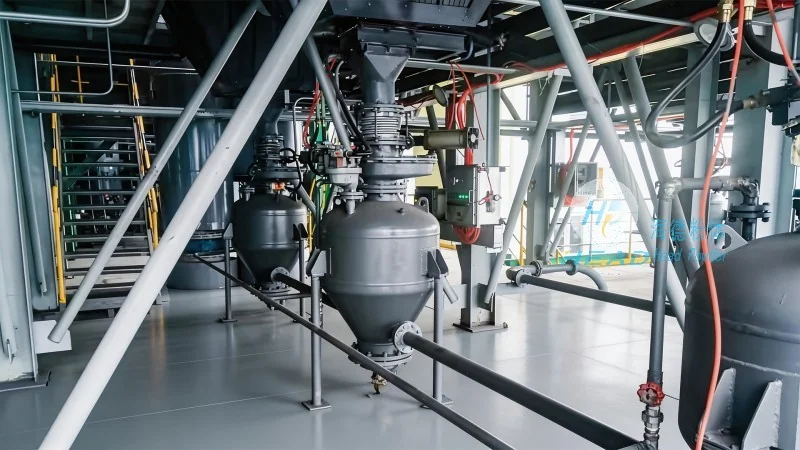
The stabilizer powder pneumatic conveying system consists of several critical components that work in tandem to achieve effective material transport. The primary elements include a hopper for powder storage, a rotary airlock valve to control material discharge, a positive displacement blower or air compressor to generate the necessary airflow, and a pipeline system for transporting the powder. Additionally, the system may incorporate a filter and cyclone separator to prevent dust accumulation and ensure clean operation. Each component is carefully selected and sized to match the specific characteristics of the stabilizer powder, such as particle size, bulk density, and flowability, ensuring optimal performance.
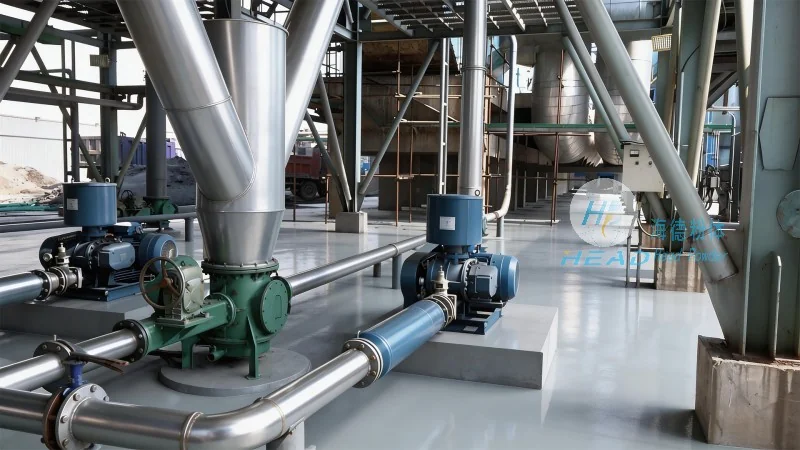
When designing a pneumatic conveying system for stabilizer powders, several factors must be considered to ensure efficiency and reliability. The first is the selection of the appropriate conveying method—whether it's a dilute-phase or dense-phase system—based on the powder's properties and the required transport distance. Dilute-phase systems use high-velocity air to suspend the powder particles, while dense-phase systems use lower air velocities and higher pressure to push the material through the pipeline. For stabilizer powders, which often have fine particles and can be prone to caking, a dense-phase system may be preferred to prevent blockages and maintain consistent flow rates. Another critical consideration is the material of construction for the hopper, pipeline, and valves, as stabilizer powders can be corrosive or abrasive. Stainless steel or other corrosion-resistant materials are typically used to ensure durability and prevent contamination of the product. Furthermore, the system must be equipped with proper dust collection and filtration to comply with environmental regulations and maintain a safe working environment.
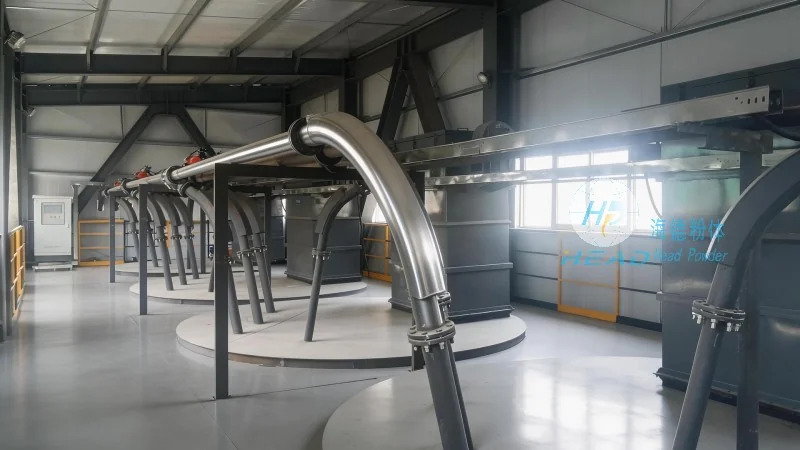
The performance of the stabilizer powder pneumatic conveying device is directly influenced by its operational parameters and regular maintenance. Proper air pressure and flow rate are essential to maintain consistent material transport and prevent system downtime. Regular inspection of the rotary airlock valve, blower, and pipeline for wear or blockages is crucial to avoid operational issues. The filter and cyclone separator must be cleaned or replaced periodically to ensure efficient dust removal and prevent system inefficiencies. Additionally, the system should be equipped with monitoring devices, such as pressure gauges and flow meters, to allow operators to track performance and make adjustments as needed. By adhering to a regular maintenance schedule, the system can achieve long-term reliability and minimize downtime, ensuring smooth operation in industrial settings.
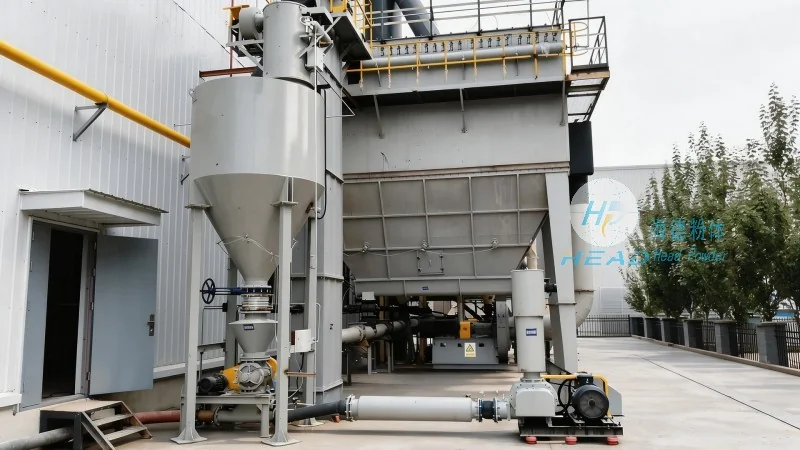
HeadPowder Engineering Co., Ltd., with its headquarters in Shandong, China, is a trusted provider of specialized pneumatic conveying solutions for various industrial applications. The design of the stabilizer powder pneumatic conveying device exemplifies the company's commitment to engineering excellence, ensuring efficient, reliable, and safe material handling. By leveraging advanced technology and careful consideration of material properties, HeadPowder delivers systems that meet the specific needs of its clients, contributing to improved productivity and operational efficiency in the industry.

 Shandong Headpowder Engineering Co., Ltd.
 156-6277-7102(Manager Zhang)
  0531-83386006
  Zhangqiu District, Jinan City, Shandong Province, China
telephone
WeChatconsult
top