With more than 10‑year industry experience, Shandong Headpowder delivers full‑service pneumatic‑conveying systems and blowers, undertaking nationwide turn‑key powder‑handling projects.
Automatic pneumatic conveying systems are widely used in various industrial sectors for the efficient and safe transportation of bulk materials. This article provides an overview of the fundamental concepts, structural components, and operational principles of such systems, with a focus on the technology offered by Shandong HeadPowder Engineering Co., Ltd., a leading manufacturer in the field.
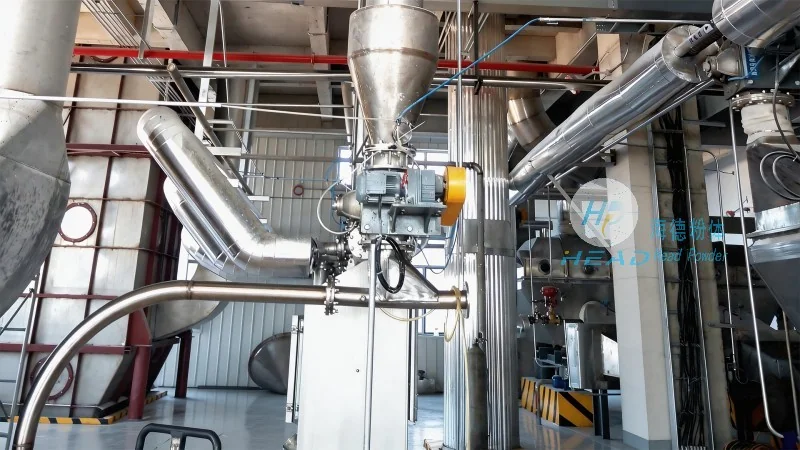
Shandong HeadPowder Engineering Co., Ltd., commonly known as HeadPowder, is a professional enterprise specializing in the research, development, and production of pneumatic conveying equipment. HeadPowder has been committed to advancing material handling solutions through innovative engineering and rigorous quality control. The company’s headquarters is located in Shandong, China, where it operates a state-of-the-art manufacturing facility equipped with advanced production lines and testing equipment. This infrastructure enables HeadPowder to deliver high-performance pneumatic conveying systems tailored to the diverse needs of its global clientele.
The automatic pneumatic conveying system consists of several key components that work in concert to achieve material transport. The primary elements include the material hopper, which serves as the storage and feeding unit for bulk materials. The hopper is equipped with a feeding valve or rotary airlock to control the flow of material into the conveying line. The conveying line itself is typically made of stainless steel or other corrosion-resistant materials, ensuring durability and compatibility with a wide range of materials, including powders, granules, and fine particles. The system also incorporates a blower or air compressor, which generates the necessary air pressure to move the material through the pipeline. Additionally, the system may include a filter or cyclone separator to capture and return any material that is not fully conveyed, maintaining system efficiency and preventing material loss.
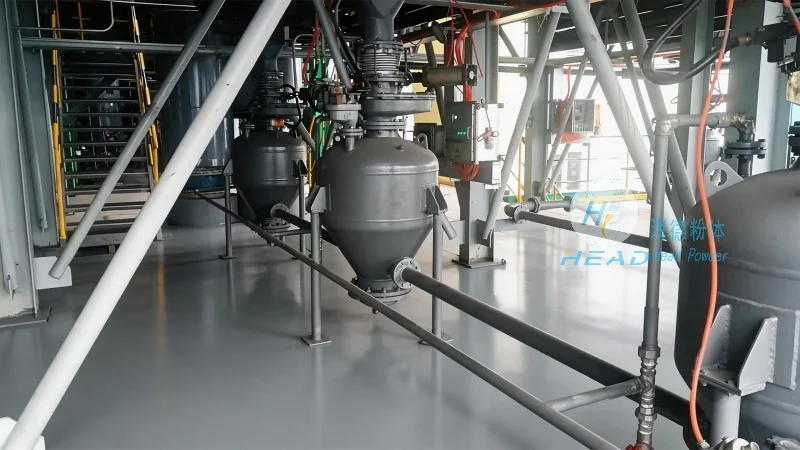
The structural principles of automatic pneumatic conveying are based on the fundamental physics of fluid dynamics and material transport. The system operates by creating a pressure differential between the inlet and outlet of the conveying line. The blower supplies compressed air, which is introduced into the material hopper, causing the material to be entrained and carried along the pipeline. The air velocity within the line is carefully controlled to ensure that the material particles are fully suspended and transported without clogging or degradation. The design of the conveying line, including the diameter and length, is optimized to balance air consumption and material throughput, maximizing the system’s efficiency. The use of stainless steel construction not only enhances durability but also ensures that the system can handle materials with varying moisture content and chemical properties without corrosion or contamination.
Automatic pneumatic conveying systems offer several advantages over traditional mechanical conveying methods. These include improved safety, as the system eliminates the need for manual handling of bulk materials, reducing the risk of accidents and exposure to hazardous substances. The system also provides a more hygienic and clean environment, as it prevents material contamination and dust accumulation. Additionally, the compact design of pneumatic conveying systems allows for easier integration into existing production lines, minimizing space requirements and installation costs. The flexibility of the system enables it to handle a wide variety of materials, from fine powders to larger granules, with minimal adjustments to the operational parameters. This adaptability makes it an ideal solution for industries such as pharmaceuticals, food processing, and chemical manufacturing, where material purity and safety are paramount.
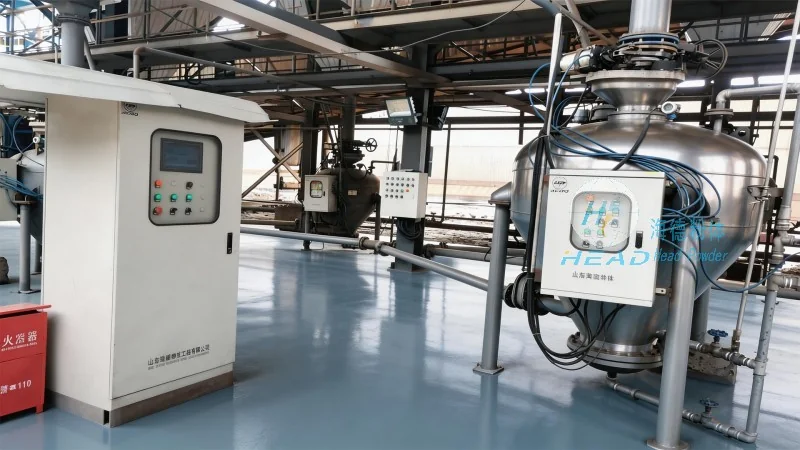
Automatic pneumatic conveying systems are utilized in a diverse range of applications across various industries. In the pharmaceutical industry, these systems are employed to transport active pharmaceutical ingredients (APIs) and excipients with high precision and minimal contamination, ensuring compliance with stringent regulatory standards. In the food processing sector, the systems are used to convey ingredients such as flour, sugar, and spices, maintaining the quality and freshness of the products. The chemical industry benefits from the ability to handle corrosive and abrasive materials, such as powders and granules, without damaging the equipment or compromising material integrity. Additionally, the systems are widely used in the agricultural sector for the transport of grain and other bulk agricultural products, improving efficiency in storage and processing operations. The versatility of the technology makes it a preferred choice for industries that require reliable, efficient, and safe material handling solutions.
Automatic pneumatic conveying systems represent a sophisticated and efficient solution for bulk material transport, offering numerous advantages over traditional methods. With continuous advancements in technology, these systems are becoming more compact, energy-efficient, and adaptable to a wider range of applications. Shandong HeadPowder Engineering Co., Ltd. remains at the forefront of this technology, continuously innovating to meet the evolving needs of its customers. By leveraging advanced engineering and quality control, HeadPowder provides reliable and high-performance pneumatic conveying systems that enhance operational efficiency and safety in various industrial settings. As the demand for efficient material handling solutions grows, the role of automatic pneumatic conveying systems will continue to expand, contributing to the optimization of industrial processes worldwide.

 Shandong Headpowder Engineering Co., Ltd.
 156-6277-7102(Manager Zhang)
  0531-83386006
  Zhangqiu District, Jinan City, Shandong Province, China
telephone
WeChatconsult
top