With more than 10‑year industry experience, Shandong Headpowder delivers full‑service pneumatic‑conveying systems and blowers, undertaking nationwide turn‑key powder‑handling projects.
HeadPowder, a leading manufacturer based in Shandong, China, specializes in the design and production of advanced carbon powder pneumatic conveying systems. These systems are essential for efficiently transporting carbon powders in various industrial applications, ensuring minimal dust generation and high material integrity. The following article provides a detailed overview of the operation process and working principles of such equipment, highlighting key components and their functions.
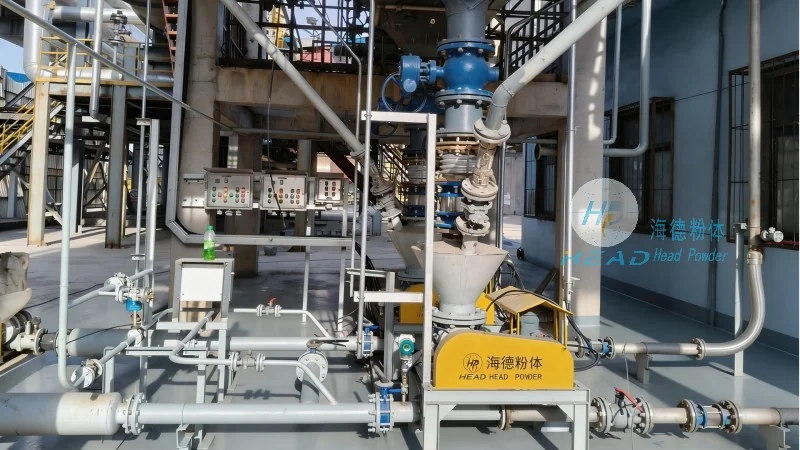
Carbon powder pneumatic conveying systems utilize air or gas as the medium to transport carbon powders from a source to a destination. This method offers significant advantages over traditional mechanical conveying, including reduced material degradation, lower maintenance requirements, and improved safety by minimizing dust exposure. The core of these systems lies in the seamless integration of feeding mechanisms, conveying pipes, and separation devices, all working in concert to achieve efficient material transport.
The carbon powder pneumatic conveyor typically consists of several critical components, each playing a vital role in the overall operation. These include the hopper or feed hopper, which holds the carbon powder and regulates the feed rate; the air compressor or blower, which generates the necessary airflow to move the material; the conveying line, which transports the powder-air mixture; and the separation or collection unit, which separates the carbon powder from the air stream for discharge.
The operation begins with the carbon powder being fed into the hopper. A feeder, such as a rotary valve or screw feeder, controls the flow rate of the powder into the conveying line. Simultaneously, the air compressor supplies compressed air to the system, creating a pressure differential between the hopper and the discharge end of the system. As the air flows through the conveying line, it entrains the carbon powder particles, forming a dense phase or dilute phase mixture depending on the system design and operating conditions. The mixture travels through the pipes under the influence of the air flow, reaching the separation unit where the powder is collected and the air is either recirculated or vented.
1. Material Loading: Carbon powder is loaded into the feed hopper. The hopper is designed to prevent material bridging and ensure a consistent feed rate. A level indicator may be used to monitor the powder level and trigger feeding when the level is low.
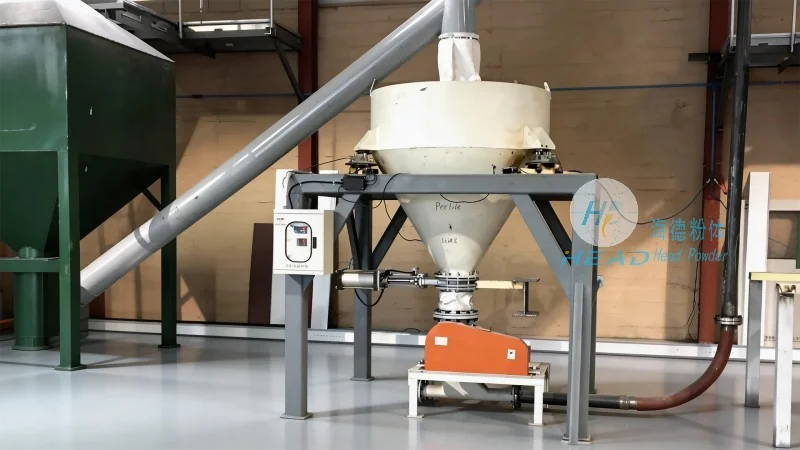
2. Air Supply Initiation: The air compressor is activated, generating the required airflow. The pressure in the hopper is increased, creating a pressure difference with the discharge end of the system.
3. Powder Entrainment: The feeder opens, allowing carbon powder to enter the conveying line. The compressed air entrains the powder particles, forming a slurry-like mixture. The velocity of the air and the size of the powder particles determine the type of conveying (e.g., dense phase or dilute phase).
4. Transportation: The powder-air mixture travels through the pipeline. The system may include bends, expansions, or contractions, which are designed to minimize pressure loss and maintain the flow stability.
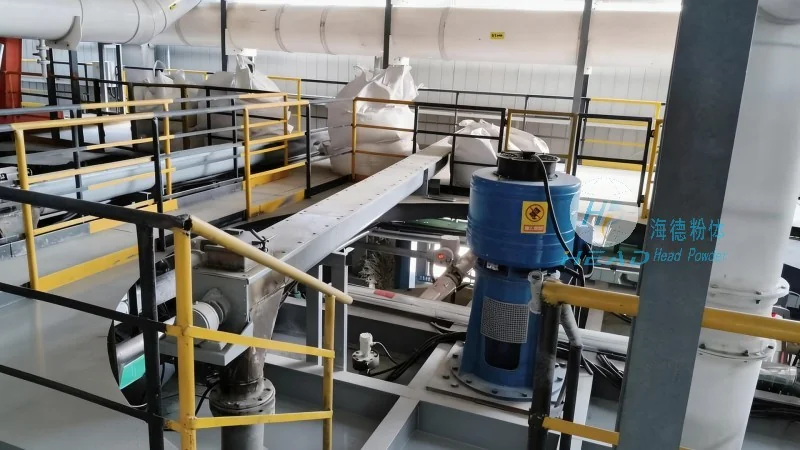
5. Separation and Discharge: At the discharge end, the separation unit (such as a cyclone or filter) separates the carbon powder from the air. The powder is collected in a receiving container, while the air is either filtered and recirculated or vented to the atmosphere.
The efficiency and performance of carbon powder pneumatic conveying systems are influenced by several factors. These include the particle size and density of the carbon powder, the air velocity and pressure, the length and diameter of the conveying line, and the design of the separation equipment. Proper selection of these parameters is crucial to ensure optimal operation, minimize energy consumption, and prevent system blockages or material degradation.
Carbon powder pneumatic conveying systems are widely used in various industries, including carbon manufacturing, chemical processing, and food processing. The benefits of these systems include reduced dust contamination, improved material handling efficiency, lower labor costs, and enhanced safety in the workplace. By maintaining a closed system, these conveyors also help in controlling environmental emissions and complying with regulatory standards.
Carbon powder pneumatic conveying equipment, as exemplified by products from Shandong HeadPowder Engineering Co., Ltd., represents a sophisticated solution for the efficient and safe transport of carbon powders. Understanding the operation process and working principles of these systems is essential for optimizing their performance and ensuring reliable operation in industrial settings. With continuous advancements in design and technology, these systems continue to play a vital role in modern material handling processes.

 Shandong Headpowder Engineering Co., Ltd.
 156-6277-7102(Manager Zhang)
  0531-83386006
  Zhangqiu District, Jinan City, Shandong Province, China
telephone
WeChatconsult
top