With more than 10‑year industry experience, Shandong Headpowder delivers full‑service pneumatic‑conveying systems and blowers, undertaking nationwide turn‑key powder‑handling projects.
For industrial facilities dealing with sawdust and other fine particulate materials, efficient material handling is crucial for maintaining productivity and operational safety. Pneumatic conveying systems offer a reliable solution for transporting sawdust particles over short to medium distances, eliminating the need for mechanical components like belts or buckets that can be prone to wear and maintenance issues. This article provides a detailed overview of the operation process and working principles of sawdust particle pneumatic conveying lines, highlighting the key components, step-by-step procedures, and technical considerations involved in their effective implementation. As a leading manufacturer in the field, Shandong HeadPowder Engineering Co., Ltd. specializes in designing and supplying advanced pneumatic conveying solutions for various industrial applications, including sawdust handling.
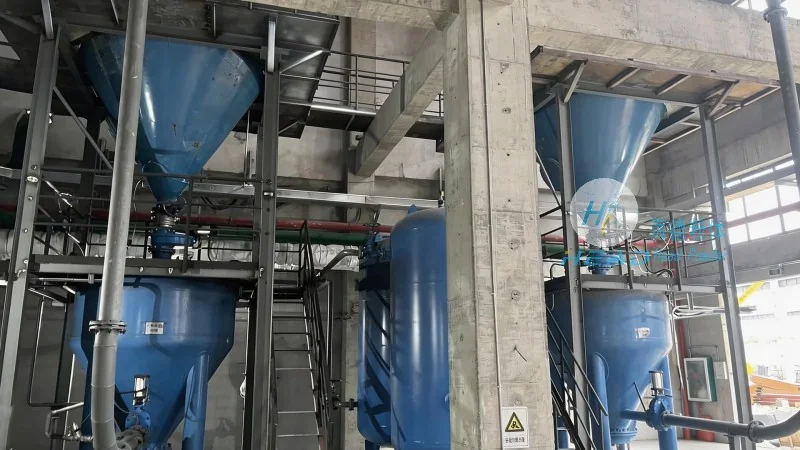
A sawdust particle pneumatic conveying line is a closed-loop system designed to transport dry sawdust or similar granular materials using compressed air or other gases. The system typically consists of a hopper for material storage, a conveyor line (usually a series of pipes), a blower or compressor to generate airflow, and a discharge point for the material. This design ensures that the sawdust is moved without direct contact with mechanical parts, reducing contamination and minimizing the risk of dust explosions in the process.
Several critical components work together to ensure the smooth operation of a sawdust particle pneumatic conveying line. The primary components include:
1. Material Hopper: A storage vessel where sawdust is collected before being fed into the conveying system. The hopper is equipped with a feeder, such as a rotary valve or a screw feeder, which controls the flow rate of the material into the conveyor line.
2. Conveying Pipeline: A network of pipes that forms the main path for the sawdust particles. The pipeline is usually made of stainless steel or other corrosion-resistant materials to prevent degradation from the sawdust and moisture.
3. Blower or Compressor: The power source that generates the airflow necessary to move the sawdust particles. Positive pressure systems use a blower to push air and material through the pipeline, while negative pressure systems use a vacuum to draw material into the line.
4. Control Valves and Regulators: These components regulate the airflow and pressure within the system, ensuring consistent material transport and preventing system overload or pressure spikes.
5. Filter and Dust Collector: To maintain air quality and prevent dust emissions, the system includes a filter that captures any sawdust particles carried by the exhaust air. The collected dust is then returned to the hopper or disposed of as needed.
The operation of a sawdust particle pneumatic conveying line involves a series of coordinated steps to ensure efficient and safe material transport. The process typically begins with the following stages:
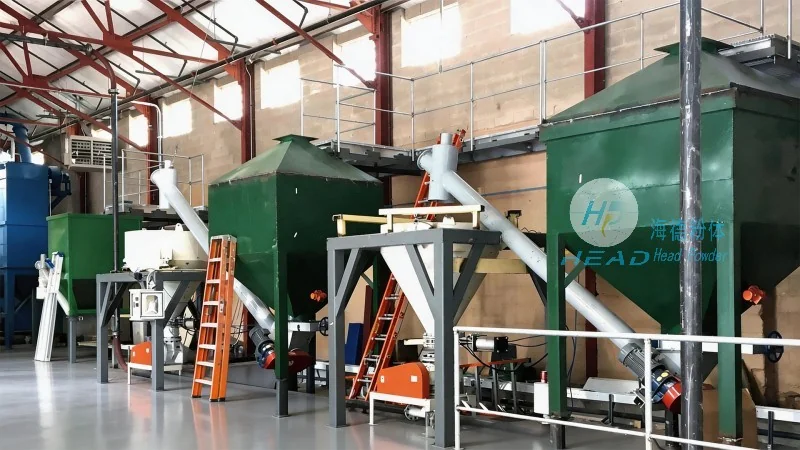
1. System Preparation: Before starting the conveying operation, the system is checked for proper air pressure, valve positions, and material levels in the hopper. The blower is turned on, and the system is pressurized to the required level. This step ensures that all components are ready for operation and that the airflow is sufficient to move the sawdust particles.
2. Material Feeding: Once the system is pressurized, the rotary valve or screw feeder opens, allowing sawdust to enter the conveying pipeline. The feeder controls the flow rate based on the system's capacity and the desired discharge rate at the receiving end.
3. Material Transport: As the sawdust enters the pipeline, the compressed air from the blower pushes it forward. The airflow velocity is maintained at a level that ensures the particles are fully suspended and carried through the pipeline without settling or clogging. The system may include bends, elbows, or other components that direct the material to the discharge point.
4. Discharge and Collection: At the receiving end of the pipeline, the sawdust is discharged into a collection bin or processing unit. The system may include a pressure regulator or a venturi to control the flow rate and prevent overloading the receiving equipment.
5. System Shutdown: When the conveying operation is complete, the system is shut down by turning off the blower and closing the feeder. The pressure is released from the pipeline, and the system is prepared for the next cycle. The collected dust from the filter is returned to the hopper or disposed of as required.
The working principle of a sawdust particle pneumatic conveying line is based on the physics of fluid dynamics and particle suspension. The system operates by creating a flow of air within the pipeline that is strong enough to lift and transport the sawdust particles. There are two main types of pneumatic conveying systems used for sawdust: positive pressure and negative pressure systems.
1. Positive Pressure Systems: In this system, a blower or compressor generates compressed air that is introduced into the conveying pipeline at the inlet. The high-pressure air pushes the sawdust particles forward, carrying them through the pipeline. The air and material mixture exits the pipeline at the discharge point, where the material is separated from the air by a filter or cyclone. Positive pressure systems are commonly used for short to medium distance conveying and are effective for handling abrasive or sticky materials.
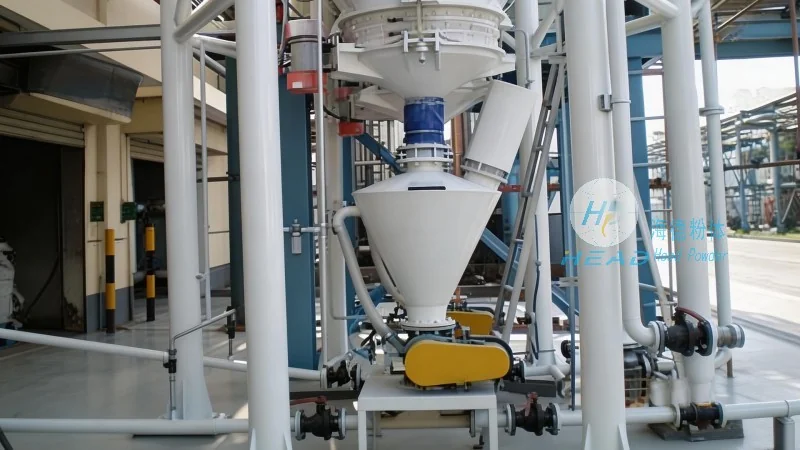
2. Negative Pressure Systems: Also known as vacuum systems, these use a vacuum pump to create a low-pressure environment within the pipeline. The vacuum draws the sawdust particles into the pipeline from the hopper or collection point. The material is then transported to the discharge point, where the air is filtered and the sawdust is collected. Negative pressure systems are often used for longer distances or when the material needs to be transported from multiple sources.
Key factors that affect the efficiency of pneumatic conveying for sawdust include the particle size, moisture content, and density of the material. Smaller particles require higher airflow velocities to remain suspended, while larger or heavier particles may need additional pressure or a different system design. The system design must also account for the potential for clogging or blockages, which can occur if the airflow is insufficient or if the material contains debris.
Sawdust particle pneumatic conveying lines offer several advantages over traditional mechanical conveying methods. These benefits include:
1. Reduced Maintenance: Since there are no mechanical parts in direct contact with the sawdust, the system requires less maintenance and has a longer service life compared to belt or bucket conveyors.
2. Improved Safety: The closed-loop design prevents dust emissions and reduces the risk of dust explosions, making the system safer for operators and the environment.
3. Flexibility and Scalability: The system can be easily expanded or reconfigured to accommodate changes in production volume or material handling requirements. It can also be integrated with other processing equipment, such as drying or pelletizing systems.
4. Energy Efficiency: Modern pneumatic conveying systems are designed to be energy-efficient, using less power than traditional mechanical systems while achieving higher material throughput.
Applications of sawdust particle pneumatic conveying lines include wood processing facilities, biomass energy plants, and sawmills, where sawdust is transported from collection points to storage silos, processing units, or waste disposal areas. The system is also used in the production of wood pellets, where the sawdust is conveyed to a pellet mill for further processing.

 Shandong Headpowder Engineering Co., Ltd.
 156-6277-7102(Manager Zhang)
  0531-83386006
  Zhangqiu District, Jinan City, Shandong Province, China
telephone
WeChatconsult
top