With more than 10‑year industry experience, Shandong Headpowder delivers full‑service pneumatic‑conveying systems and blowers, undertaking nationwide turn‑key powder‑handling projects.
HeadPowder, a leading provider in the field, specializes in the design and implementation of pneumatic conveying systems tailored for the handling of positive and negative electrode materials used in lithium-ion batteries. This article delves into the operational process and underlying principles of such systems, offering insights into their efficiency and reliability.
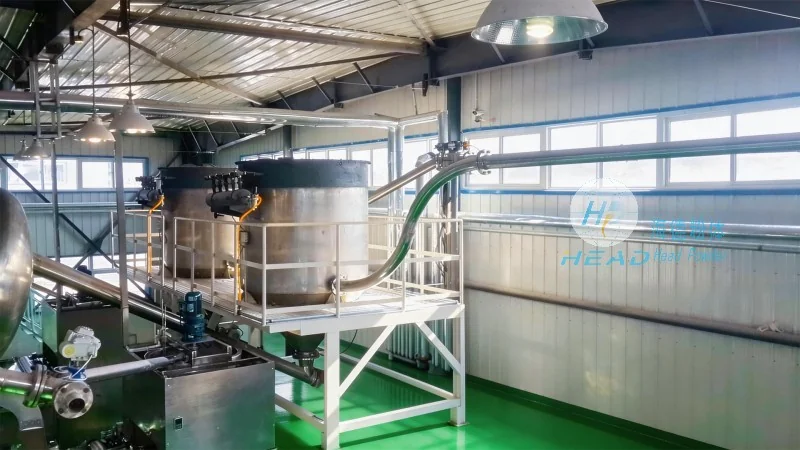
Pneumatic conveying is a method of transporting bulk materials through a pipeline using air or other gas as the conveying medium. In the context of electrode material handling, this technology is crucial for ensuring safe, efficient, and dust-free transfer of materials from storage to processing equipment. The system typically consists of several key components, including a hopper, a rotary valve, a conveying line, and a receiver, each playing a vital role in the overall process.
The hopper serves as the initial storage container, holding the electrode materials before they are conveyed. It is equipped with a discharge mechanism, often a rotary valve, which controls the flow of material into the conveying line. The rotary valve acts as a gate, regulating the amount of material released at a controlled rate to maintain a steady flow. The conveying line, usually made of stainless steel or other corrosion-resistant materials, transports the material under pressure. The receiver, at the end of the line, collects the material and may include a dust collection system to ensure environmental compliance and operational safety.
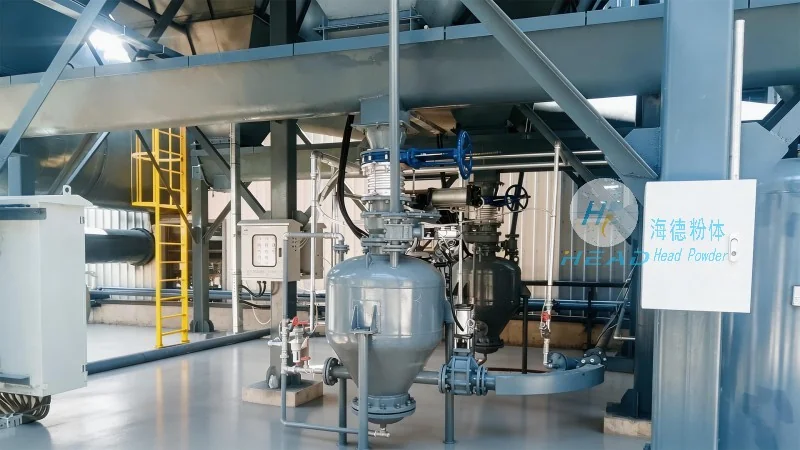
The process begins with the material being loaded into the hopper. The rotary valve then opens to allow a controlled quantity of material to enter the conveying line. Compressed air is introduced at the inlet of the line, creating a pressure differential that propels the material forward. As the material travels through the line, it is suspended and transported by the air flow. The receiver at the end of the line captures the material, and the system may include a filter or dust collector to manage any airborne particles, ensuring a clean and safe environment.
The core principle of pneumatic conveying is the interaction between the material particles and the air flow. In a dilute phase system, the material is suspended in the air stream, moving at a velocity sufficient to overcome gravitational forces and any friction within the pipeline. The pressure drop along the conveying line is a critical factor, as it determines the energy required to transport the material. Proper design of the system, including the size of the pipeline, the air velocity, and the material characteristics, is essential to achieve efficient and cost-effective operation.
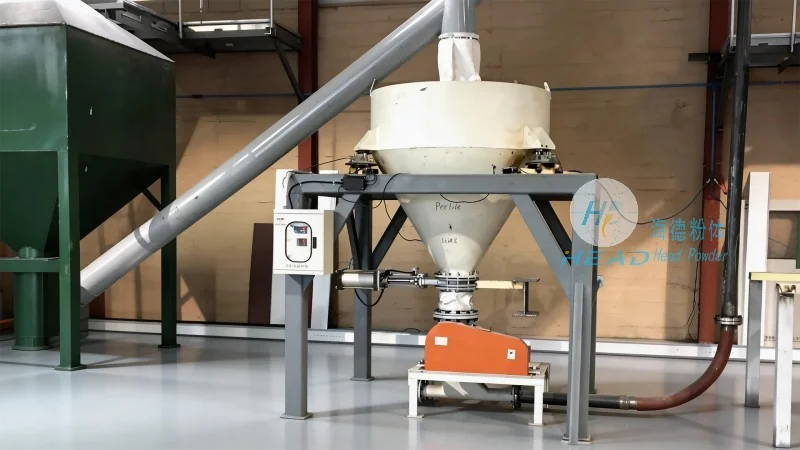
Implementing pneumatic conveying systems for electrode materials offers several advantages. Firstly, it provides a dust-free environment, which is critical for maintaining material quality and ensuring workplace safety. Secondly, the system allows for continuous and automated material transfer, reducing labor costs and improving operational efficiency. Additionally, the technology can handle a wide range of material types and particle sizes, making it versatile for different production needs. The compact design of the system also saves space, which is valuable in modern manufacturing facilities.
HeadPowder, with its headquarters in Shandong, China, is a specialized engineering company dedicated to the development and manufacturing of advanced material handling solutions. The company leverages years of experience and technical expertise to design customized pneumatic conveying systems that meet the specific requirements of clients in the battery manufacturing industry. By focusing on quality, reliability, and innovation, HeadPowder has established itself as a trusted partner in the production of high-performance electrode materials.

 Shandong Headpowder Engineering Co., Ltd.
 156-6277-7102(Manager Zhang)
  0531-83386006
  Zhangqiu District, Jinan City, Shandong Province, China
telephone
WeChatconsult
top