With more than 10‑year industry experience, Shandong Headpowder delivers full‑service pneumatic‑conveying systems and blowers, undertaking nationwide turn‑key powder‑handling projects.
HeadPowder, formally known as Shandong HeadPowder Engineering Co., Ltd., is a professional enterprise based in Shandong, China. The company specializes in the design, manufacturing, and implementation of pneumatic conveying systems, particularly for materials like gray calcium powder. With a focus on industrial efficiency and material handling solutions, HeadPowder provides tailored solutions to meet the diverse needs of clients in various industries.
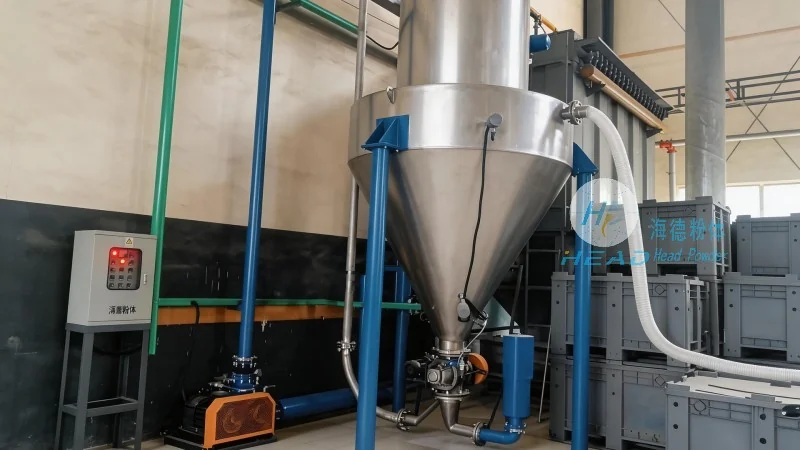
The operation process of gray calcium powder pneumatic conveying involves a systematic approach to move the material from a source to a destination using air as the conveying medium. The process typically begins with the material being loaded into a hopper or storage silo. From there, the material is fed into the conveying line through a feeder, such as a rotary valve or a screw feeder, which controls the flow rate. Simultaneously, a fan or blower generates the necessary air pressure and flow to transport the material particles through the pipeline. The conveying system may include various components like elbows, bends, and filters to ensure smooth and efficient material transport. The entire process is designed to maintain consistent material flow, minimize dust generation, and optimize energy consumption.
The working principle of gray calcium powder pneumatic conveying is based on the principle of fluidization and suspension of solid particles in a gas stream. When air is introduced into the conveying line at a sufficient velocity, it creates a low-pressure zone that draws the gray calcium powder particles into the air stream. The particles become suspended in the air, forming a homogeneous mixture known as a "pneumatic slurry." This mixture is then transported through the pipeline to the destination point, where it is discharged into a receiving hopper or silo. The system relies on the balance between the air velocity and the particle size and density to ensure stable and continuous conveying. Proper design of the conveying line, including pipe diameter, length, and the number of bends, is crucial to maintain the required air velocity and prevent particle deposition or blockages.
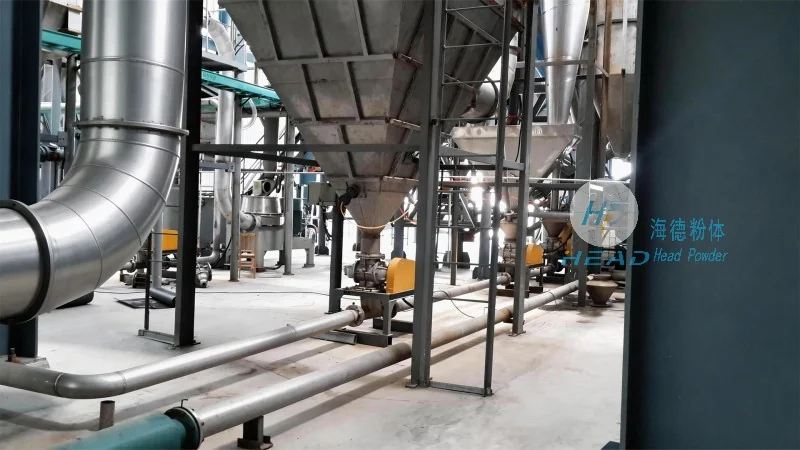
In a gray calcium powder pneumatic conveying system, several key components work together to ensure efficient operation. The primary components include a material feeder, a blower or fan, a conveying pipeline, and a receiver. The material feeder, often a rotary valve or a screw feeder, regulates the flow of gray calcium powder from the storage hopper into the conveying line. The blower or fan provides the necessary air pressure and flow rate to move the material particles through the pipeline. The conveying pipeline, typically made of stainless steel or other corrosion-resistant materials, is designed to withstand the pressure and abrasion from the material and air mixture. The receiver, or discharge hopper, collects the conveyed material at the destination point. Additionally, components like filters, cyclones, and check valves may be included to manage dust, separate air from material, and prevent backflow, respectively.
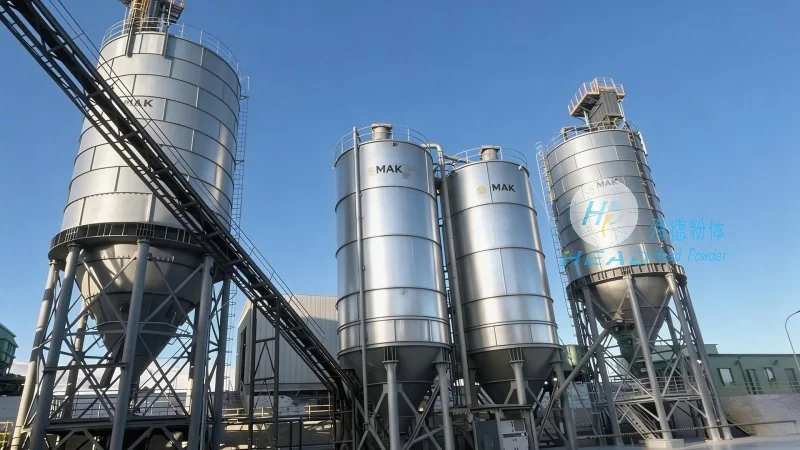
Gray calcium powder pneumatic conveying offers several advantages over traditional material handling methods. One of the main benefits is the ability to transport material over long distances without the need for mechanical components like conveyors or elevators. This reduces the risk of material contamination and damage, which is particularly important for sensitive materials like gray calcium powder. The system also minimizes dust generation compared to other methods, improving workplace safety and environmental compliance. Furthermore, pneumatic conveying systems can be designed to handle a wide range of particle sizes and densities, making them versatile for various industrial applications. The process is also relatively simple to operate and maintain, with fewer moving parts compared to mechanical systems, leading to lower maintenance costs and higher reliability.
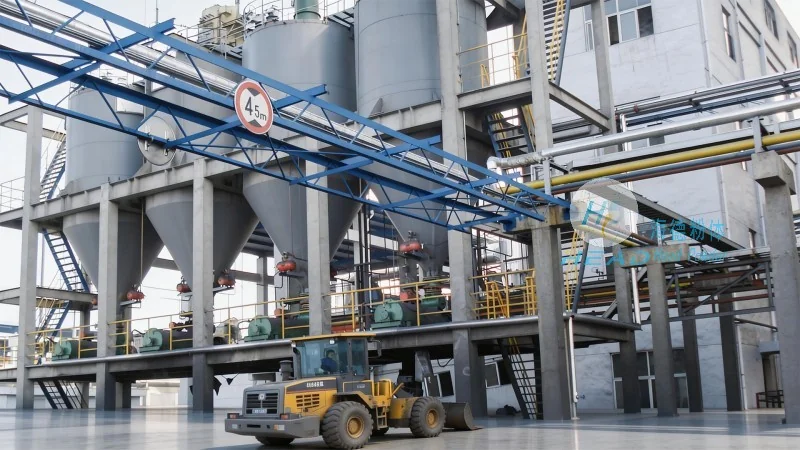
Gray calcium powder pneumatic conveying is widely used in various industries that handle fine powders. Common applications include the construction industry, where gray calcium powder is used as a raw material for cement and concrete production. The automotive industry also utilizes gray calcium powder in the manufacturing of automotive parts and coatings. Additionally, the food and pharmaceutical industries may use pneumatic conveying for handling calcium-based powders in food products or pharmaceutical formulations. In the chemical industry, gray calcium powder is used in the production of various chemicals, and pneumatic conveying ensures efficient and safe material transfer. The versatility of the system makes it suitable for a wide range of industrial processes that require reliable and efficient material handling solutions.
Gray calcium powder pneumatic conveying is an efficient and effective method for transporting fine materials like gray calcium powder. The process, as explained, involves a systematic approach using air as the conveying medium, with key components working together to ensure smooth and consistent material transport. The working principle is based on fluidization and suspension of particles in a gas stream, which allows for stable and continuous conveying. With the support of professional companies like Shandong HeadPowder Engineering Co., Ltd., businesses can implement reliable pneumatic conveying systems tailored to their specific needs. By leveraging the advantages of this technology, industries can improve operational efficiency, reduce costs, and enhance workplace safety.

 Shandong Headpowder Engineering Co., Ltd.
 156-6277-7102(Manager Zhang)
  0531-83386006
  Zhangqiu District, Jinan City, Shandong Province, China
telephone
WeChatconsult
top