With more than 10‑year industry experience, Shandong Headpowder delivers full‑service pneumatic‑conveying systems and blowers, undertaking nationwide turn‑key powder‑handling projects.
White carbon black, also known as silica, is a critical industrial material utilized across diverse sectors including rubber, plastics, coatings, and electronics. The efficient transportation and handling of white carbon black are paramount for sustaining production efficiency and product quality. Pneumatic conveying lines provide a reliable solution for moving white carbon black from storage to processing units, ensuring a dust-free and controlled environment. This article delves into the fundamental principles of white carbon black pneumatic conveying systems and highlights the key working scene characteristics that make them suitable for industrial applications.
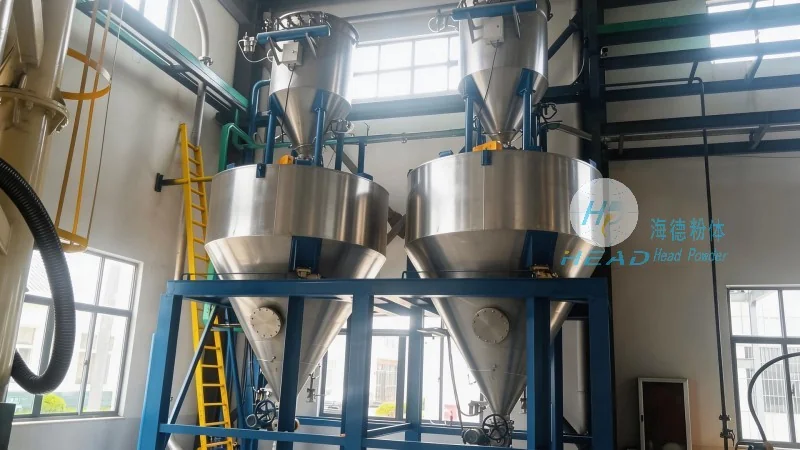
The core principle of pneumatic conveying involves utilizing compressed air or gas to transport solid materials through a pipeline. For white carbon black, the system typically operates under positive pressure, where air is blown through the pipeline to move the material. The process can be classified into two main types: dilute phase and dense phase. Dilute phase conveying employs high-velocity air to suspend material particles, allowing them to travel through the pipeline with minimal pressure drop. Dense phase conveying operates at lower velocities, creating a plug flow of material, which is more appropriate for handling abrasive or sensitive materials like white carbon black. The choice between these two methods depends on factors such as material properties, distance, and required flow rate. The system generally comprises components like a hopper, feeder, air compressor, pipeline, and receiver. The hopper stores the white carbon black, and the feeder regulates the material flow into the pipeline. The air compressor supplies the necessary pressure to move the material, while the pipeline transports it to the processing unit. The receiver collects the material at the destination. The entire system is designed to ensure minimal material degradation and maximum efficiency.
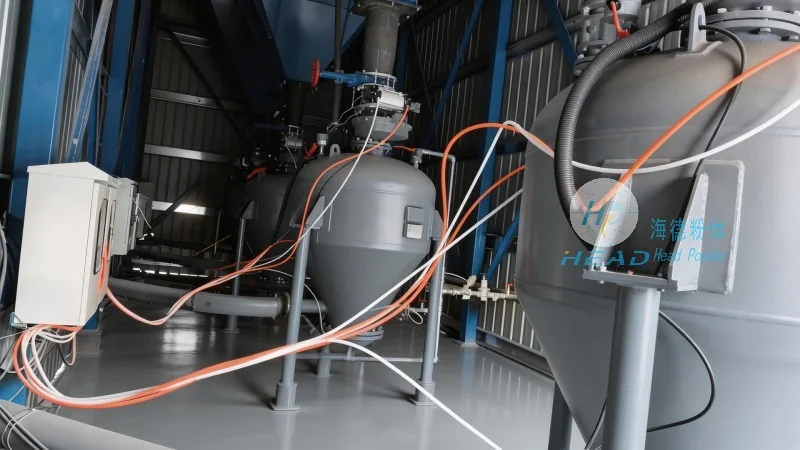
The working scene characteristics of white carbon black pneumatic conveying lines are tailored to meet the specific demands of industrial environments. One of the primary characteristics is the ability to handle fine powders without causing dust explosions or clogging. White carbon black particles are typically very fine, and traditional bulk handling methods may lead to dust accumulation and safety hazards. Pneumatic conveying systems mitigate these risks by enclosing the material in a sealed pipeline, preventing dust from escaping into the environment. Additionally, the system allows for precise control over the flow rate and pressure, ensuring consistent material delivery to the processing equipment. This is particularly important in applications where the quality of the final product is directly affected by the uniformity of the white carbon black addition. The working scene also includes considerations for space efficiency, as pneumatic conveying lines can be installed vertically or horizontally, adapting to the layout of the production facility. Another key characteristic is the ability to integrate with existing production lines, reducing the need for major structural modifications. The system can be retrofitted into existing plants, making it a cost-effective solution for upgrading material handling capabilities. Furthermore, the maintenance requirements of pneumatic conveying systems are relatively low compared to other bulk handling methods, as the components are designed to withstand the abrasive nature of white carbon black. Regular inspections and cleaning of the pipeline and equipment are sufficient to maintain optimal performance.
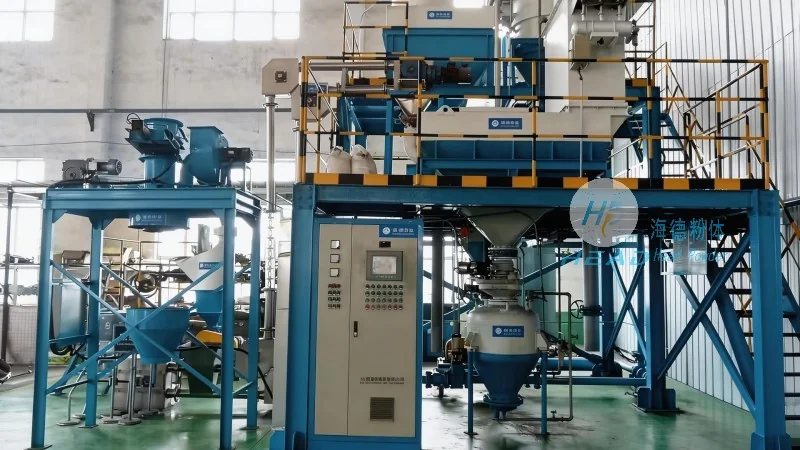
White carbon black pneumatic conveying lines are widely utilized in various industrial settings due to their versatility and efficiency. In the rubber industry, for example, white carbon black is used as a filler to enhance the mechanical properties of rubber compounds. The pneumatic conveying system ensures that the white carbon black is delivered to the mixing equipment in a controlled manner, preventing overloading and ensuring consistent mixing. In the plastics industry, white carbon black is added to improve the UV resistance and mechanical strength of plastic products. The system allows for precise dosing of the material, which is critical for maintaining the quality of the final product. In the coatings industry, white carbon black is used to provide opacity and UV protection. The pneumatic conveying system ensures that the material is evenly distributed in the coating, resulting in a smooth and uniform finish. The benefits of using pneumatic conveying lines for white carbon black include improved safety, reduced material loss, and increased production efficiency. The enclosed system prevents dust from contaminating the environment and reduces the risk of accidents. It also minimizes material spillage and loss during transportation, leading to cost savings. Additionally, the system allows for continuous operation, which is essential for maintaining high production rates. The ability to handle fine powders without clogging or degradation makes it suitable for sensitive applications where product quality is paramount.

 Shandong Headpowder Engineering Co., Ltd.
 156-6277-7102(Manager Zhang)
  0531-83386006
  Zhangqiu District, Jinan City, Shandong Province, China
telephone
WeChatconsult
top