With more than 10‑year industry experience, Shandong Headpowder delivers full‑service pneumatic‑conveying systems and blowers, undertaking nationwide turn‑key powder‑handling projects.
Efficient and reliable powder conveying systems are crucial for industries that handle bulk materials, and sodium chloride powder, commonly known as table salt, is a prime example of such a material. The equipment designed for transporting sodium chloride powder must address unique challenges related to its physical properties, such as particle size, moisture content, and flowability. This article explores the fundamental principles behind sodium chloride powder conveying equipment and highlights the key characteristics of its application scenarios.
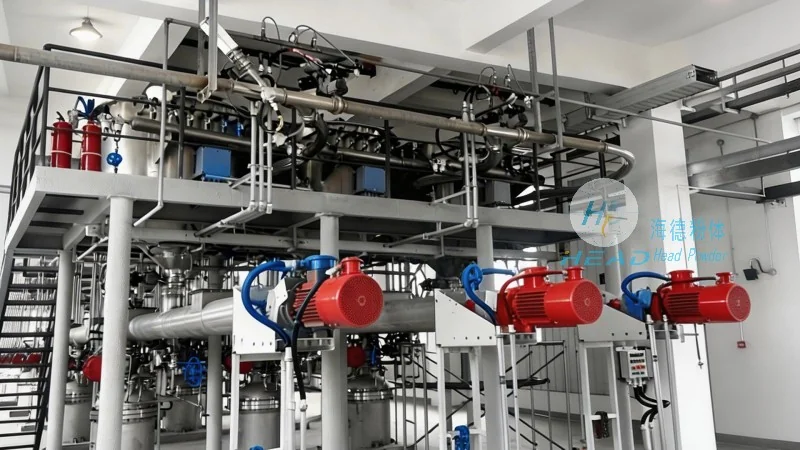
Sodium chloride powder, with its widespread use in various sectors including food processing, pharmaceuticals, and chemical manufacturing, requires specialized handling to ensure safety, efficiency, and product integrity. Conveying systems for this material must be capable of managing the challenges posed by its granular nature, including the risk of caking, bridging, and dust generation. The equipment developed by Shandong HeadPowder Engineering Co., Ltd. addresses these issues through advanced engineering solutions tailored to the specific demands of sodium chloride powder transport.
The primary principle behind sodium chloride powder conveying equipment is the effective transfer of bulk material from a source to a destination without compromising quality or safety. This is achieved through a combination of mechanical and pneumatic technologies, depending on the application requirements. For instance, mechanical conveyors like screw conveyors and belt conveyors are often used for horizontal or slight incline transport, leveraging the material's bulk density and flow characteristics. In contrast, pneumatic conveying systems, which utilize air or gas to move powder, are ideal for longer distances or when the material needs to be transported in a closed system to prevent contamination or dust exposure.
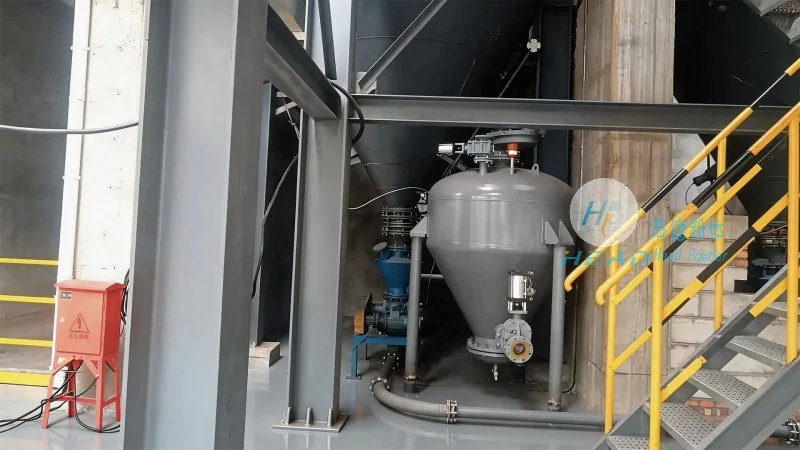
Key components of these systems include feeders, hoppers, and control mechanisms that regulate the flow rate and pressure. The design of the conveying equipment must account for the hygroscopic nature of sodium chloride, as moisture can affect its flowability and cause caking. Therefore, many systems incorporate drying or moisture control features to maintain optimal material properties during transport. Additionally, the equipment is engineered to minimize particle breakage and maintain the purity of the sodium chloride, which is critical for applications in food and pharmaceutical industries.
The application scenarios for sodium chloride powder conveying equipment vary widely across different industries, each presenting unique operational conditions and requirements. In the food processing sector, for example, the equipment must comply with stringent hygiene standards and be easy to clean to prevent cross-contamination. This often involves stainless steel construction and CIP (Clean-In-Place) systems integrated into the conveying line. The working environment may also involve high volumes of material, requiring high-capacity conveying solutions that can handle continuous production flows.

In the pharmaceutical industry, the focus shifts to maintaining product purity and preventing contamination from external sources. The conveying equipment is typically designed with aseptic features, such as sealed hoppers and air filtration systems, to ensure that the sodium chloride remains free from impurities. The working scene may involve batch processing or continuous feed, depending on the production scale, and the equipment must be capable of precise control over flow rates to meet strict quality standards.
In the chemical manufacturing sector, sodium chloride powder is often used as a raw material in processes like electrolysis or as a reagent in chemical reactions. The conveying equipment in this context must be robust enough to handle abrasive or corrosive conditions, and may include features like wear-resistant liners or corrosion-resistant materials. The working scene may involve high temperatures or aggressive chemicals, requiring specialized components that can withstand such environments while maintaining efficient material transport.
Shandong HeadPowder Engineering Co., Ltd., commonly known as HeadPowder, is a leading manufacturer of specialized powder handling equipment. With its headquarters located in Shandong, China, the company has established itself as a trusted provider of conveying solutions tailored to the needs of various industries. HeadPowder's expertise lies in designing and manufacturing equipment that addresses the unique challenges of handling bulk materials like sodium chloride powder, ensuring efficient, safe, and reliable transport.
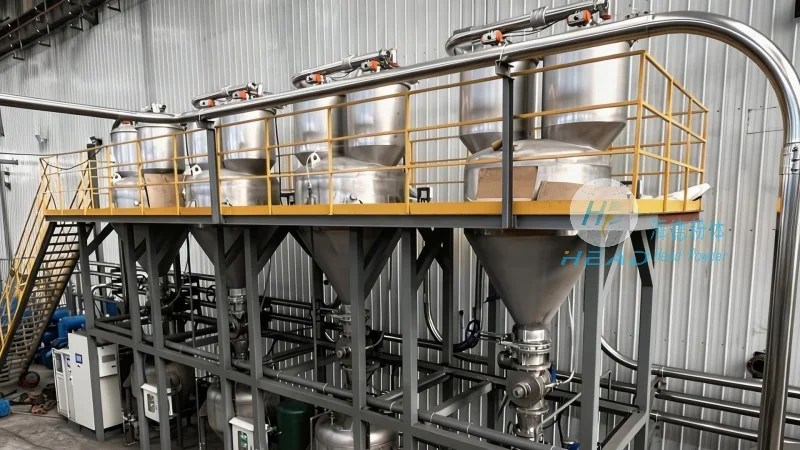
The company's commitment to quality and innovation is reflected in its product line, which includes a range of conveying systems from mechanical to pneumatic designs. Each piece of equipment is engineered to meet the specific requirements of the application, whether it involves high-volume production, strict hygiene standards, or harsh operating conditions. HeadPowder's team of engineers and technicians work closely with clients to understand their operational needs and develop customized solutions that enhance productivity and reduce downtime.
By leveraging advanced technology and rigorous quality control processes, HeadPowder ensures that its sodium chloride powder conveying equipment meets the highest industry standards. The company's products are designed for durability, efficiency, and ease of maintenance, providing long-term value to its customers. With a focus on customer satisfaction and continuous improvement, HeadPowder remains at the forefront of the powder handling industry, delivering reliable solutions for the transportation of sodium chloride powder and other bulk materials.

 Shandong Headpowder Engineering Co., Ltd.
 156-6277-7102(Manager Zhang)
  0531-83386006
  Zhangqiu District, Jinan City, Shandong Province, China
telephone
WeChatconsult
top