With more than 10‑year industry experience, Shandong Headpowder delivers full‑service pneumatic‑conveying systems and blowers, undertaking nationwide turn‑key powder‑handling projects.
When it comes to the efficient and reliable transportation of phenolic resin, a well-designed pneumatic conveying system is crucial. As a leading engineering company, Shandong HeadPowder Engineering Co., Ltd. specializes in providing comprehensive solutions tailored to the unique needs of industrial applications. This article outlines key considerations and steps for designing an optimal phenolic resin pneumatic conveying system, ensuring safety, efficiency, and cost-effectiveness.

Before diving into the design process, it's essential to understand the specific characteristics of phenolic resin and the operational demands of the application. Phenolic resin, known for its durability and chemical resistance, often requires specialized handling to prevent degradation or contamination during transport. Factors such as resin viscosity, particle size distribution, and moisture content significantly impact the selection of conveying equipment and system configuration. Additionally, the desired throughput, distance of transport, and environmental conditions must be carefully evaluated to ensure the system meets both current and future operational requirements.
Designing a phenolic resin pneumatic conveying system involves several critical components and considerations. The system typically includes a material feed hopper, a conveying line (either positive or negative pressure), a dust collection system, and a discharge unit. For phenolic resin, which can be abrasive or have specific flow characteristics, the choice of material for the hopper and conveying line is paramount. Stainless steel or corrosion-resistant materials are often preferred to prevent wear and maintain product integrity. The feed mechanism, such as a rotary valve or screw feeder, must be selected based on the resin's flowability and the need to control material flow accurately. The conveying line's diameter and length are determined by the required airflow velocity and the material's particle size, ensuring that the resin moves smoothly without excessive pressure drops or blockages.
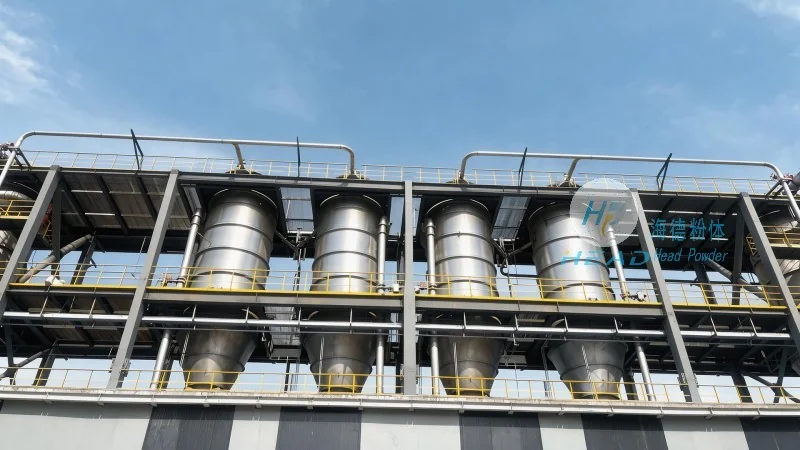
Proper sizing of the pneumatic conveying system is critical to achieving optimal performance with phenolic resin. The airflow rate must be sufficient to maintain the resin in suspension and prevent settling or clogging in the conveying line. Calculating the required air velocity involves considering the resin's density, particle size, and the system's pressure drop. A higher air velocity may be needed for finer particles or longer transport distances to ensure consistent flow. Conversely, excessive air velocity can lead to increased energy consumption and potential wear on components. The system's pressure drop across the conveying line and other components must be minimized to reduce energy costs and prevent equipment failure. HeadPowder engineers utilize advanced computational fluid dynamics (CFD) and empirical formulas to model airflow and optimize system sizing for phenolic resin applications.
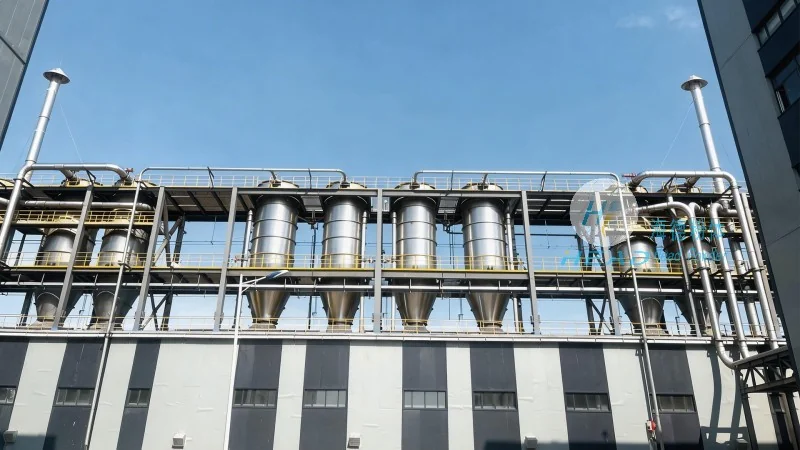
Handling phenolic resin requires adherence to strict safety protocols to protect personnel and equipment. The pneumatic conveying system should incorporate features such as explosion-proof designs, where applicable, to mitigate risks associated with dust accumulation. Proper ventilation and dust collection systems are essential to maintain air quality and comply with occupational health and safety regulations. Additionally, the system should include monitoring and control devices to detect blockages, pressure fluctuations, or other anomalies in real-time, allowing for immediate intervention to prevent system downtime or product damage. Regular maintenance and cleaning procedures are also critical to ensure the longevity of the system and maintain product purity.
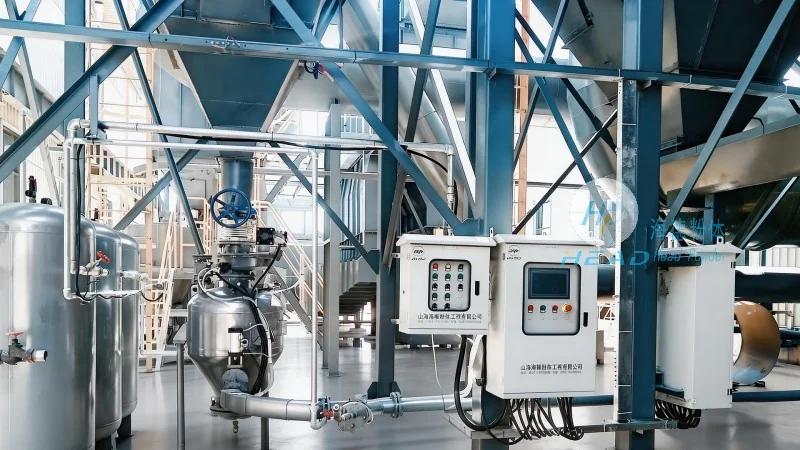
When designing a phenolic resin pneumatic conveying system, it's important to consider future expansion and integration with other industrial processes. The system should be designed with modular components that can be easily upgraded or expanded as production needs change. This includes provisions for additional feed hoppers, conveying lines, or processing units without major system overhauls. HeadPowder's engineering team works closely with clients to develop scalable solutions that align with long-term business objectives, ensuring that the investment in the pneumatic conveying system provides a return on investment over its operational lifespan.
Designing a reliable and efficient phenolic resin pneumatic conveying system requires a deep understanding of the material's properties, operational requirements, and industry best practices. Shandong HeadPowder Engineering Co., Ltd. leverages its expertise and experience to deliver customized solutions that meet the unique challenges of phenolic resin handling. By focusing on system sizing, material selection, safety, and scalability, HeadPowder ensures that clients achieve optimal performance, reduced downtime, and cost savings in their phenolic resin transportation processes. For more information on phenolic resin pneumatic conveying systems, contact HeadPowder today.

 Shandong Headpowder Engineering Co., Ltd.
 156-6277-7102(Manager Zhang)
  0531-83386006
  Zhangqiu District, Jinan City, Shandong Province, China
telephone
WeChatconsult
top