With more than 10‑year industry experience, Shandong Headpowder delivers full‑service pneumatic‑conveying systems and blowers, undertaking nationwide turn‑key powder‑handling projects.
Grit powder, a critical material in various industrial applications, requires efficient and reliable conveying systems to ensure smooth material handling. The process of grit powder conveying involves the movement of abrasive or fine-grained particles from one location to another, often under challenging conditions such as high temperature, moisture, or abrasive properties. Understanding the underlying principles and optimal working scenarios is essential for selecting the right equipment and ensuring operational efficiency.
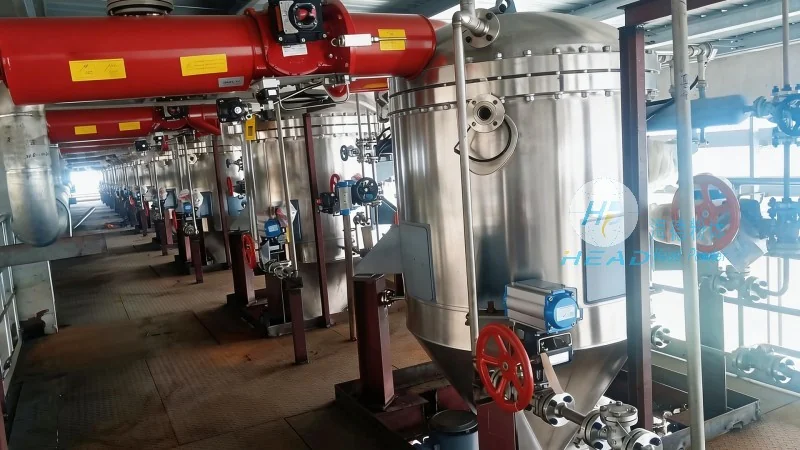
The core principle of grit powder conveying revolves around the use of specialized equipment designed to handle the unique characteristics of grit materials. Unlike traditional bulk materials, grit powders often exhibit high abrasiveness, which can cause wear on conventional conveying systems. Therefore, the conveying mechanisms must be robust and equipped with wear-resistant components. Common methods include pneumatic conveying, mechanical screw conveyors, and vacuum systems, each tailored to specific material properties and operational requirements.
For instance, pneumatic conveying uses air pressure to transport particles through pipelines, which is effective for fine, dry grit powders. However, it may face challenges with high moisture content or sticky materials, where mechanical systems like screw conveyors or belt conveyors are more suitable. The choice of conveying method depends on factors such as particle size, density, flowability, and the distance over which the material needs to be transported. Additionally, the system must be designed to minimize material degradation and ensure consistent flow rates, which are crucial for maintaining product quality and preventing blockages.
The working scene characteristics of grit powder conveying vary significantly based on the application and environment. In industrial settings, such as mining, construction, and manufacturing, the conveying systems must operate under demanding conditions. For example, in mining operations, grit powders like silica sand or metal powders are transported over long distances, often in harsh outdoor environments. The equipment must be durable enough to withstand exposure to dust, temperature fluctuations, and mechanical stress. In construction, grit powders used for abrasive blasting or concrete additives require precise control during transport to avoid segregation or clumping, which can affect the final product quality.
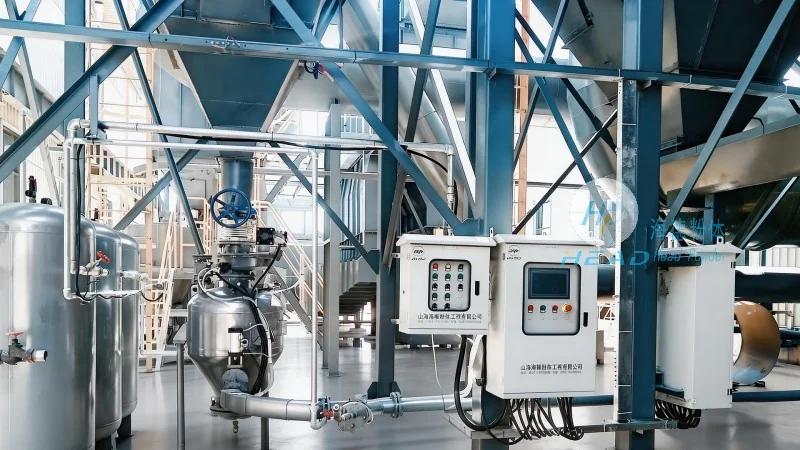
In manufacturing processes, the conveying of grit powders for surface treatment or coating applications demands high accuracy and minimal contamination. The systems must be designed to maintain particle size distribution and prevent cross-contamination between different batches. This is particularly important in industries like automotive or aerospace, where the quality of the final product is directly linked to the purity and consistency of the grit powder. Furthermore, the working scene may involve multiple stages of conveying, such as from storage silos to processing units, and then to packaging areas, requiring seamless integration of equipment to ensure continuous operation.
The effectiveness of grit powder conveying systems relies heavily on the quality and design of the equipment components. Key components include feeders, conveyors, and control systems, each playing a vital role in the overall operation. Feeders, such as rotary valves or vibratory feeders, are used to regulate the flow of grit powder into the conveying system, ensuring a consistent feed rate. These components must be constructed from wear-resistant materials like stainless steel or special alloys to withstand the abrasive nature of the material.
Conveyors, whether pneumatic or mechanical, are designed to transport the grit powder through the system. Pneumatic conveyors use air pressure to move particles, which can be further classified into positive displacement and pressure systems. Positive displacement systems are suitable for low-flow applications and fine powders, while pressure systems are ideal for high-flow and larger particle sizes. Mechanical conveyors, such as screw or belt conveyors, are more common in applications where air quality is a concern or for transporting bulkier materials. These systems are equipped with special coatings or liners to reduce wear and extend the lifespan of the equipment.
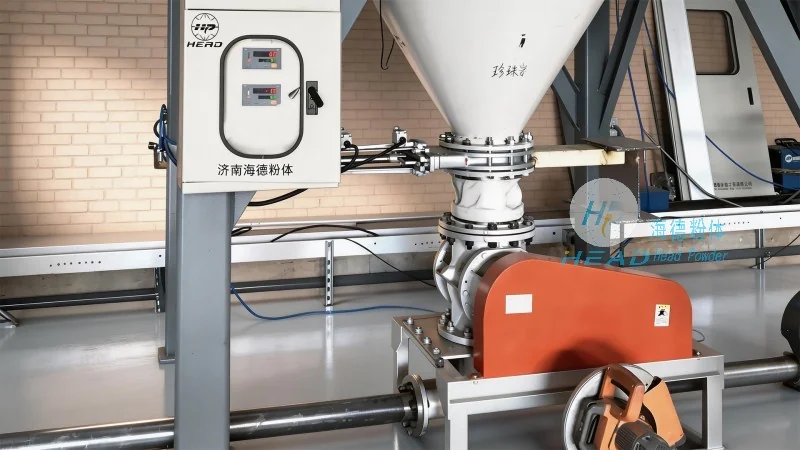
Control systems are essential for monitoring and managing the conveying process. Sensors and controllers are used to detect flow rates, pressure, and temperature, ensuring that the system operates within optimal parameters. This helps in preventing issues like blockages, overloading, or material degradation. The integration of advanced control technologies, such as PLC (Programmable Logic Controllers) and SCADA (Supervisory Control and Data Acquisition) systems, allows for real-time monitoring and automated adjustments, enhancing the efficiency and reliability of the conveying process.
Grit powder conveying plays a pivotal role in various industries, contributing to the efficiency and productivity of manufacturing processes. In the mining industry, efficient conveying of grit powders like sand or ore is crucial for downstream processing, such as crushing and grinding. This ensures that raw materials are transported to processing plants without loss or degradation, maintaining the quality of the final products. In construction, the conveying of grit powders for concrete additives or abrasive blasting materials supports the production of high-quality building materials and surface treatments.
In manufacturing, the use of grit powders in surface treatment processes, such as shot blasting or media blasting, requires precise control during transport. The conveying systems must ensure that the grit particles are evenly distributed and free from contaminants, which is critical for achieving the desired surface finish. This is particularly important in industries like automotive, where the appearance and durability of vehicle components depend on the quality of the blasting process. Additionally, the efficient conveying of grit powders in pharmaceutical or food processing industries, where material purity is paramount, highlights the importance of specialized systems designed to meet stringent standards.

 Shandong Headpowder Engineering Co., Ltd.
 156-6277-7102(Manager Zhang)
  0531-83386006
  Zhangqiu District, Jinan City, Shandong Province, China
telephone
WeChatconsult
top